Michelle Perez has lived and breathed 4‑H since she was seven years old. As a member of Kansas 4‑H, she was involved in a variety of projects including beef, swine, and poultry, in addition to creating her own projects that were the first of their kind.

Now the mother of two boys, whom she proudly describes as “born and bred in 4‑H,” Michelle serves the 4‑H community as part of the local County Fair Board, where she helps determine what awards will be provided for all project areas at the county fair.

When she became part of the awards committee, she wanted to make sure grand champions were honored with something extra special. After years of involvement in 4‑H as a youth, an extension educator, a volunteer, and a 4‑H agent, Michelle knew how much time and dedication 4‑H’ers put into their projects and the fair, and she wanted to honor them accordingly.

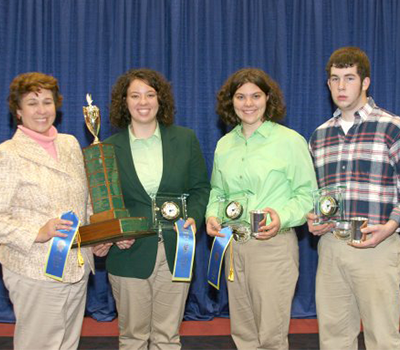
To meet this need, Michelle, with the assistance of sponsors and the County Fair Board, began a tradition of awarding grand champions with a belt buckle that matched their species. She very quickly identified that there were several species not yet represented, and contacted the 4‑H Mall.

With Michelle’s help, the 4‑H Mall has introduced three brand-new belt buckles: rabbit, poultry and sheep. Through her expertise and dedication to the 4‑H community, the 4‑H Mall has become more inclusive and now offers more 4‑H’ers the special gifts that highlight their great achievements.

We are so thankful for Michelle and for people like her, who have a passion for 4‑H and speak up to make the community better for everyone. See the new belt buckles on 4‑HMall.org, and keep your eye out for the 4‑H Mall’s newest addition – the dairy goat belt buckle!

We continue our celebration of 4‑H youth impact across the nation, here are just a few of the many ways 4‑H empowered youth and built true leaders in 2015.

Jerry, a Mississippi 4‑H’er, serves as a Youth Health Ambassador with Alcorn State Eat4‑Health Program:

“I have been in 4‑H for 3-1/2 years. During that time, 4‑H has helped me learn a lot about leadership, teamwork and communication (public speaking). Being in 4‑H has also helped me develop better decision-making skills, it has helped me be more responsible and take charge of my life.

Participating in the Citizenship Washington Focus program has changed my life. Traveling to Washington, D.C. has given me a new look on life. Before this trip I was not sure where I was going but today I know I am going to college and I would like to be an educator. This experience helped me to learn more about 4‑H and my government, things that will help me be a better 4‑H’er and citizen. I have always been a little shy, but CWF gave me the opportunity to meet and interact with people from different backgrounds and communities. This gave me confidence in myself and my abilities.”

"Being in 4‑H helped me develop better decision-making skills, be more responsible, and take charge of my life." – Jerry, Mississippi 4‑H

Nebraska 4‑H
Nebraska 4‑H’er Emily’s story is one of 4 H skill and responsibility:

“4‑H has helped me amplify my love for agriculture, and build my skills in other areas that are important to me, such as: Citizenship, Sewing, Cooking, and Photography. 4‑H has also helped me to become a confident individual. I have helped improve my community by volunteering my abilities to do different community service projects with my club and with my friends. I love when I get the chance to participate in community service projects that younger generations are involved in because I feel like I am leading them to do good in their lives also.”

"4‑H has also helped me to become a confident individual." – Emily, Nebraska 4‑H

Jessica is a North Carolina 4‑H’er who has been showing goats since the age of 10. Now in college and an active 4‑H volunteer, she wrote a beautiful poem about her time as a 4‑H’er:

Showing days are over, It’s time for college
From a 4-leaf clover, I leave with my knowledge
From a girl who was once shy, and had no clue what to do in the ring
Saying goodbye with a cry, Especially in the spring
Showing taught me a lot, Most importantly responsibility
I gave it all I got, With much acceptability
Win or lose, Different judge every time, Can put you in the blues
But worth every dime . . .
I wouldn’t be who I am today if it wasn’t for this
Made a lot of friends along the way, Ones I’ll definitely miss
My goal in life is to help others, So that’s what I’m going to do
Make a difference in my life and another’s—Maybe yours too

Career opportunities in science, technology, engineering or mathematics (STEM) are available far and wide, however, according to a recent study, America is not keeping pace with the current and projected demand for graduates with STEM skills and training. This need is even more prevalent amongst women and minorities, who are significantly under-represented in STEM degrees and careers.

Lockheed Martin wants to empower today’s youth with the resources and knowledge needed to discover and explore STEM career opportunities. Introducing the 4‑H STEM Futures program.

Developed through work with National 4‑H Council, this national program features a new, research-based framework to set more young people on a clear pathway for careers as scientists and engineers. Through after-school learning and practical, hand-on experiences, the world of STEM comes to life as youth are armed with skills needed to face STEM in the real world.

The key component of the program is the 4‑H Career Pathway, a unique process that repositions STEM careers and majors as attainable options for youth, particularly girls and minorities. Here’s how it works:

Explore – youth participate in introductory, short-term STEM projects
Learn – youth delve into projects that teach more advanced STEM concepts and problem solving skills
Practice – youth engage in more long-term projects with professional coaches to guide them in building STEM and leadership skills for college and career
Experience – youth immerse themselves in a field of work, including on-site training, shadowing and internship opportunities with STEM businesses.
The best part about the process? Lockheed Martin employees, scientists and engineers will serve as mentors to youth across the country throughout each stage, amplifying the 4‑H /Lockheed Martin joint effort and making an even greater impact on today’s youth. They are even kicking off their work together with this year’s 4‑H National Youth Science Day event where volunteers will assist over 300 youth in the Motion Commotion experiment in Washington D.C. on October 7th – providing the opportunity to spark their interests in exploring STEM.

“Lockheed Martin has partnered with 4‑H for many years on STEM programs that educate and inspire tomorrow’s scientists, engineers and mathematicians,” said Emily Simone, Lockheed Martin’s director of Community Relations. “This new STEM Futures partnership will provide even more opportunities to introduce students to exciting STEM careers and make positive impacts on the world.”

Encouraging young people nationwide to reach their full potential is the number one priority for 4‑H. It is critical that today’s youth are introduced to, and encouraged to pursue the career paths that they may be unaware of or feel are unattainable.

Sparking interest in agriculture and science, technology, engineering and mathematics (STEM) is even more important for young women and girls who remain under represented in ag and STEM careers.

I had the pleasure to connect with U.S. Department of Agriculture Deputy Secretary Krysta Harden. As a visionary in agriculture, an advocate for women and girls, and proud 4‑H alumna, she shared her thoughts on the importance of 4‑H hands-on learning programs today, and provided insight on her vision for the next generation of our nation’s leaders.

As America’s largest youth development organization, 4‑H is focused on growing young innovators and preparing them for leadership roles in their careers. From someone who grew up in 4‑H, how did your 4‑H experience impact your life and career?

Krysta Harden (KH): 4‑H opened up many doors for me. Through my involvement in various 4‑H competitions and camps, I was exposed to new experiences – and many life lessons that I have carried with me. In my professional career, I have seen the positive impact 4‑H has on our youth and I truly believe that the organization is developing the next generation of young leaders. I make it a point during every trip I take as USDA’s Deputy Secretary to visit with these young leaders and let them know that we need their skills and talent in order to build a better future.

As a leader in agriculture and agribusiness, what is your vision for the next generation of agriculture and agribusiness leaders?

KH: The time is now to be building the bench for tomorrow’s producers, consumers, and agribusiness leaders. It is crucial that our leadership in the field of agriculture truly reflects the diversity of our nation’s farmers and ranchers.

We need everyone at the table. Everyone’s voice is important and having diverse representation will only lead to better discussions and a stronger tomorrow.

As Deputy, I have also focused a lot of my efforts on women in agriculture because it is a topic near and dear to my heart. Our women farmers and ranchers have a wide variety of interests and skills. At USDA, we started the Women in Agriculture Mentoring Network to connect women with shared interests and goals, personally and professionally. We have over 700 members and we are always looking for more 4‑H’ers! You can join by e-mailing agwomenlead@usda.gov.

USDA is currently working to reach new and beginning farmers. How do you think 4‑H and other agriculture-based youth organizations are helping to support this effort?

KH: The average age of a farmer is 58 years old. We have to start making decisions today to make sure young people will get involved in agriculture, and that’s in all aspects. That’s farming, science, marketing, education, and communication. It’s the entire industry.

I think organizations like 4‑H really do help start a career path for a young person who is thinking about an interest, a degree, or a career in agriculture. 4‑H can show them the opportunities. USDA certainly wants to be there and help bring awareness, and to help provide outreach to young people. We do a lot with colleges, 4‑H clubs, and even space programs. We do a lot of joint research with NASA, helping young people understand the importance of growing and providing astronauts with safe, available food. You often hear people refer to STEM in the news but at USDA, we want to make it STEAM to include agriculture.

In partnership with 4‑H, we want to expose young people to all the different options involved in agriculture. For those who want to stay on the farm or ranch, we want to make sure they have the tools to do that as well.

The push for more women in agriculture and agribusiness is a topic being raised on a global level. What are your thoughts on ways we can encourage young women to pursue a career in such a high demand field?

KH: We must first say, “You can do it if you want to do it.” Girls and young women need to know that there are a vast amount of opportunities in the field. From the farm to the boardroom to the classroom, there are so many possibilities and we must continue to open doors for women. We need their ideas and talents, and USDA stands ready to make sure they receive that message through our mentoring efforts, partners, outreach opportunities, and so much more.

James was growing older, and he was busy going to school, spending time with his friends and 4‑H club. When he had a difficult day at school, he could always go into the coop and hang with his “girls.” They trusted and depended on him every day, and they would always make him feel better. He always found time for them and was sure to see to all their needs.One cold morning, near the end of winter, James found Goldie in the coop flopping around and having a hard time walking. He brought her into the house to see what was wrong. She could barely stand up and was getting weaker as the day went by. She wouldn’t eat or drink. He decided to make a comfortable bed of hay for her in the basement to separate her from the others. Goldie continued to get weaker that night and into the next day. I let James stay home from school so he could care for her. He called his 4‑H leader, and she told him what he had feared – that Goldie wasn’t going to make it through the night.

“Sometimes chickens get sick and weak and will just lie down and go to sleep,” she explained. “You are doing everything you can by making her comfortable.”

She also offered to come and take Goldie so he wouldn’t have to watch her die. James was heartbroken. He would have to face his biggest fear – he was going to lose one of his beloved chickens, and soon. He worried that Goldie was in pain and didn’t like to see her so sick. James decided to keep her at home. Saying goodbye to Goldie was so difficult.

Throughout the day, he would go check on her, and each time he told her, “I love you, Goldie.”

Goldie continued to grow weaker, until she finally lied down, closed her eyes, tucked her head under her body and went to sleep. Shortly after, she stopped breathing. I was the first to find her. Goldie died! – I sadly realized. I wanted to be first just to make sure before James saw her.

We put her lifeless body in a box with some hay. James’ older brother dug a grave for her outside under the apple tree where other family pets were buried. We gathered at the grave to say goodbye and James’ dad said a few kind words on how much we all loved her, how happy she was, and how she brought James a lot of joy. Both of James’ brothers said, “Goldie was a good chicken.”

“Goldie was the friendliest chicken I ever had,” James remembered. “She was the first one to come over to me when I first got them.”

They all helped shovel dirt and placed rocks onto the grave, then walked away. James stood for a moment, reached down, and touched her grave, saying tearfully, “I feel like she is still here – that she is not gone.” He looked down one last time and said, “I love you, Goldie.”

The next day James got up, got dressed and went out to the coop. He knew the chickens were depending on him so he filled the water and feed, said good morning and let them out into their run. He wondered if they would notice that Goldie was gone. When he entered the coop, they squawked more than usual. James believed it was because they missed her.

He went off to school, but it wasn’t like any other day. He realized what it felt like to lose a beloved pet. Losing Goldie was so heartbreaking, but he acknowledged that even though he was sad, he would be OK. Life would go on without Goldie.

After Goldie died, I was so relieved that he had handled it so well. He had reached out for support from his 4‑H community, and he managed it just like he took to building the coop and caring for their daily needs. Although there are times when he still misses Goldie, he is more socially confident and sure about his goals because of the support he has received from his 4‑H community.


The whole process has been so empowering for him and gratifying for me to know that he can do this. I am thankful that he has friends and a community that gets him and where he feels he belongs. It took a few years for this to happen for him but he now has many ribbons and even performed at the State 4‑H Visual Presentation day placing second with this VP on Model Railroading.

During his first year keeping records, James has written about this journey in his 4‑H story. In his own words:

“This is probably one of the first times in my life where I’ve been accepted by everyone in the club, and of course, I accepted all of them. I definitely think that whenever I’m at 4‑H meetings or events or just hanging out with my best friends from 4‑H, I am happier than I’ve ever been and always have a smile on my face. That is why I love 4‑H.”

James has recognized that 4‑H has given him confidence and improved his self-esteem. Anytime he can talk about his interests he is happy and confident, and now he has found a venue to do this where he is accepted and respected.

James’ story is not unique as I know there are other kids out there who do benefit greatly from the 4‑H experience. It has opened many doors for us as a family that we would not otherwise have discovered. I also have been inspired by his determination, and I am authoring and illustrating a children’s story based on Goldie.

By the way, what’s his new interest? He’s learning to play the Banjo. Trains, Chickens and Banjos, Oh My! Is there a club for that?

Wood shavings, goat hair, and judging notebooks characterized my summers growing up, rather than the traditional sunscreen and bathing suits. I spent most of my time with Sarah, Ace, Geoffrey, and Habanero — all sheep or goats in our show string.

My 4‑H career spanned nearly every conceivable event and team. I sewed, judged livestock, went to 4‑H camp, learned to safely shoot BB guns, cured country hams, attended national conferences, and gave speeches. Dipping my toe into so many disciplines definitely made me a more well-rounded student, but my heart lied in the livestock program, specifically in Skillathon. I enjoyed that part of the livestock competitions the most because you relied solely on your ability and knowledge of animal science. Ten years of work and study culminated at the 2007 National 4‑H Skillathon Contest in Louisville, Kentucky. My sister and I were on our county team (not to mention coached by our mother!) representing Kentucky 4‑H and to our delight won the National Contest! This remains my proudest accomplishment as a 4‑H member.

Elizabeth-Riley-2007-National-4-H-Skillathon-1

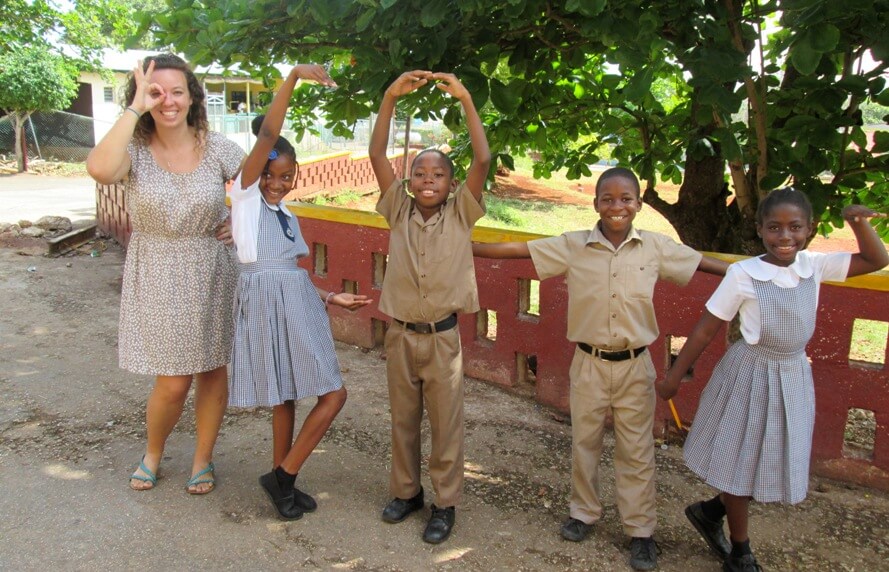
Certainly the more traditional 4‑H projects continue to remain relevant and practical, but I learned some of my most important lessons in an initiative Christian County 4‑H took on called Youth in Governance (YIG). This program trained youth in advocacy and how government worked. Through our efforts, youth were placed as non-voting members of various boards and government agencies. We contended that the voice of youth was valuable and worth hearing. I was an ex-officio member of our local Economic Development Council (EDC), where I learned how industry impacts a community, how local governance works (or doesn’t), and most importantly in my mind, the value of caring. When I was a teenager, it certainly wasn’t “cool” to be passionate about something. Apathy was popular and being on the EDC as part of YIG showed me that people dedicated to a cause get things done in their community. That lesson has stayed with me and ultimately played a part in my decision to join the Peace Corps, where I’m still working with 4‑H in Jamaica. Our YIG group went to the Citizenship Washington Focus in 2004 and happened to be there during President Reagan’s funeral, certainly a memorable experience.

ElizabethRiley_youth

One of my most treasured memories in 4‑H is when I was an adult counselor at 4‑H camp. I always preferred to be in charge of the youngest girls, even though they were often plagued with homesickness; the drama and boy-craziness of the older girls hadn’t hit them yet, for which I was profoundly thankful. In Kentucky 4‑H camps, a Spirit Stick is awarded to the teams with the most “spirit” at each evenings’ activities; basically, the loudest ones. This always put my little ones at a disadvantage, but one night they pulled out all the stops and were awarded the Spirit Stick. To this day, I don’t know why it touched me so much, perhaps we’d been denied it so long, but I was unbelievably proud of those girls.

My 4‑H activities and animal science knowledge led me to receive my BS in Animal Science from the University of Kentucky and my MS, also in Animal Science, from Virginia Tech. The people I’ve met and friendships forged throughout the years have certainly enriched my life and made me a better person. I carry with me all the lessons that I learned through 4‑H, especially applicable as I continue my Peace Corps service in Jamaica. I don’t know what my next step in life will be, but you can bet 4‑H will be part of it.

It’s a 4-H tradition. 4-H’ers have met with every U.S. President dating back to 1912 when President William Howard Taft was in office. These are life-changing moments for 4-H youth across the country to meet and greet our nation’s leaders. Today, that tradition continued, as 4-H’ers from Alaska, Arizona, Georgia, Idaho, Iowa, Maryland and Utah had the extraordinary opportunity to step foot into the Oval Office to meet President Barack Obama. The visit was a particularly exciting one, as the eight phenomenal youth were joined by Agriculture Secretary Tom Vilsack to share how they are taking action in their communities to fight rural poverty and childhood hunger.
 
I was able to capture the tremendous excitement of Geneva (AK), Andres (AZ), Kashawn (GA), Kimberly (ID), Lorena (ID), Spencer (IA), Gabrielle (MD), and Jacob (UT), minutes after meeting President Obama. It was a priceless moment, and I was honored to be there with such deserving 4-H youth who are changing lives every day.
A family friend had some chickens on his farm and offered to give four to James. One, in particular, was getting hen-pecked by the other chickens in the flock. Her name was Goldie. The friend said that he was rescuing her by giving her to James. When she arrived, she was missing feathers and looked pretty rough, but like the other chickens, she warmed up nicely to James.One of the chickens started getting sick after a month, so James and his dad took her back to the farm so that the other chickens wouldn’t get sick. I could see how hard it was for James to leave her there but he knew it was the right decision. He was very sad, mostly because he couldn’t care for that chicken like he did the others. As a result, James began to lose sleep and worry about behaviors in them that he didn’t recognize.“What if they are sick and end up dying?” he would ask. “What if one of them keeps coughing or one of them has diarrhea?”

I reminded him, “You can call your 4-H leader or the friend who gave you the chickens. You can also call the farm supply store. They will be able to answer your questions, and then you will know what to do.”

So he would call them for advice – a lot – and learned a lot in the process. When the chickens got mites, he learned to give them a dust bath with a special powder. When they were losing their feathers and not laying eggs, he discovered the chickens were molting. He learned to put apple cider vinegar in their water to keep away respiratory illnesses. He fed them crushed oyster shells to make their egg shells stronger. James learned to their personalities and noticed when one was acting “broody” or trying to lay an egg. He also learned the different “calls” they would make to each other. James enjoyed watching their daily routine of eating grubs and grass, scratching and dust bathing in the dirt and laying eggs. He took care of them. He played with them and talked to them. They were his pets; he loved them.

James decided to add to his flock and ordered six chicks at the farm supply store. He set them up in the basement in a brooder with a heat lamp to keep them warm. He finally had chickens in the house! However, after two weeks, he found one of the chicks lying motionless. The chick had died. It just wasn’t strong enough to survive, and it was very upsetting to James. The other five chicks thrived in the basement for three months, while James worked to expand his handmade coop, hoping to make room for the new chicks.

Quickly, the baby chicks grew, and by the summer there were eight chickens in the coop. It took some time, but eventually, the older girls accepted sharing the coop with the chicks. That, however, was the least of James’ worries, as a coyote scare threatened the lives of the chickens. One day, a coyote came around the coop stirring up the chickens. It even tried to attack one of them through the wire. James worried about them getting hurt or even worse – killed! His worry and fear for the safety of his chicks fueled his determination to make the coop safer and more secure, working tirelessly with his dad.


Suddenly, fall arrived and they stopped laying eggs. Winter soon followed and was even colder than the last, and it seemed like spring would never come. But at last, they started to lay eggs once again. James sold his eggs to his teachers at school and earned enough money to pay for their feed.

Goldie was no longer laying eggs, but she was fun to have around and always up to some mischief in the coop. One day James went out into the coop with a bag of treats and Goldie jumped up at the bag of meal worms he was holding, and she grabbed them right out of his hands! She ate it all, leaving nothing for the others.

“Silly Goldie!” James laughed.

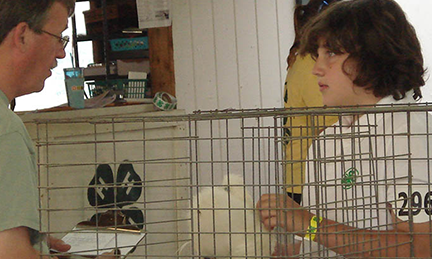
Once summer arrived, James was able to participate in the local agricultural fair with his 4-H group and show his Bantam chicken, Lily Bell. He placed third in Showmanship and Knowledge among dozens of kids. James was the only kid in his club to place, judged by the toughest judge to ever be invited to the fair – so the organizers told us! James has this confidence whenever he can talk about his interests, so this came naturally to him. All his time researching chickens had earned him a third place ribbon at the fair. We were so proud of him, and it was nice that the kids from his club were all happy for him, too.

How do we strengthen the connection between family and youth development? It’s with various in-school and after-school programs that 4-H is able to not only contribute to the upbringing of today’s youth, but to encourage greater family engagement. The work of 4-H is beneficial to all involved—youth, parent/guardian and adult leader/mentor.

So, what organization knows the importance of youth and family engagement better than the National Parent Teacher Association (PTA). In celebration of National PTA Founders’ Day, we were honored to chat with the National PTA president and 4-H alumnus Otha Thornton.

OthaThornton-feature-1
Otha Thornton, National PTA President – 4-H Alumni feature:
 
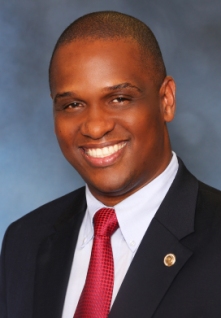
Otha Thornton knows from personal experience the importance of family engagement in a child’s life as he credits his own mother as someone who was influential in his upbringing.“My mom believed in us … she cared,” he explains. “She ensured that we had a good education and gave us opportunities to take part in clubs like 4-H and scouting.”Growing up as a member of the Elbert County 4-H Club in Elberton, Georgia, Thornton says it was 4‑H that influenced his desire and passion for service.

“[Serving people] was the core of 4-H to me,” he says, recalling the third H—pledging his hands to greater service.

During his five-year involvement with 4-H, Thornton participated in a number of programs, including gardening, photography and canning, with his photography skill earning him an award for what was a personal hobby of his.

Thornton went on to receive his bachelor’s degree in urban planning from Morehouse College and received his master’s degree in communications from Michigan Technology University. He also served in the United States Military and is now a retired United States Army Lieutenant Colonel. Aside from his role as National PTA president, Thornton currently works as an operations specialist at General Dynamics.

We caught up with Otha Thornton to get his insights on today’s 4-H and how he feels its values are helping to empower youth in varied communities across the country.

How do you think 4-H is helping develop youth today?
Otha Thornton (OT): I believe 4-H is developing youth now through the importance of service in the community, through the importance of being healthy adults and also developing leadership skills. Youth are given so many opportunities to develop their leadership skills through 4-H.

Tell us about other interests you gained because of skills developed in 4-H?

OT: When you’re in 4-H, you’re exposed to so many different things and exposed to different people. That, for me, was very important. I also think about the four H’s: Managing and thinking (Head); Relating and caring for people (Heart); Giving and working (Hands); Living a healthy lifestyle (Health). Those values help. They really make a difference.

Today, 4-H is focused and committed to serving youth in all backgrounds, including those in urban communities. What challenges do you see these youth facing today and how do you think 4-H can play a part in solving these issues?

OT: I think what is critical is empowering our youth to reach their full potential. It’s important to partner with communities and continue to give kids opportunities, especially in the urban communities. I know 4-H is strong in our rural communities, but it’s also in the urban communities where 4-H can really make a difference.

With your military background, how do you think military families and youth benefit from the 4-H Military Partnerships?

OT: I believe 4-H work with children in military families benefits them by reinforcing positive physical and mental development. One thing I know 4-H offers is mentoring programs. These are the sort of programs that work really well for the military and its partnership with organizations like 4-H. Mentoring is really important in the positive development of military youth.

What does it take for families to become actively involved in a child’s learning and upbringing, both during and after school?

OT: One of the things PTA is working on, which is an element of what 4-H is doing, is promoting the importance of health and healthy lifestyles. PTA has great programs that promote healthy lifestyles as far as education. We’re working very closely with communities across the country to help put an emphasis on early childhood education. Encouraging healthy lifestyles is what will make our kids more productive and more competitive in the country and the world.

What is top priority for National PTA right now?

OT: PTA is now leading in family engagement. We’re working with the secretary of education, we’re working with Congress, and we’re working with folks all around the country to find ways to get more families involved in education. They estimate that when you invest in a kid in education, that’s almost equivalent to $1,000. We want to get all family members in every family engaged. The bottom line is when you get involved, kids do better in school and it opens up more opportunities for them and their lives.

Do you think the importance of family engagement is prevalent in the work of 4-H?

OT: Absolutely! The mission of 4-H is to empower youth to reach their full potential through working and learning with the help of partnerships with caring adults. That contributes to family engagement.

How do you think 4-H is helping to build towards its vision of growing more youth leaders and preparing them for leadership roles as an adult?

OT: I believe what’s most important is the values 4-H encourages. It teaches kids how to manage and how to think. The organization also stresses the importance of being able to relate and genuinely care for people and make a difference. Giving back to the community and working to make them better is also a crucial value. Lastly, 4-H is teaching youth about being healthy and living the healthy lifestyle that will make a difference in their lives and being better, more productive citizens. These are very important values that 4-H provides to strengthen the leadership skills of youth.

James was an energetic but sensitive young boy growing up the middle child of three boys. Although he struggled in school and had social difficulties, we provided him with support in school and at home. James had a hard time making and keeping friends, because of struggles with social perceptions. Most kids just didn’t understand his interests, and he found it hard to connect with them. He always felt like the kids just didn’t get him and didn’t want to be his friend. From about third grade he wasn’t invited to birthday parties and struggled in team sports. He had a lot of creative energy, so he spent a lot of alone time developing his train modeling hobby and kept busy doing projects and building things.Since he was a little boy, James had always been fascinated with chicks and chickens. When James was in first grade, his class hatched some eggs in an incubator loaned from the local county 4‑H Extension office. The baby chicks were so soft and fuzzy, and he loved hearing their little ‘cheep cheep’ sounds.

James came home from school and asked me, “Can I have a baby chick? They are soooooo cute.” I replied, “Well what are you going to do when it grows up to be a BIG chicken and it’s not so cute anymore?”

Although I could see his eagerness, I had to refuse his pleas.

Years went by, and James would occasionally ask if he could get a chick but I still declined, telling him he would have to settle for visiting them at the farm supply store. Neither my husband nor I had any farming experience growing up, so we were hesitant to indulge him with this. It was also difficult for me knowing he was excluded from social activities with peers. It made me angry that kids didn’t include him in their invites and the parents that I was friends with did not see that he was invited. At times he would come home and say everyone in the class was invited to the party accept him. He would over dramatize the real situation because that was how he felt. It was heartbreaking, but it left him lots of alone time to develop his interests.

That summer, James worked at an organic farm during the summer program that was offered at his school. He helped out with coop chores and gardening. Then his persistence kicked in.

James: Mom can I get a chicken?
Me: Are you kidding me? What are we going to do with chickens? No!
James: Yes! They lay eggs, so they earn their keep. They even make chicken diapers so they won’t poop all over the house and they make great pets!
Me: Chickens in the house? No! I don’t think so.
James: But I really want some chickens! They are so funny and I know I can take care of them. I can even build a coop!

James didn’t understand why we wouldn’t let him have chickens. James was always very persistent with his interests. He always had to have things right when he wanted them, or a meltdown would ensue. It is hard to manage the urgency he always brought with his enthusiasm, and I thought it was me who would have to take care of those chickens. I wasn’t ready to take on anything like that.

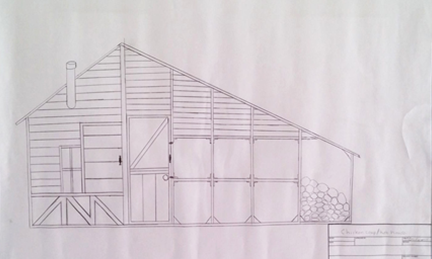
One day after the new school year started, James came home with chicken coop plans he had designed on special blue print paper his teacher gave him. The details were amazing. It had a hen house and an enclosed chicken run to keep them safe. He had spent countless hours on the computer searching every thing he could learn about building a coop. He found out about providing roosts so they could perch to sleep, how big he should make the coop, how to secure chicken runs from predators to protect the flock. He also researched how many nesting boxes were needed for laying eggs. He would talk to anyone who knew anything about chickens. He asked so many questions that he became a chicken boy expert! Every day he would try to convince us that he could raise chickens. He drove everyone nuts with all the chicken talk! We were beginning to think that maybe getting chickens wasn’t such a bad idea.

His therapist told us that with his keen interest in chickens that perhaps joining a 4‑H club could give him a sense of community and belonging that he wasn’t able to find with peers at school. He would also be around people that had the same interests as him! This helped persuade us to believe that he could do this.


“OK,” I finally said, “you can have some chickens, but you will need to join a 4‑H club and meet other people who have chickens. If you have any questions or problems, you can call them. But if they get sick you’ll have to give them back to the farm.”

We didn’t have the money for a vet, and I worried that James just wasn’t able to manage that because he didn’t have a lot of experience dealing with sick chickens yet. He was anxious and worried about this, so I felt it was better that he have a choice to take them back to the farm.

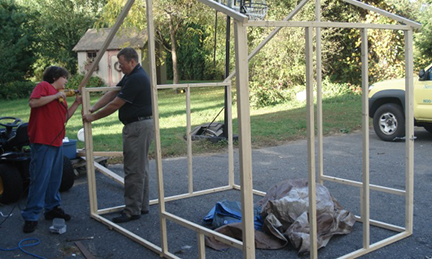
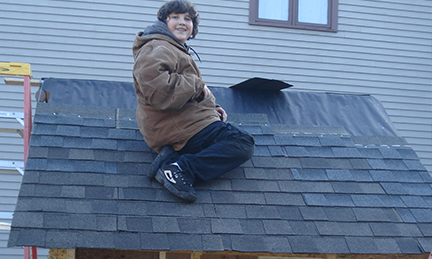
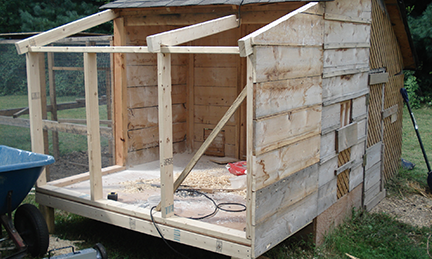
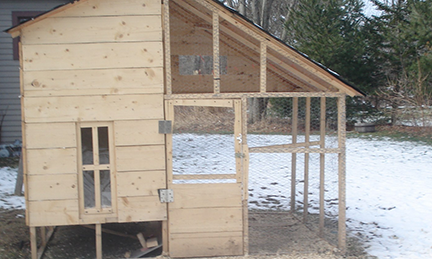
So James built his coop with help from his dad and big brother. He built it to look just like his drawings.

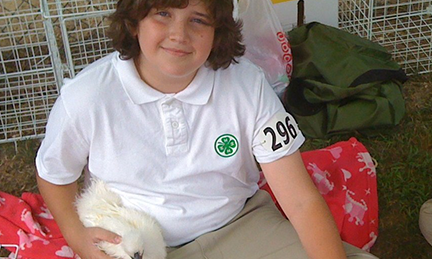
He joined a local 4‑H chicken club that had lots of kids and adults who loved chickens just as much as he did, and he made lots of new friends. He went to 4‑H meetings and school, and in his spare time, he built his coop. It took him three months, but finally, the coop was ready for chickens. We had checked out a couple of local clubs in fall of 2012 and chose the one that had some boys in it. It was called United Bantams. He was the oldest member of the club at age 13, and the other members looked up to him and offered their friendship and support almost immediately. James was also voted the president of his club because he knew so much about chickens and would answer anybody’s questions including the club leaders! For the first time in a very long time, he had friends and felt like he belonged.