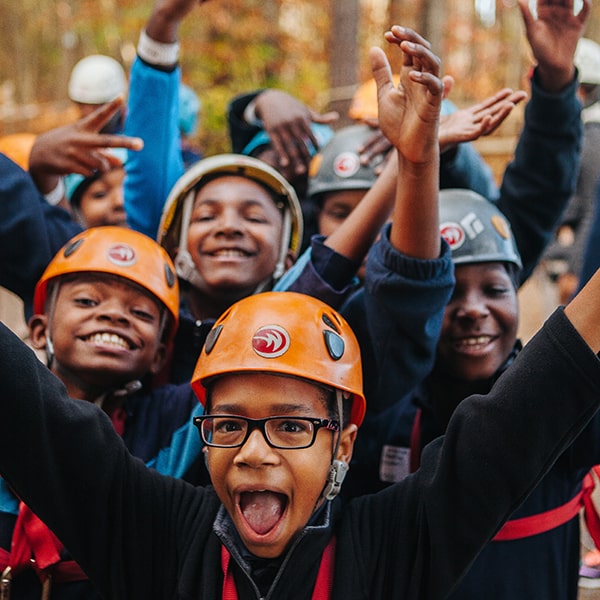

Amidst COVID-19 an overwhelming number report feeling anxious, stressed, or depressed as they call for more openness on mental health issues

CHEVY CHASE, MD (June 17, 2020) – A new survey commissioned by National 4‑H Council, and conducted by the Harris Poll, finds that 7 in 10 teens are struggling with their mental health in the wake of COVID-19. More than half of those surveyed shared that the pandemic has increased their feelings of loneliness, with 64 percent believing it will have a lasting impact on their mental health. The survey, conducted in May 2020, is among the first to examine the impact this unprecedented public health crisis has had on U.S. teens.

In 2019, the World Health Organization announced suicide as the third leading cause of death in teens 15 to 19. Their findings determined that the “consequences of not addressing adolescent mental health conditions extend to adulthood, impairing both physical and mental health and limiting opportunities to lead fulfilling lives as adults.” Today, as the country grapples with a global pandemic, economic downturn, and recent conversations on racial injustice, teens are being met with added stressors and seeking out new ways to cope.

The survey, which polled over 1,500 youth between the ages of 13-19 nationwide, was commissioned by National 4‑H Council and conducted by The Harris Poll to gain a deeper understanding of the state of teen mental health and to gather youth perspectives on the issue as 4‑H aims to empower young people with the resources and support to address their health and well-being head on.

Key findings from the survey include:

  • 81% of teens say mental health is a significant issue for young people in the U.S.
  • 55% of teens say they’ve experienced anxiety, 45% excessive stress, and 43% depression
  • 71% of those surveyed say school work makes them feel anxious or depressed
  • 65% of those surveyed say uncertainty about the future makes them feel anxious or depressed
  • Teens report feeling more pressured to hide their feelings rather than do drugs
    • 67% feel pressure to keep feelings to themselves
    • 67% pretend to feel better to not worry anyone
    • 65% deal with my feelings on their own
  • Approximately 45% say that they try to ignore their feelings or spend more time alone when they are dealing with mental health issues
  • Teens today report spending 75% of their waking hours (approx. 9 hours each day) on screens during COVID-19
  • 46% of teens reported social media as their most common outlet for learning about coping mechanisms for mental health and 43% follow or support someone on social media who openly talks about their mental health issues
  • 82% of teens are calling on America to talk more openly and honestly about mental health issues in this country
  • 79% of teens surveyed wish there was an inclusive environment or safe space for people in school to talk about mental health. 70% wish their school taught them more about mental health and coping mechanisms

“Young people are facing a whole new world and set of challenges today and it’s our job to listen and respond,” said Jennifer Sirangelo, president and CEO of National 4‑H Council. “This survey provides a vital glimpse into the uncertainties many teens are feeling every day. In 4‑H, we aim to empower teens with resources and guidance enabling youth to tackle life’s challenges today and become leaders in their lives, careers and communities as they grow into responsible adulthood.”

More than half of the teens surveyed shared that they feel pressure to hide their feelings, and they want that to change. An overwhelming majority of teens are calling on America to talk more openly and honestly about mental health and wish for schools to teach more on the issue.

“During these months of being away from my 4‑H club and friends, I’ve definitely felt disconnected,” said Micah Palacios, a 4‑H teen from Texas who developed a mental health program in her community. “Coronavirus has been overwhelming and being on social media can be too much for me at times. It’s been a lot to deal with. That said, my work on mental health awareness through 4‑H has given me tools to address these concerns in healthy ways for me and for others in my community. I hope to continue teaching and spreading mental health awareness so everyone can find productive ways to cope.”

With programs focused on issues such as substance abuse prevention and mental health, 4 H, powered by Cooperative Extension—a community of more than 100 public universities across the nation, aims to help young people build a firm foundation of social-emotional health. By understanding how to take care of their minds and inner being, 4‑H helps young people develop good decision-making and strong interpersonal skills which is key to holistic well-being.

About 4‑H

4‑H, the nation’s largest youth development organization, grows confident young people who are empowered for life today and prepared for career tomorrow. 4‑H programs empower nearly 6 million young people across the U.S. through experiences that develop critical life skills. 4‑H is the youth development program of our nation’s Cooperative Extension System and USDA, and serves every county and parish in the U.S. through a network of 110 public universities and more than 3000 local Extension offices. The research-backed 4‑H experience grows young people who are four times more likely to contribute to their communities; two times more likely to make healthier choices; two times more likely to be civically active; and two times more likely to participate in STEM programs.

Learn more about 4‑H at www.4‑H.org, find us on Facebook at www.Facebook.com/4-H and follow us on Twitter at www.Twitter.com/4H.

Since joining National 4‑H Council 14 years ago, I’ve had the honor of meeting and building relationships with 4‑H alumni and supporters who are serving and leading with purpose. I thought now would be a great opportunity to reconnect with my colleagues for a new virtual series, 4 for 4. 4 questions. The concept of these talks is simple. We ask four questions in four minutes.I’m excited to launch the 4 for 4 series with Wade Miquelon, president and CEO of JOANN Stores and a member of the National 4‑H Council Board of Trustees. We discuss how stores have supported communities during COVID-19. The concept of these talks is simple.


So, Wade, looking back on your life’s journey so far, who or what helped you to succeed?

Wade Miquelon (WM): I would say more than anything, you know, it’s really the word others. At an early age, having role models to look up to. Having mentors, seeking them out. Having good bosses and taking their advice. Also working with peers and collaborating to work together versus trying to work as a silo. Hiring good people and letting them run and do their job and supporting them. It’s really about others. And one person can only do so much, but if you can surround yourself in all directions with great people then great things happen.

You’re the chief executive of one of the nation’s most well-known brands. What advice would you give young people who want to succeed and aim high like you?

WM: I would say first and foremost, I think it’s critical that you really find something you love and you do it will all your heart and you’ll be successful. You know, there’s no right or wrong. I was originally an engineer and I felt I wasn’t a great engineer and I didn’t love engineering. It was a great background. Then I found something I loved in business and I went for it with my heart. No matter what it is, put your passion into it. And the other thing too is that life gives us certain windows of opportunity, and when you see those opportunity windows, step through them because they close very quickly. Create an eye for seeing opportunities and not being afraid to take some personal risks.

Well over the last few months, JOANN has stepped up with volunteers to make and donate over 100 million masks for those in need during this COVID-19 pandemic. So, why from your perspective is this commitment to service so important to you and the JOANN family?

WM: You know, our customers are unique people. They almost all come into the store to make something. Most of the time, 70% of the time they are making something to give to a sister, a friend, a daughter, a child. And almost 30% of the time they are making to give to charities. It could be blankets for children in hospitals. It could be blankets for people in shelters. It could be quilts for people with cancer. It could be things for veterans. You name it and for the homeless and so that’s who pays our bills is a very giving customer and so we need to be giving back and be authentic about it.

Do you have any words of encouragement for kids who are home right now because of the coronavirus and are thinking about their futures?

WM: Yeah, I do. The first thing I would say is, you know, don’t worry about the future. Things are going to be okay. There will be a great future there. There’s going to be great opportunities. This too will pass like so many other things. So, I’d say, try to do sometimes when you’re without from within. I read a story once about a man who was in a prison camp basically in Vietnam and basically for many years he wrote several books in his head. Every day he would write the next page and memorize and when he was released, he put them quickly to paper and won multiple awards. And, I say it because you should use your time productively. You know, you may not have time like this where you can learn new skills. You can research new things. You can find new ways of communicating. So, don’t waste this precious time. Look at it as a gift to do all of the things that maybe you didn’t have time to learn and do and when you’re without, do from within and I think you will be so much stronger than you would have been otherwise. And this too will pass, and your opportunities will be there for you.


 

Kids will discover and unlock their creativity with this week’s lessons in photography, creative writing, jewelry making, and abstract art! Visit the links to learn more about the activity and check back every Monday for new ideas and hands-on, educational resources for all young people.


Creative Writing

Recommended age: Grades 3-12

Courtesy of Purdue University, Indiana 4‑H

Explore creative writing with this simple and fun activity the whole family can do together.

Start Writing! 

Photography

Recommended age: Grades 3-12

Courtesy of Oklahoma State University, Oklahoma 4‑H

Learn about monochromatic photography with this video made by a 4‑H’er.

Snap Some Pics! 

Jewelry Making

Recommended age: Grades 3-12

Courtesy of New Mexico State University, New Mexico 4‑H

Follow along with this video to learn how to make a leather bracelet! Supplies needed include leather cord, eye pin, jump rings, beads, clasp, round nose pliers, wire cutter, and flat nose pliers.

Start Accessorizing! 

Abstract Art

Recommended age: Grades Pre-K-12

Courtesy of University of Kentucky, Kentucky 4‑H

Learn about abstract art and create your own abstract art project by following along with this video. Supplies needed include a flat canvas, acrylic paint, container of water, cover for workspace, paper plate, paint brushes and craft sticks or cotton swabs.

Explore Art!


More Weekly Lessons:

CLOVER: Gardening, Exercise & Wildlife

Water Bottle Rockets, Bicycles & Embryology

Dog Training, Bees & Cloud Dough

Origami, Baking & Space

Butterflies, Omelets & Journaling


This week’s activities feature lessons in exercise, gardening and wildlife. Visit the links to learn more about the activity and check back every Monday for new ideas and hands-on, educational resources for all young people.


Indoor & Outdoor Gardening Projects

Recommended age: Grades Pre-K-12

Courtesy of University of Maine, Maine 4‑H

Spark an interest in gardening with these video lessons and instructions sheets with activities including Tomato in a Bag, Growing Microgreens Indoors, Starting a Straw Bale Garden & more!

Develop Your Green Thumb!

Exercise Dice

Recommended age: Grades 3-12

Courtesy of Purdue University, Indiana 4‑H

Encourage your family to stay physically active with this fun dice game!

Have Fun with Fitness!

Wildlife Print Casting

Recommended age: Grades 3-8

Courtesy of University of Florida, Florida 4‑H

Learn about identifying wildlife tracks and how to make castings of the tracks using plaster!

Track Local Wildlife!

4‑H Coloring Sheets

Recommended age: Grades Pre-K-5

Courtesy of West Virginia University, West Virginia 4‑H

Teach your kids about citizenship, communication, leadership, responsibility, and service with these printable 4‑H coloring sheets!

Learn Life Lessons in Color!


Originally published for University of Missouri Extension. 

“In good times, 4‑H is a wonderful resource to help develop the youth of America and around the world. In hard times, like what we’re going to feel through this crisis and into the coming recession, that value expands exponentially,” said Richard Maltsbarger, president and CEO of Pet Retail Brands, a multinational pet products company.Maltsbarger is also a 4‑H alumnus from Pettis County, Missouri, and member of National 4‑H Council’s board of trustees.

In response to COVID-19, National 4‑H Council launched the FOURWARD Fund to provide educational resources and funds to help support local clubs and extension. “I’m proud of all the ways in which 4‑H is adapting so quickly,” Maltsbarger said.

As a kid, Maltsbarger had worked on small engine projects in 4‑H, developing skills he still uses today. He said those experiences “really began some of the first embryonic stages of understanding the place I could possibly have in a much broader world than just Pettis County, Missouri.”

He emphasizes the importance of the 4‑H pledge(opens in new window). “When you include the words ‘world’ and ‘country,’ the fact that you are making a commitment that stretches out to all of the world, that was a big moment for me as a kid,” Maltsbarger recalled.

“The activities and the work that we did in agriculture in real life, even in small-town Missouri, were tied into a broader world economy,” he said.

Maltsbarger decided to attend the University of Missouri because of how university extension helped to make 4‑H possible. “I took the same spirit of 4‑H and started teaching myself how to program computers,” he said. “Ultimately, my first job was working on a computer program at Farmland Industries.”

4‑H gives children confidence and helps them understand that they have the ability to learn new skills, he said. “If I can do that, I can do this; for me, that was computer programming.”

Today, Maltsbarger runs a company that distributes food and supplies for more than 125 million pets. “I love what I do, I love the opportunity to go into our stores every day and work with people that are just like my family. We work to serve people who love their pets,” he said.

“The most important thing I learned from 4‑H was that you have potential, and that potential can expand to any size community and any place in the world,” Maltsbarger said.

His advice to 4‑H’ers is to not lose the essence of the pledge in the way they continue to live life as an adult.

“I’m proud to be a part of 4‑H,” Maltsbarger said. “I’m proud to be a part of the team that helps understand what we can do to expand the resources and the reach of 4‑H every day.”


The last few days have been challenging for all of America. Like many, I was overcome with emotions as I witnessed the video footage of George Floyd’s final breaths. My thoughts and prayers immediately went out to the African American community, especially young people of color, who endure the pain and injustice of racism again and again with each senseless death. George Floyd is not an isolated case. We are painfully reminded of other lives lost unjustly like Ahmaud Arbery, Breonna Taylor, Philando Castile, Freddie Gray, Sandra Bland, Eric Garner, Trayvon Martin, and Michael Brown to name and remember a few of the thousands who have died. Each of these tragedies is a stinging reminder of the systemic racism all people of color endure today in countless small and large doses that are so common that now – it is simply expected.

Many faiths and belief systems embrace a divine element inherent in all humanity. In my faith tradition, we believe that all human beings are equally beautifully and wonderfully made in the image of God. Therefore, all lives have value, meaning and purpose simply because we are present in this world and have a bit of the divine in our design. It’s this belief system that guided me to a 20-year career in positive youth development and to 4‑H where we believe that all young people, no matter their beliefs, backgrounds, or color of their skin, can create positive change in their communities today and deserve the opportunity to prepare for life and work with meaning, purpose and positive impact.

As protests sweep across our country, it is time for all of us to step up and use our voices to create an America that finally fulfills our mission to stand as “one nation under God, indivisible with liberty and justice for all.” Most importantly, we do this for young people. The wisdom, clarity and humanity of our young people is THE hope for a brighter future for our country. It is our responsibility as adults and mentors to show up as allies and mentors who can lift their voices and empower them to address the challenges they face head-on. At National 4‑H Council, we will always believe in them, we will always tell their stories, and we will always work to create opportunities for those hardest to reach and who need us the most.

In this brief video, you can hear from diverse voices of 4‑H youth and Cooperative Extension 4‑H leaders about what equity means to them. I look forward to following their lead as they work hand-in-hand with communities to prepare young people to take on the future ahead.

This week’s activities feature lessons in making water bottle rockets, bicycles and embryology. Visit the links to learn more about the activity and check back every Monday for new ideas and hands-on, educational resources for all young people


Water Bottle Rocket

Recommended age: Grades 3-12

Courtesy of New Mexico State University, New Mexico 4‑H

Get outside with this explosive Rocketry project! Learn how to make a rocket from a plastic bottle, pencils, tape, vinegar, and baking soda. Then watch the rocket shoot to the sky!

Ready, Set, Blast Off!

Bicycle ABC Quick Check

Recommended age: Grades 3-12

Courtesy of Purdue University, Indiana 4‑H

Run through these short steps before every ride to keep your bicycle running properly.

Get Ready to Ride!

Embryology 101

Recommended age: Grades 3-5

Courtesy of University of Nebraska-Lincoln, Nebraska 4‑H

The Embryology 101 series includes four lessons complete with videos and worksheets allowing youth to explore the life cycle of an embryo and how life develops! Youth will observe the process of incubating and hatching chicks, identify parental traits that influence the appearance of the chicks, and recognize where eggs and chicken meat come from.


Congratulations 2020 Graduates!

While this may not be the graduation and celebration you looked forward to, it will surely be one that you will never forget.

You thrived. Through adversity and uncertainty, you made it!

Whether you’re a new or longtime 4‑H alum, I have a feeling you made it this far with help from one of the first things you learned as a 4‑H’er: The 4‑H Pledge.

Today, I celebrate you and the 4 H’s—Head, Heart, Hands, Health—that guided you throughout your journey.

Celebrating a Clear Head

You knew where you wanted to go and what it took to get there. By pledging your head to clearer thinking, you have built your path to a future of which you will be proud.

Celebrating Loyalty

Over the past few years, you have pledged your heart to greater loyalty for your passion and craft, while overcoming obstacles and learning a few life lessons along the way. That devotion will serve you well, no matter what the future brings.

Celebrating Service

In the wake of COVID-19, what I’ve learned is we are in this together. As you navigate the world ahead, I encourage you to lead with a service mindset. Your pledge to larger service will guide you to make the world a better place.

Celebrating a Healthy Mind and Body

No matter how difficult the journey, how far you’ve come is a clear indication that your pledge to better living—mentally and physically—helped you win.

The 4 H’s were the foundation of what you learned early on—perhaps many years ago—in your 4-H Club. And I hope that you continue to allow your head, heart, hands, and health guide you through a path that leads you to fulfill your purpose in your community, country and world.

Congratulations to the Class of 2020!


This week’s featured activities include lessons in dog training, baking cloud dough and bees! Be sure to visit the links to learn more about the activity and check back every Monday for new ideas and hands-on, educational resources for all young people.


4-H Dog Training Project

Recommended age: Grades 3-12

Courtesy of University of Missouri, Missouri 4-H

Spend quality time with your pup while practicing some of the fun dog training tips in these how-to videos created by members of the Missouri Roving Rovers 4-H Club!

Have fun with your furry friend!: 

Make Your Own Bee Hotel

Recommended age: Grades Pre-K-12

Courtesy of University of Georgia, Georgia 4-H

Learn how to make your own bee hotel using recycled items in your home! Bee hotels can help provide a habitat for solitary bees as well as giving other pollinators a place to rest.

Learn pollinator hospitality!

Florida 4-H Adventures

Recommended age: Grades Pre-K-12

Courtesy of University of Florida, Florida 4-H

Explore 45 virtual summer experiences that will navigate through healthy living, leadership, and science topics! Programs will take place throughout the summer, and registration is open now.

Get summer learning at home! 

Cloud Dough

Recommended age: Grades 3-12

Courtesy of New Mexico State University, New Mexico 4-H

Learn how to make “cloud dough” using only two ingredients – corn starch and conditioner!

Start baking!


More Weekly Lessons:
4-H youth take the lead to solve the current food crisis and celebrity chefs Carla Hall, Trisha Yearwood, Anne Burrell show their support in new cookbook to equip families with health-conscious meals and more


CHEVY CHASE, MD
(May 20, 2020) – A new survey commissioned by National 4-H Council found that 88 percent of U.S. teens believe having access to healthy food is a basic human right, though a majority say that unhealthy options are easier to access and more cost-effective. As COVID-19 continues to negatively impact the economy and create impossible situations for families struggling with food security and access, 4-H teens from across the country are stepping up their efforts to solve the problem through service and cooking.

37 million Americans, including 11 million children faced food insecurity in 2018 and these numbers are growing exponentially amid the COVID-19 crisis. The survey, which was completed prior to the current global pandemic, highlights that healthy eating choices are determined by access and necessity. More than a third (35%) of those surveyed say “healthy food is not easily accessible to me,” while a majority (84%) say, “junk food is too accessible.”

“Many young people and their families don’t know where their next meal is coming from, especially during this current global crisis, and choosing healthy options that are cost effective only becomes that much more difficult for economically challenged communities across the country,” said Jennifer Sirangelo, president and CEO of National 4-H Council. “This survey shows that today’s youth have an expressed interest in leading healthier lifestyles, and we’re pleased to serve and ensure that kids and their communities develop the healthy habits they need to thrive.”

The survey, which polled over 1,500 youth between the ages of 13-19 nationwide, was commissioned by National 4-H Council and conducted by The Harris Poll as part of the 4-H Healthy Habits Program. The program has reached over one million youth from across the country with nutrition education and physical activity, with an intentional focus on populations who face challenges in achieving positive health outcomes.

Other key findings from the survey include:

  •  Teens are interested in being active participants in solving the food crisis, as a majority said they would like to/or have donated money and/or volunteered within their communities.
  • 68 percent say they satisfy their hunger with unhealthy foods because it’s more accessible to them at school than healthy food.
  • Most teens wish there were healthier food options in their community (74 percent) and at home (69 percent), while 1 in 4 reported having to drive 30 minutes to buy groceries (25 percent).
  • 84 percent surveyed say schools should teach students more about what makes food nutritious, while over half also believe supermarkets should incentivize health food choices through healthy grab & go options (55 percent).
  • Most teens (66 percent) are spending more time deciding what they want to watch on Netflix and YouTube, than thinking about what they eat.
  • 73 percent of youth say that they think they would eat healthier if healthy foods tasted better.

Since 2012, teens in the 4-H Healthy Habits Program have been finding ways to teach their communities about healthy living habits. But as the need for food access has grown in recent months, they’re finding new ways to serve with:

  • Fresh produce boxes that are being created with the surplus crops farmers may otherwise destroy in Florida,
  • A food delivery program to ensure students in need of meal assistance continue to get meals while out of school in Illinois,
  • A community garden that provides free produce to community members in Georgia, and
  • Blessing Boxes which are small sustainable food pantries for community members to walk up and grab nonperishables in Louisiana.

“Developing healthy eating habits starts at a young age and it can be hard to find the right resources when they’re not readily available in schools, grocery stores or other community gathering places” said Janya Green a 4-H Healthy Habits teen. “Through 4-H’s Healthy Habits program, I’ve been able to make a real difference in teaching kids and families in my community about making healthy choices, without creating a financial burden.”

In addition to getting food to those most in need, 4-H teens are making sure that healthy living habits continue to be a priority for American families. In response, the National 4-H Council released a free, digital cookbook, 4‑H Fresh Chefs, as a resource to encourage youth and their families to eat a balanced diet and make nutritious meals at home. The cookbook features a number of easy and affordable recipes from 4-H youth, celebrity chefs, and 4-H supporters including:

  • Carla Hall, Celebrity Chef, 4-H Healthy Habits Program Ambassador and Tennessee 4-H Alumna
  • Anne Burrell, Host of Food Network’s Worst Cooks in America: Celebrity Edition and Cookbook Author, New York 4-H Alumna
  • Trisha Yearwood, Award-Winning Singer, Cookbook Author, Executive Producer and Host of Food Network’s Trisha’s Southern Kitchen, Georgia 4-H Alumna

“It’s important for young people to build a lifetime of healthy eating habits early on, through a thoughtful and balanced approach towards food,” said Celebrity Chef and 4-H Healthy Habits Program Ambassador Carla Hall. “The 4-H Healthy Habits Program exposes youth to essential life skills such as health conscious cooking, eating, and decision-making that can impact their futures as well as the future of their communities. I’m glad to partner with 4-H and share my passion for mindful eating and living with the next generation of young leaders.”

To learn more about the Healthy Habits Program and to download a free copy of the Fresh Chefs Cookbook, please visit https://4-h.org/parents/healthy-living/healthy-habits/.

About 4‑H

4-H, the nation’s largest youth development organization, grows confident young people who are empowered for life today and prepared for career tomorrow. 4-H programs empower nearly 6 million young people across the U.S. through experiences that develop critical life skills. 4-H is the youth development program of our nation’s Cooperative Extension System and USDA, and serves every county and parish in the U.S. through a network of 110 public universities and more than 3000 local Extension offices. The research-backed 4-H experience grows young people who are four times more likely to contribute to their communities; two times more likely to make healthier choices; two times more likely to be civically active; and two times more likely to participate in STEM programs.

Learn more about 4-H at www.4-h.org, find us on Facebook at WWW.FACEBOOK.COM/4‑H and follow us on Twitter at www.Twitter.com/4H.