

HughesNet is excited to join 4‑H as a national sponsor in celebrating the 10th annual 4‑H National Youth Science Day (NYSD) when it kicks off across the country on October 4, 2017. 4‑H NYSD is an interactive learning experience that gets youth excited about science, technology, engineering, and mathematics (STEM), and spotlights the many ways millions of youth are engaging in 4‑H Science programs year-round.

With a shared passion for STEM, 4‑H and HughesNet aim to inspire the next generation of scientists by introducing more youth to hands-on, community-based science projects, and 4‑H NYSD does just that! HughesNet is thrilled to play a role in connecting young people from around the world in an exciting, interactive STEM challenge that utilizes engineering principles we integrate into our work every day.

Access to quality science, technology, engineering and math education shouldn’t be determined by where you live. Kids all across the U.S. should have access to hands-on STEM learning. Not only is it important for the development of our youth, but it’s also critical for our country’s future. To help 4‑H reach even more youth, HughesNet sponsored a Raise Your Hand for STEM campaign, giving the ten states with the most votes 100 4‑H NYSD kits. This will allow an additional 10,000 kids across the country to participate in the challenge!

This year’s challenge, Incredible Wearables, designed by the University of Nebraska-Lincoln Extension, offers youth the opportunity to learn how circuits, sensors and health data can be blended with fashion to create a wearable tech product. During the interactive project, these future engineers will work together to design their very own fitness wearable and test their device in real-time by wearing them during brief exercise activities.

“2017 will mark the fourth year of 4‑H NYSD sponsorship for HughesNet — a milestone in our ongoing partnership with 4‑H to promote STEM education nationwide,” said Peter Gulla, senior vice president, marketing, Hughes Network Systems. “Since 2013, HughesNet and 4‑H have helped provide hands-on STEM activities to thousands of youth across the country each year. We are proud to witness the exponential growth of 4‑H NYSD into the world’s largest youth-led science challenge.”

hughesnet, nysd, 4-h, event, preview, STEM, science, wearable tech, fitness, youth, teens, kids, education, hands on

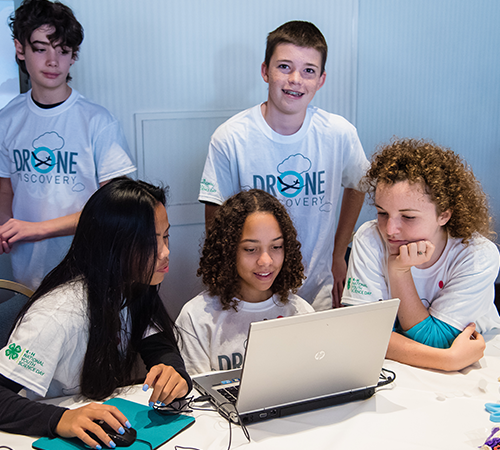
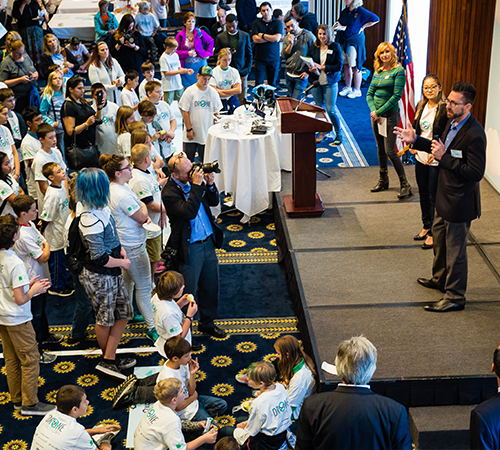
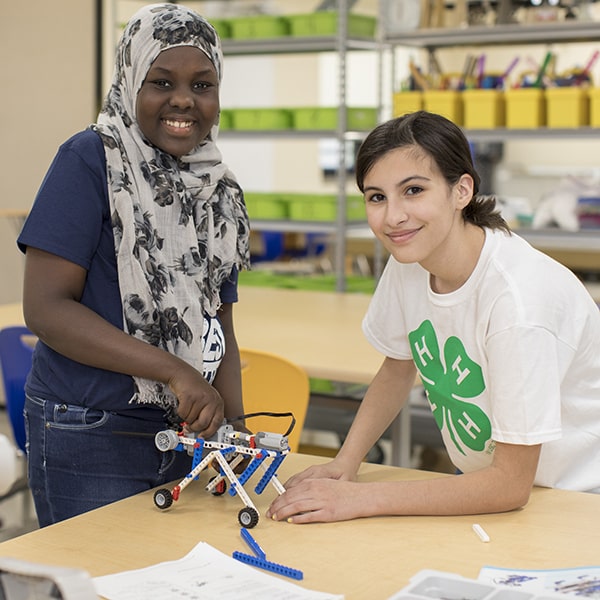
On August 8, Ava Lonneman, our 2017 4‑H Youth in Action STEM pillar winner, hosted a 4‑H National Youth Science Day preview event at Hughes headquarters for local students from Montgomery and Frederick County, Maryland. Ava shared her 4‑H story and helped the young engineering teams design their very own wearable fitness monitor, complete with a programmable Wi-Fi enabled microcontroller and sensors for monitoring data on a smartphone, tablet or laptop. Some participants were so excited about optimizing their health monitor that they opted for a wearable glove to better track movement data! You can watch the highlight video here.

Don’t miss the chance to be part of the 2017 4‑H NYSD event! Click here to order a kit for your club today. For more information on HughesNet’s STEM partnership with 4‑H, please visit www.hughesnet.com/4H.
4‑H recently announced a nationwide collaboration with Bayer to address the need for an enhanced STEM (science, technology, engineering and math) workforce by planting a love of scientific exploration in thousands of youth in urban and rural areas across the country. The new program, Science Matters, is designed to equip at least 25,000 students with the tools they need to deepen their understanding of science.

Check out the new infographic, which perfectly demonstrates why science matters!

Learn more about the 4‑H and Bayer partnership!

With less than four months until the 2017 4‑H National Youth Science Day event, excitement is building as 4-H clubs, schools, after-school programs and more are preparing for this national youth-led science experiment. Watch as the University of Nebraska-Lincoln – developers of the 2017 4-H NYSD Challenge, Incredible Wearables – shares the importance of 4-H STEM programming and check out the new engineering challenge in action!

There’s still time to pre-order the official 4-H NYSD Challenge kit from the 4-H Mall at a discounted price. Visit the website to purchase your kits today.

Learn more about 4-H National Youth Science Day!

When it comes to creating success in one’s career, sometimes the greatest obstacle can be ourselves. Lori Dawson has experienced this challenge firsthand. While her journey in the field of engineering began with the desire to solve complex problems by interacting and communicating with others, speaking up and using her voice was a struggle. As senior director of Engineering and Network Operations at U.S. Cellular, Dawson admits that very early in her career, she struggled with having confidence in her ability.

“I would often know the answer,” she recalls, “but hang back and allow others to speak and then I would speak up in support of their answer.”

Now, after learning to “jump in and speak up,” Lori Dawson understands the value of growing confidence in young people, and she is committed making learning opportunities available at an early age through the 4-H/U.S. Cellular partnership.

She shared her insights on why it’s important for organizations to attract diversity in science, technology, engineering and math (STEM) fields, and how 4-H and U.S. Cellular are working collectively on these efforts.

What do you think are the current barriers to achieving more diversity in STEM career fields?

Lori Dawson (LD): I believe one of the barriers to achieving more diversity in STEM career fields is the opportunities available at a young age.  Today there are many opportunities to participate in various sporting events for young children but very limited opportunities for those interested in STEM. Children need STEM activities that are fun, challenging and rewarding to attract more diversity to the field.


What can organizations do to get more girls interested in STEM careers?

LD: I believe organizations can assist with attracting girls to STEM careers by allowing girls into the organization for job shadowing or internships.  Also, organizations should strengthen their involvement in the community, bringing to life what STEM careers are available and the rewards that come with those careers.

expertseries-usc-boys


Why do you think the 4-H/U.S. Cellular partnership is critical for sparking STEM interest in youth? How has the partnership been successful?

LD: I see the partnership between 4-H and U.S. Cellular as critical for the future of our youth and the success of U.S. Cellular.  From a 4-H perspective, U.S. Cellular can assist 4-H in bringing to life STEM opportunities and U.S. Cellular will benefit from the future leaders that 4-H is developing as they are our next technology leaders.

Recently, U.S. Cellular has ventured outside of their STEM partnership with 4-H, now serving as a sponsor of the 2017 4-H Youth in Action Award Citizenship Pillar. How does the topic of community service align with U.S. Cellular’s mission and values as an organization?

LD: Community service and involvement are the core to who U.S. Cellular is.  The Engineering teams at U.S. Cellular live and work in the markets they serve.  All associates are encouraged to get engaged in the communities where they live and work.


How do you think 4-H is preparing today’s young people, particularly girls, to be leaders in life?

LD: I believe 4-H has a history of developing strong leadership skills by developing, communication, and confidence in our youth.  4-H assists our youth in developing and practicing critical thinking skills.  4-H not only does this for young girls but all young people engaged in 4-H.

expertseries-usc-girls


What are your thoughts on ways we can encourage young women to pursue entrepreneurial and leadership opportunities?

LD: I think from a very young age we need to encourage young girls to actively participate in science and math classes.  To reward their participation and challenge them to think differently.  We also need to look for and encourage opportunities for young girls to get involved in activities such as 4-H, Lego League, etc.


What is your vision for the next generation of women in STEM and leadership?

LD: I see the next generation of women in STEM leading the way for significant growth in technology.  The technology marketplace is growing at a pace faster than ever, and I see women developing the vision and leading through the technology evolution.


Learn more
about the 4-H and U.S. Cellular partnership.
Winning the 2017 4‑H Youth in Action STEM Pillar Award is a life-changing experience. There have been so many wonderful adventures that I don’t know where to begin! The Legacy Awards dinner was awe inspiring. There were so many people who were supportive of 4‑H and its mission. Everyone was so interested in me and my accomplishments. Representatives from HughesNet, my pillar sponsor, were such great people, and I really enjoyed sitting down for dinner with them.

The few days I spent in Washington, D.C. are some of the most amazing memories of my life. I was fortunate enough to meet and spend time with the three other pillar winners — Amelia, Bryanne, and Bubba — who are amazing youth inside and out. They have a passion and genuine drive for helping those in their communities and being True Leaders. Although the time we spent with one another was short, I feel we have made lifelong friendships.

Over the past two months, I have been provided the opportunity to meet so many amazing new and influential people. From the camera crew out of St. Louis to the National 4‑H Council staff in Washington D.C., and even the Council President and CEO, Jennifer Sirangelo (I was a little star struck). The entire experience has been mind-boggling. There are times when I sit and think, “Wow, did all of this really happen!?” When first receiving the news that I had been selected as the 2017 STEM Pillar Winner, I was honestly in utter disbelief. I was so excited, I didn’t know what to do.

While the experience has been extremely rewarding and exciting, it has also been slightly overwhelming to comprehend the positive impact I can have on youth at a national level. I am looking forward to getting youth and adults involved in bringing hands-on STEM programming to their communities, and bringing awareness to learning disabilities and the lack of women in STEM fields. I am so thankful to have been chosen as the 2017 4‑H Youth in Action STEM Pillar Award winner; now I can make an impact on a much larger platform.


It’s only April, and we are already getting excited for the 2017 4‑H National Youth Science Day Challenge, Incredible Wearables, which will take place October 4, 2017!

This year’s challenge was developed by University of Nebraska-Lincoln and incorporates the fast-evolving field of wearable technology, teaching kids to not only use technology but create it. During the innovative, hands-on project, these future engineers must work together to design, build and refine a wearable health-tracking device that is easy-to-use and aesthetically appealing.

Ready to start preparing for your local 4‑H NYSD event? Kits are now available for pre-order on the 4‑H Mall at the discounted price of $23.95! Each kit can be used by up to 10 kids at once and are completely re-usable.

Want to learn more about the 2017 4‑H NYSD Challenge? Check out the video to see what’s in store!

Looking for the latest in 4 H National Youth Science Day news? Visit our website to sign up for our monthly 4‑H NYSD newsletter. You’ll be the first to know about exclusive offers, receive exciting STEM content, and much more!

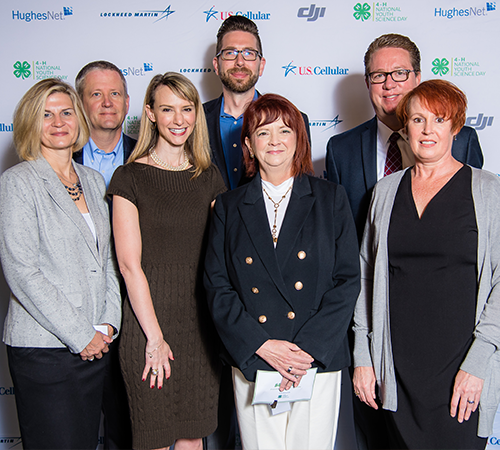
Thank you to 4‑H NYSD National Partners, HughesNet, Lockheed Martin and U.S. Cellular, Signature Partner DuPont Pioneer, and Official Partner CA Technologies.

Special thanks to SparkFun Electronics for supporting the development of the Incredible Wearables challenge.

“Dream big…and I mean really big!”

This was 4-H alumna Peggy Whitson’s advice to youth from the 4-H Clubs of Houston and Hartsfield Elementary School in Texas during a twenty-minute interview on March 3rd, 2017. And such advice is not to be taken lightly when you consider that it was given by someone 250 miles above the Earth’s surface traveling at 17,500 miles per hour.

You see, Peggy Whitson is an astronaut currently living on the International Space Station.

“It is important for young people to dream big,” Whitson told the 4-H’ers. “And I mean really big. Think about things you might not be able to imagine yourself doing. And then imagine yourself there. And then pursue it as a goal. Because you can accomplish it!”

And if there’s anyone who has followed that advice, it’s Whitson herself. Not only was she the first female commander of the International Space Station, but she was also the first female Chief of the Astronaut Office at NASA, the organization’s most senior leadership position for active astronauts. Dr. Whitson is currently tied for most spacewalks by a female astronaut in history (a record she’ll break during her current or next mission), and will soon hold the record for most days in space for a United States astronaut.

When asked how she feels about breaking records, Whitson told the 4-H’ers, “I think setting records in exploration is very important. It shows that we’re advancing in our capabilities.” She went on to add, “I hope that young people, in your futures, will surpass all the records that you encounter.”

Talk about a dreaming big.

Throughout the course of the interview, Whitson answered questions on everything from her education to her research to her career as an astronaut, and of course, to her time as a 4-H’er.

So meaningful was her time in 4-H, that when asked about her most memorable experience, she didn’t need a moment to think about it.

“That’s an easy question,” she said with a smile, before telling her interviewers that 4-H helped her overcome a childhood fear of public speaking. From speaking to her local club to speaking in space, Whitson credited 4-H for helping her conquer her fear of public speaking, turning it into a skill that would help her throughout her career.

The interview is a fascinating look into the lives of people who, quite literally, live at the edge of the world. At the end of her interview, Whitson encouraged the youth interviewing her to “look for questions, and try to answer them.”

After all, it’s worked well for her.

To watch the interview, click here.

Raise Your Hand as a 4-H Alumni!
Peggy Whitson shows her pride as a 4-H alum; now it’s time for you to share yours! Raise your hand and identify as a 4-H Alumni: 4-h.org/RaiseYourHand
From a young age, Michelle Munson loved learning. As she was growing up, her parents encouraged her to explore her interests in science, technology, engineering, and math (STEM) both at school and in 4‑H. Her experiences gave her the desire and confidence to pursue an undergraduate degree and two graduate degrees in STEM subjects and to launch her own software company, Aspera.

I had a chance to speak with Michelle about women in STEM and how early experiences can build the framework for later success.

When did you first know STEM was the path for you? Is there a particular moment or experience that sparked your interest?

Michelle Munson (MM): There wasn’t a single moment. There were many, many moments, both at school and in 4‑H. My parents were focused—not just on learning, but also on the practical applications of learning. When I was as young as seven, my mom helped me make some very advanced clothing designs that I would sew from scratch. We also did computing projects—when I was in fourth grade, my mom and I developed a database to keep track of what I was doing in 4‑H.

I stayed in science and engineering because I loved math and science and saw that they had a major impact on the world. I also wanted to create new things. My dad is a farmer who grows crops and raises animals, and my mom is a professor. They both emphasized the value of applying my knowledge to create things, so I ended up choosing engineering because it’s the application. I started a software company where we make new products from the ground up—that’s what I do for my job.

Tell me about the challenges you face working in STEM.

MM: I think the number-one challenge of STEM is it’s hard. The joy comes from mastering difficult subject matter. The problems that we tackle at Aspera are hard. There are no clear answers. The counterpoint is the joy of succeeding when you’re able to advance your own knowledge and reach solutions to complex problems.

Did you face challenges as a woman in STEM?

MM: I think that any challenges were hugely mitigated for me because of my environment. I started doing STEM-related projects when I was young, and quite honestly there was no discussion of being a girl. It just didn’t enter the conversation. I think one of the great things about 4‑H is that it is very balanced in that way. Girls and boys do the same projects—they do them together—and moms and dads are equally involved.

How did the skills you learned in 4‑H influence your career?

MM: The most important skills I learned were public speaking and leadership. Every moment of every day, everything I do relies on being able to communicate effectively, both in speaking and writing. In 4‑H, we did so much public speaking, as well as a lot of writing, to record our projects. I also had leadership roles the entire time I was in 4‑H.

When did you decide entrepreneurship would be your path?

MM: I didn’t make a decision to start a company until I was about thirty. But I think 4‑H gave me many of the skills I needed, as well as the courage and the comfort level with independent projects. I’d been doing independent projects in 4‑H since I was seven, and building a company is very much like that. You use all of yourself—all skills and all aspects. You form something that no one has ever done before. You have to implement your own plan. It’s typically ridden with lots of challenges you have to overcome. It’s very similar to many 4‑H projects.

That’s the essence of leadership, learning to work with people in your own peer group to get things accomplished. And I believe 4‑H does that better than anything in the world.

How do we get more girls and minorities in STEM? What barriers are there?

MM: We have to get young people involved as early as possible. This is where 4‑H projects are so wonderful. You learn the subject in a practical way from a very young age, and it helps you develop an interest in it. 4‑H has no limits to the types of projects you can do in all aspects of science. They help young women develop a sense of independence and counter all of the tendencies that deter confidence in science and math.

How can we get young women more involved in leadership roles?

MM: The same way—4‑H does something very special: it asks young people to start leading their peers when they’re seven or eight years old. You’re responsible for sending out the e-mail or making the phone call to organize the meeting or project, then standing up at the meeting and presenting some information and playing a role in that meeting. To me, that’s the most formative thing. From an early age, you develop a sense of self and self-confidence, and it can build on itself as you get older into middle school and high school. That’s the essence of leadership, learning to work with people in your own peer group to get things accomplished. And I believe 4‑H does that better than anything in the world.

What advice would you give young girls or women starting in STEM?

MM: Stay in the field. Don’t stop. It’s too fantastic to deviate from. And enjoy it. What’s great about science is there’s no limit to what you can learn and there’s no limit to what you can do with it in your career. It’s the foundation of society now, and its practical impact is unlimited.

For two consecutive years, U.S. Cellular has proudly supported National 4‑H Council and 4‑H National Youth Science Day (NYSD). It is a wonderful way to introduce young people to the wide range of ways that Science, Technology, Engineering and Math (STEM) education is used every day in hundreds of careers. When our associates spend time with 4‑H youth in our local communities, our hope is that the kids see how what they are learning today can lead to fun and interesting careers down the road.

In my engineering role at U.S. Cellular, I get to work on many unique and challenging projects, and it’s the part of my job that I love the most. Wireless technology moves so fast that there is always something new to learn or a problem to solve. And while you may think that we engineers are sitting by ourselves at a computer all day, that couldn’t be further from the truth. I get to work with amazing people every day, and we combine our STEM knowledge together to overcome challenges that we face – all with the goal of ensuring that our customers have access to a fast data network and that their phones work when and where they need it.

USCellular-NYSD-Lori-Dawson-blog


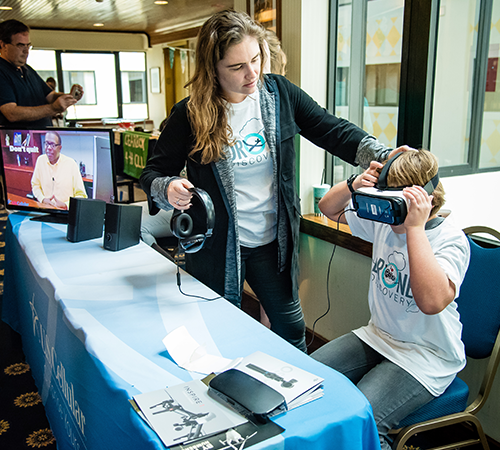
This year’s 4‑H NYSD theme of Drone Discovery is especially relevant in the wireless industry. As the industry learns more about the capability of drones in real-world applications, we are watching closely to determine how we can implement this technology into our work. Possibilities include using drones to assess damage to cell sites when roads are closed due to severe weather, testing network signals on high-rise buildings, and routine tower inspections. As someone who owns two drones, I am thrilled that 4‑H youth are learning about them now, and I can’t wait to see all of the new ways they will show us how they can be used in the future.

Over the past month, U.S. Cellular associates have worked with hundreds of 4‑H youth at eight 4‑H NYSD Drone Discovery events, and seeing the creativity and energy that the young people bring has been very inspiring. One of the most fun parts of working with drones is just seeing what you can make them do. Having young people with a strong background in STEM education is critical to the ongoing evolution of how we create and use technology, including drones.

U.S. Cellular at 2016 4‑H National Youth Science Day
Tony Frank is the president of Colorado State University, Chancellor of the Colorado State University System, and a 4‑H alum. He had some of his earliest experiences with STEM (science, technology, engineering and math) subjects in his local 4‑H chapter in rural Illinois, before going on to earn a college degree in biology and a doctorate in veterinary medicine. He also had some of his first leadership experiences in 4‑H, and now leads a university with more than 29,000 students.

I was pleased to have the opportunity to speak with him about 4‑H when he was growing up, and where it’s going today.


You were in 4‑H in the 1960s and 70s. What kinds of things were 4‑H’ers doing then?

Tony Frank (TF): A lot of livestock and farm projects. I did cattle and hogs, some veterinary science projects—which wound up becoming my career when I went on to vet school after college. And as I went through 4‑H, I held a lot of officer positions—secretary treasurer, president, vice president.

Did you learn any skills in those 4‑H leadership roles that you use today as president of Colorado State University?

TF: Virtually everything you need to know as a leader you experience in those 4‑H offices. As secretary, you learn the importance of getting other people involved to get work done, and as treasurer you learn the importance of the trust that comes with dealing with other people’s money and funds. As the vice president, you learn to put other people first, and then as the president you learn what it’s like to represent a group of people.

At the end of the day, it’s those basic things—how do you get people involved, how do you make sure everyone’s voice is heard, how do you represent your constituents faithfully—those are the things good leaders have in every organization.


I’m happy to hear that, because developing leadership skills is still very important in 4‑H. We still have those roles and try to create more leadership positions so that more young people can learn critical life skills.

TF: I don’t think I realized at that time what I was getting out of those 4‑H leadership roles. I think without realizing it, I was part of one of the greatest leadership programs out there, and that’s 4‑H.


Did you learn anything else in 4‑H that is relevant to your life today?

TF: One of the first science-oriented projects I ever did was a 4‑H project. It was keeping track of data in a livestock project. There were many pieces of that which came to replicate my tasks later on as a researcher.


As an educator, do you think 4‑H does a good job of getting kids interested in STEM?

TF:  4‑H finds exciting ways to draw young people into STEM. Those might be animal-related projects, rocketry projects or robotics projects. Those are all great ways to get young people involved, but the important things are the underpinnings. Not only are there a lot of job opportunities in STEM, but it’s also a critical aspect of what we do as a country. It’s critical to our global economic competitiveness.


Were you thinking about any of these things back when you were 18 and in 4‑H? What was important to you then?

TF: The world was a much smaller place in general back in the late 60s and early 70s. I certainly didn’t have much of a worldview. If I were to tell you what my greatest goal was, it was probably to get an 8-track player for my pickup truck.

Today, 18-year-olds are a lot more focused on their future and more connected to a much larger world. I think 4‑H helps open the world up for a lot of kids.


What did you wish you knew when you were 18?

TF: I wish I had known that there were so many opportunities out there. There were so many more things that I could have participated in through 4‑H, like state-level leadership activities, the national organization, and even international opportunities.  Those things add a great deal of value, and I sure wish I knew those opportunities were there.


As the head of a university, you work with plenty of young people. What advice do you give your students who are 18?

TF: First, take advantage of all the opportunities that are out there. There are always more opportunities than you realize at 18.  Just dig in and immerse yourself; get involved in as many things as you can because they’ll all benefit you.

And secondly, know that there’s a lot of time ahead of you. I think that there’s a sense of urgency sometimes. At 18. you don’t realize that you have a very long life ahead of you. So while you should immerse yourself in your opportunities, you should also take risks and try things. Some things won’t work out, but you’ll have a lot of chances to redirect. Over the course of your life you can have so many opportunities to serve in leadership roles in your community. You’ll find the right place to make a difference.


Anything else you want to add about your 4‑H experience?

TF: I want to thank all the volunteer leaders. They made a big difference in my life and I know in the lives of so many other 4‑H’ers.