




- 2 large eggs
- 2 tablespoons milk or half & half
- salt and pepper to taste
- 1 tablespoon butter
- 1/4 cup filling of your choice (I like sausage, grated cheese, sautéed bell pepper)
Cooking Instructions:

Whilst we load your content.
Participating in 4‑H has been one of the most rewarding experiences I could have ever imagined. It afforded me with a launching pad that equipped me with a support system, skills, and space to dream. It conditioned me to never settle for mediocre and to strive to always rise to the occasion. The consistent mentorship and encouragement I received during my time in the 4‑H program produced a ripple effect of impact that is reflected in every aspect of my life.
My 4‑H career began just before the fourth grade, thanks to my mother being employed by the University of Tennessee Extension. Having the opportunity to be exposed to other youth and community leaders who displayed a passion for helping youth confirmed that 4‑H was a place I wanted and needed to be. Over the years, the sheep and goat projects developed into leadership and citizenship activities. These moments inspired my career path as a Family and Consumer Sciences Agent for UT Extension and prepared me to educate others to assist them in finding real-life solutions.
4‑H has shaped me as an individual by providing caring mentors along the way. As a high school freshman, I decided to take on the challenge of running for Congress Speaker of the House. I sought out the counsel of one of the older 4‑H members in my county, who shared with me their secret to great speeches. He said the key to being a great speaker is not to simply tell a story, but to make a connection. If he knew it or not, establishing a meaningful connection was not only the secret to great speeches, but the secret to great leadership.

Early in my 4‑H career, I had the opportunity to interact with Jennifer Sirangelo. Through our continued interaction, she showed me what it meant to be compassionate for others, to stand for what you thought was right, and to face challenges head-on. As a great mentor does, she challenged me to operate outside my comfort zone on a regular basis and to pour into others just as others had for me. The service mindset prepared me to enter into a field that strives to serve and empower others. This is just one example of the power of mentorship. They often see the things in you that you don’t see in yourself and help you grow the underdeveloped parts of you that will aid in becoming a leader in your field.
In a world that is so accustomed to being dominated by men in leadership roles, it was imperative for me to find a network of hardworking and passionate women to help mentor and guide my career. It has been so rewarding to be connected with other women who are committed to the mission of making this world a better place. To be on the receiving and giving side of mentorship is a learning experience for both parties. It reinforces the idea that each step in the right direction for one is a part of a leap in the right direction for us all.
My very first 4‑H demonstration was entitled “Omelet Up!”. When I started putting the demonstration together, I didn’t even know how to make one myself. Needless to say, a few YouTube videos later and a lot of practice, I became a star omelet maker.
As my demonstration advanced through San Joaquin County, North Central Section, and finally on to the California State level, I would beef up my speech with chicken and egg facts. I would tell the audience that a chicken lays an egg about every 26 hours. You can determine the color of the egg a chicken will lay by looking at the color of the earlobe. If you raise your own laying hens you might notice a spec of blood inside the egg. This defect is called a blood spot, and although it does not look appealing to the eye, it is safe to consume.
I like to start my omelet with two eggs and a splash of milk or half and half. It is important to season with salt and pepper. I melt a tablespoon of butter in a nonstick pan over medium-high heat. Then, I pour in the whisked egg mixture.
The most important part of the process is how you cook the egg. You don’t want the pan to be too hot and brown the egg. We are looking for a gentle heat. Use the idea “dig a hole and fill it”, moving the cooked egg from the outer edges into the center, allowing the remaining liquid egg to fill the holes you’ve just made.
The filling can be anything that tickles your fancy. I like cheese and bacon crumbles. Just make sure that your ingredients (bacon, sausage, peppers, onion, etc.) are pre-cooked and warm. As soon as you put in the filling, your omelet is done cooking so the ingredients won’t have time to heat up.
Fillings can be completely vegetarian or a meat lover’s dream. Any leftovers? Omelets are a great way to repurpose leftover meat and vegetables.
Cooking Instructions:


The joint interview is a follow up to the 2018 book “Land-Grant Universities for the Future: Higher Education for the Public Good,” and its discussions on the impact of Cooperative Extension as well as land-grant universities’ connections with the community.
Here are a few highlights from the article:
The EvoLLLution: What are some of the challenges that universities typically face when it comes to creating accessible and relevant programming for K-12 learners?
Gordon Gee: One of the biggest problems is that universities largely have become disconnected from public education. Some of this disconnect has come about through arrogance. Here, universities are operating under the assumption that they can simply sit back and wait for the K-12 system to do its work before receiving its students for a final round of educational polish. Universities should be actively creating relationships and partnerships with public educators. In fact, they should be getting back into the business of creating laboratory schools, especially regarding the development of innovative models that unite educators from campuses and communities in the common purpose of educating our youth.
How does the mission and work of 4-H align with land-grant universities and their Cooperative Extension Services?
Stephen Gavazzi: 4-H is a program run by Cooperative Extension Services, and Extension was established through the Smith-Lever Act of 1914, the third of three major congressional actions that formed the basis for our three-part land grant mission. Land-grant institutions must transcend the urban-rural divide by focusing on what is good and right for all our nation’s communities, regardless of their geographic location. Cooperative Extension Services in general and 4-H programming more specifically must help land-grant universities achieve that objective. In 1914, undoubtedly there was a major focus on rural youth and more agriculturally based activities. In our modern era, we are witnessing some significant growth in 4-H programming that reaches youth in more urbanized locations. For that reason, 4-H now represents one of the land-grant university’s best efforts to connect the urban-rural divide.
Why is 4-H programming relevant in the 21st century?
Jennifer Sirangelo: One of the most important roles that 4-H plays today is in working alongside the nation’s public school system. As an organization founded by educators, 4-H knows schools cannot do it alone. Across the U.S., 4-H is able to support and enhance what is happening in the classroom through hands-on leadership experiences that are proven to develop their skills and ability to lead. This kind of leadership development has always been important to our country’s well-being, but we believe this work is even more relevant now. We need leaders who engage others, who have confidence in their own abilities, who think about the needs of others and are giving back to their communities. The role of 4-H is to the develop community members who are civic-minded individuals with valuable strengths and real influence to improve the world around us.
How can land-grant universities and Cooperative Extension Services better support 4-H programming in the years to come?
Karen Pittman: I would take this back to the fact that Cooperative Extension Services exists inside of land-grant universities that have made a commitment to increased diversity. And I would encourage these universities to hold themselves numerically accountable. To not only make these verbal commitments, but to begin to discuss where they are and where they are not making progress by referring to data that has been gathered about various efforts to make themselves more diverse. That would include evaluative information about activities inside of Extension efforts in general and more specifically within their 4-H programming.
Visit EvoLLLution.com to read the feel interview!
It was the week before Christmas Day 2018. My family and I were in our vehicle, traveling to Illinois to visit family over the holidays. Still a bit groggy as I had just woken up from a great nap, I received a phone call from a number I did not recognize. I had been expecting a call, and the suggested caller was National 4‑H Council. Anxiously, I answered. Suddenly, my jaw hit the floor, as I received the news that I had been named the 2019 4‑H Youth in Action Award Winner in Civic Engagement. My mind began racing at the thought of all the grand opportunities and individuals I knew I would encounter along this journey, and the reality is… I was not wrong.
I had just started the Alma Entrepreneur Tour, a project that connects rural youth to successful entrepreneurs in our community to highlight the importance of persistence, resilience, and individuality—specifically in the workplace. My fantastic 4‑H agent, Leah Wooddall, approached me about applying for the Youth in Action Awards, but I quickly declined and told her I was not qualified and would never stand a chance against the other applicants. Meanwhile, I continued with my project, and it was extremely successful! I had known about the 4‑H Youth in Action Awards program for a few years; especially because my biggest role model of all time from Georgia 4‑H was named a pillar winner in 2018. However, never in a million years would I have thought that I could accomplish the same thing. Zooming up to present day, I stand in awe of the fact that I am being seen by others in the same light that I still view my biggest role models.
If you have ever considered applying for the 4‑H Youth in Action Awards program, I strongly recommend you do, regardless of how qualified or experienced you are! I decided to apply two-and-a-half hours before the deadline and clicked “submit” 30 seconds before it was due, and look where I am today. I am just a South Georgia boy with a passion for empowering others to be confident in themselves and a story of self-love and acceptance. To think that something as simple as making the decision to live my truth has earned me the platform I have today is mindboggling. You see, I did not have to do anything bizarre to earn this award. I just decided to be myself and take action for something in which I believed. Sometimes, though, that is the most bizarre thing one can do. You might be surprised by how much good can come from making the decision to shine your light. I know I was.


“Bob Baffert is a fellow 4-H’er. We both grew up in 4-H,” Nettles shared. “So I’m definitely going to be betting for some of his horses for sure.”
And yes, two-time Triple Crown winner Bob Baffert had three horse in the race. While he was hoping to secure the historical title of three-time Triple Crown winner, his horses, Game Winner, Roadster, and Improbable, placed 4th, 5th and 15th, respectively.
In March, Bob Baffert attended the 10th annual 4-H Legacy Awards, where he received the Distinguished 4-H Alumni Medallion. Before accepting the award, he shared how 4-H prepared him to become the successful horse trainer he is today.
“I learned to communicate with these animals, and [4-H] really helped me through the years,” he said. “So it really helped me down the road to pick horses out, which turned out to win Kentucky Derbies.”
Let’s be honest, STEM can be intimidating to adults, so of course it’s not surprising it is for kids too – especially for those who haven’t been exposed to the topics often. Trying new things can be scary, so a perfect way to overcome any fears is to introduce new ideas in creative ways.
Paula Bendfeldt-Diaz, an author for the Growing Up Bilingual blog, curated her favorite STEM projects she made with her son. Check out her projects below, and download our Spring Activity Guide for more fun projects to do with your family.
Here are her top picks:
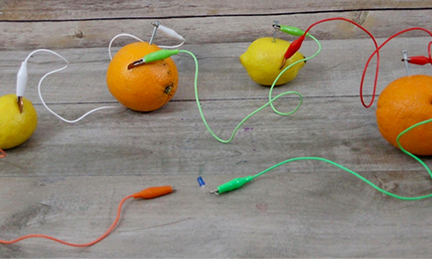
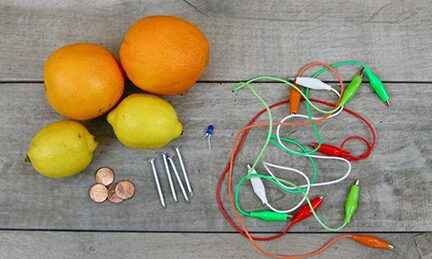
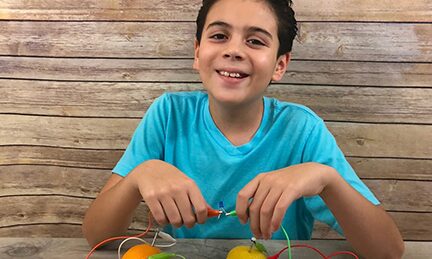
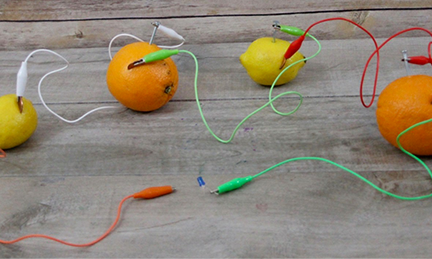
Build a battery out of fruit and explore how electric circuits work and whether or not chemical reactions create electricity. (It does.)
Materials:
Instructions:
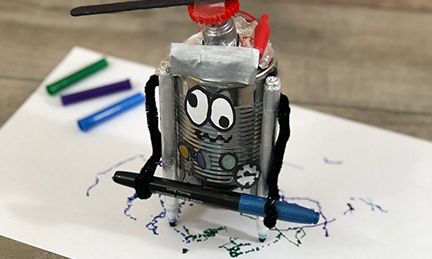
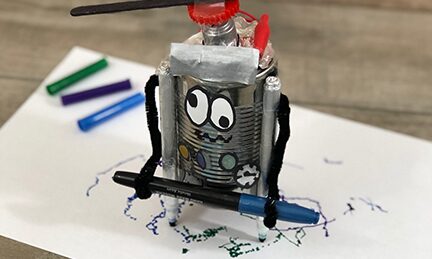
You can create an easy robot at home that will teach kids basic concepts about motors and engineering concepts. Paula originally followed the 4‑H Inspire to Do Activity Guide, but her son ending up making some changes to the original concept and create his own invention – we’re going to share their instructions!
Materials:
Instructions:
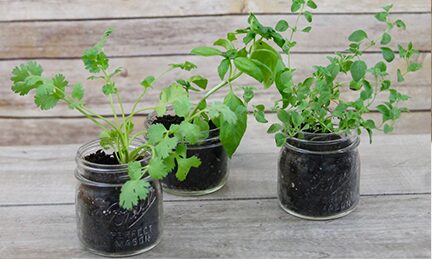
Growing herbs connects the family to the earth and teaches kids how plants grow. It’s also a great way to get the family cooking with different herbs and tasting new flavor combinations! If you don’t have outdoor space or are just a little weary of starting a full garden, start small by growing herbs in mason jars first!
Every herb is different. Some need more water, some like direct sunlight while others like partial sunlight or shade. Before planting, do some research online or at your local library and find out what each herb needs. If you plan on cooking with your herbs (of course you are!) also think about what kind of dishes you’ll be cooking and how your herbs will incorporate into those.
Don’t forget to check out more activities to do with your family by downloading the Spring Inspire Kids To Do Activity Guide!
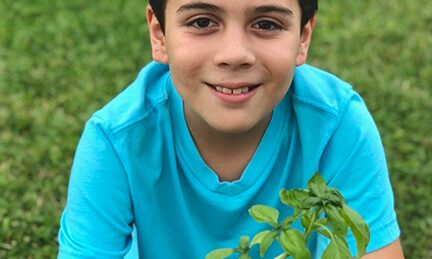
In this week’s journal entry, Ethan demonstrates kindness through the themes of not judging a book by its cover, leaving your comfort zone, embracing change, keeping an open mind. He shares how these themes taught him to love all animals, allow himself to grow, and let go of prejudice.
While Ethan is trying to tidy up Blue the horse’s pen in “Pony Blues” (S01E09), Olivia lets Houdini the rat escape his cage. Ethan is not the biggest fan of rats — he loves most furry creatures, but has a hard time wrapping his head around keeping a rat as a pet. However, he sets his work aside and helps Olivia search anyway, and learns a lot about rats along the way. By the end of the day, Houdini has is found and Ethan volunteers to look after him!
Dear diary,
When I started volunteering at Rescue Ranch, I thought I would just be looking after horses and maybe playing with a goat or two — maybe the occasional donkey. I had no idea I was signing up to look after rats! Any other day and I would have been coming to you with a horror story about how creepy and scary rats are, but to be honest, they’re really not as bad as they seem. I definitely didn’t start my day feeling this way, though.
So, after school, I came to the Ranch like usual. It was my job to tidy up Blue’s pen so he can be nice and comfortable when he arrives. He’s a new horse to the Ranch and we try to take extra care in the first few days so new animals can get used to their new environment. Olivia was cleaning out a cage nearby — I thought it was for a bunny, but she told me it was actually for a rat. I had no idea we boarded rats, and had no idea why we would. Who wants to keep a creepy pest as a pet? Don’t rats carry diseases? Before I could even find out, my worst fear became a reality: not only were we boarding a rat, but it had escaped.
I wasn’t too thrilled about it, but Olivia and I formed a search party and started looking. She told me the rat’s name was Houdini and that he’s escaped before. His name makes a lot of sense I guess — although I doubt he could escape from a locked box underwater like the real Houdini. I let Olivia know that I don’t like rats but wanted to help her anyway because I knew how much doing a great job taking care of the animals means to her. For a girl who’s a little nervous around reptiles and other creepy crawlies I thought she would feel the same about rats, but she actually seemed to really like them. She told me all sorts of facts about how different domesticated rats are from wild ones: they’re bigger because they can eat a healthier diet, and they’re more colorful and super clean as well. They also make themselves comfy spots to rest and groom themselves, almost like a nest. I didn’t know any of this before — rats were starting not to sound so bad after all.
When Olivia said they like to make comfy nest-like spots, I had an idea of where Houdini might have gone. Sure enough, he was right where I thought he was: resting on the pillow on top of the haystack I’d made for Blue! Kind of greedy, but I guess it would be hard for a tired rat to pass up such a comfy spot.
When I saw him calmly grooming himself, I started to think about rats differently. I had this idea of rats as gross, dirty animals who always ran away from people and somehow also made them sick, but Houdini is nothing like that. He’s super clean, and he loves to play — after his nap, we fixed up his running wheel and gave him a ball to play with. I guess it goes to show that sometimes you think you’ve got something (or someone) figured out, and you find out you were totally wrong. In this case, I’m happy I was wrong — I would have never met my new favorite member of Rescue Ranch otherwise! Well, favorite except for the other Ponysitters of course ? Catch you later, diary!
Did you know that kids can become a real member of the Ponysitters Club? Learn how to join and be sure to inspire your kids to be doers by downloading the 4‑H Inspire Kids to Do Activity Guide!
Since a 4‑H’er from my state and county won the 4‑H Youth in Action Award several years ago, my mentors and peers motivated me to pursue this amazing opportunity to represent 4‑H youth across the country. When I applied for the award, I was hopeful that National 4‑H Council would see all the amazing work that I have done in the field of STEM. After a few months went by, going through the interview and waiting for some time, I found out I was selected from many incredible youth as the HughesNet-sponsored 2019 National 4‑H Youth in Action STEM Pillar Winner. My family was so excited for me to be recognized at such a prestigious level.
Attending the 2019 4‑H Legacy Awards was such an incredible opportunity to see how 4‑H has grown since the beginning of its era. I got to meet such influential role models and hear their 4‑H stories and how 4‑H has impacted them in a positive way. I also got the amazing opportunity to meet the other pillar winners. Addy Battel (Agriculture), Mason McClintock (Civic Engagement), and Elisabeth Watkins (Healthy Living) are not only youth that are catalyzing incredible change in their communities, but also are some of my amazing friends who I get to work with this year!
The trip to DC was amazing and gave me a new perspective on the nation that we live in. I got to learn about the history of the United States, learn how to represent 4‑H through media outlets and just meet some incredible people, like the National 4‑H Youth Advisory Committee. I would tell anyone who is interested in applying to just show your passion and personality. The work you are doing is great; share your personality and show how you stand out from others. I am honored to represent all things 4‑H and promote STEM to youth as well as to promote the mentoring that 4‑H offers, which started my 4‑H career.


In this week’s journal entry, Olivia demonstrates kindness through the themes of responsibility, vulnerability, empathy, nurturing, parenthood. She shares how these themes allowed her to express kindness by accepting responsibility and treating animals with love and care.
In “Springtime Foal” (S02E010), Olivia is enjoying taking care of a group of baby ducks with Trish and Ethan when it becomes clear that they’ve “imprinted” on her — they think she’s their mother! Now, this accidental mama duck has to teach her babies everything she knows (and lots she doesn’t know) about how to be a good duck. It’s a valuable confidence and empathy building experience for Olivia, who doesn’t come by her animal whisperer skills as naturally as some of the other Ponysitters. Plus, they’re super cute (obviously).
Dear diary,
I never thought I’d be saying this, not for a looong time anyway, but being a parent is hard work! I mean, I’ve only been raising ducks for one day and I’m exhausted — how does anyone have the energy to raise human children? Okay, let me back up. We recently took in some new ducklings from a lake not too far from Rescue Ranch. I guess their mother got into a boating accident, but the boat owner was kind enough to notice that she had eggs that were about to hatch, so he gathered them up and brought them to us right away so they didn’t freeze or hatch with no one around.
After they hatched, Trish and Ethan helped set up a little pen for them and I got a hot water bottle to stand in as a mother until we could talk to Skye and Grandpa and see how they thought we could help them. They didn’t seem to take to their water bottle mama at first, so I hopped in the pen with them and tried to show them that it was okay. They still didn’t care about the hot water bottle, but they sure took to me! They huddled around my feet and gave me little nips with their little beaks and followed me all around the pen. I had become their new mother duck!
Diary, I don’t think I have to tell you that I don’t know the first thing about being a duck, let alone a mother duck. Billy told me that the ducklings had “imprinted” on me — apparently, when ducklings are born, they latch onto the first moving thing they see and follow it around. It’s supposed to be their mother, but it can be just about anything, from a dog to a model train to a human girl apparently!
I didn’t ask for it, but I knew I had a responsibility to these poor confused ducklings to be the best fake mama duck I could be. I got them to practice walking in a line, hopping over some small logs, and Grandpa brought in a kiddie pool for us to splash around in. Those little duckies have SO much energy — you’d think after fighting your way out of an egg you’d want a bit of a break! Billy helped blend up some food for them as well — I may be a pretty good duck mom but I am NOT qualified to chew their food for them.
I really came to love my new little friends in a hurry and it made all the hard work keeping them active and busy feel like just playing and having fun. When it was their bedtime I reintroduced them to the hot water bottle, and this time they all huddled around it and went straight to sleep! I guess they just needed someone they trusted to show them it was okay. It made me feel amazing to have other creatures that trust me and rely on me to keep them safe and happy — I was nervous at first that they wouldn’t like me or I’d teach them the wrong things, but they seem to be shaping up to be first-rate ducks to me! I just hope once we can finally release them back into the wild that they won’t forget to visit their dear old mom once in a while! Later, diary ?
Did you know that kids can become a real member of the Ponysitters Club? Learn how to join and be sure to inspire your kids to be doers by downloading the 4‑H Inspire Kids to Do Activity Guide!
To celebrate National Volunteer Month and provide ideas for your True Leaders in Service project, here are ways you can encourage your kid to be grateful and to give back to their community.
Volunteer as a Family
There are many ways families can volunteer together. Some opportunities include serving lunch at a local soup kitchen, taking part in community clean-up projects, or dog-walking at a local animal shelter. Volunteering helps kids recognize the things they have, which in turn will teach them to be grateful and appreciative of those things, along with their ability to help others.
Collect Change for Charity
Encourage your family members to start putting extra change in a jar every night when they come home. You’ll be amazed at how quickly it adds up. At the end of the month, or on a particular date, research and select a charity you’d like to donate the money that was collected. This is a great way for kids to learn about different charities and non-profit groups.
Get Moving for a 5K Run/Walk
A 5K Run/Walk is a great way to not only spend time together as a family for a cause, but you are also able to reap the health benefits. Also, paying the race fee and learning about the cause and organization behind the 5K provides a ready-made way to give back.
Visit HEALTHY ESSENTIALS® for more ideas to inspire your kids and family to give back to the community. Once you’ve picked your family’s service project, be sure to register at 4‑H.org/TrueLeadersinService as part of this month’s True Leaders in Service initiative.