Dr. Peggy Whitson has spent more time in space than any other American. She is the first woman to command the International Space Station, the first non-military Chief of the Astronaut Corps, and has completed 10 spacewalks – the most of any female astronaut. But before she became comfortable living in zero gravity, she had her hands planted firmly in the earth. She grew up on a farm outside Beaconsfield, Iowa, where her family raised cattle and hogs and grew corn and soybeans.

She knew early on she loved science, and soon she dreamed of becoming an astronaut. So how does a kid go from living and working on a farm to working on the International Space Station? We asked, and she graciously answered.

What 4‑H activities did you participate in growing up?

Dr. Peggy Whitson (PW): I showed heifers. I did woodworking. I did sewing. I did some baking projects. But for me, the most valuable thing was learning to do public speaking. Being a very shy person, that was an incredibly valuable lesson. I can’t imagine being where I am today had I not learned about public speaking and being able to do that effectively.

When did you first set the goal of becoming an astronaut?

PW: My first inspiration was, of course, when I was nine years old and I watched the walk on the moon. But seeing the first female astronauts selected the year I graduated from high school (1978), it seemed like it was possible for me, too. And so, for me, that’s when my dream became a goal.

peggywhitson-blog-image2

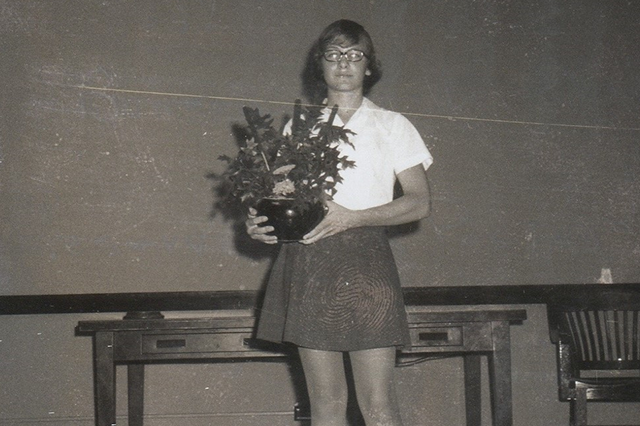
Whitson developed public speaking skills through 4-H presentations.

What was the process of taking that goal and making it a reality? You had to at some point figure out a path, when did it come together?

PW: I didn’t know exactly how to make it come together, but I was really interested in science and I figured, astronauts had to be smart people. And I knew I wanted to be a scientist. In that first female astronaut class, there was a biochemist, and it made me think, ‘Oh, hey, I could pursue my interest in biology and chemistry and make that into becoming an astronaut.’

When I finished graduate school, I started applying to become an astronaut. It took 10 years of applications and rejections before I was finally accepted to the training program. But I started at NASA with a fellowship. From there, I ended up getting a job with one of the contractors that worked at NASA, then I started working for NASA directly a few years after that. And then, after 10 years, they decided I might be okay to become an astronaut.

It took 10 years to make it into the astronaut training program. People usually don’t see the rejection and “No’s” before someone’s achievement.

PW: There were a lot of “No’s” along the way. And in retrospect, those 10 years made me a better astronaut. Those years made me a leader. You need to learn along the way that even if your path is not a straight line, you have to learn from all the lessons that are around you, what you’re being exposed to. I really think it’s very, very important for young people to realize that you can go through life taking the easy path and do the things that are just easy for you, but you’re never going to find out what you’re truly capable of unless you push beyond your comfort zone.

How do kids today become an astronaut? How should they pursue their dream? 

PW: The number one thing is that NASA is looking for astronauts in all kinds of fields – science, engineering, every field. It’s really important to know what it is that drives you and motivates you because you need to be really good at it in order to be noticed out of thousands of people who are going to apply for the same job. You have to be a really good team player. You have to have enough different experiences in life to demonstrate that you know how to be adaptable. So, you need to be very good at something, and you also need to be a jack of all trades.

What about physical requirements?

PW: You have to be able to do spacewalks and you have to be able to think in three dimensions to do robotics. And so, it’s all part of the big picture, being able to do lots of different things.

What does an astronaut do when they aren’t in space and if they aren’t selected for the mission? Do astronauts go years without going into orbit?

PW: When I came through the Astronaut Office, there was, on average, around five to seven years between missions. Most of your life is a ground job. And that ground job is usually helping someone who is currently in orbit, like working in mission control or working on procedures for crew members who are going to be flying in the future. Or working on training to improve the training process, so we can get it done more efficiently and more effectively.

Statistics show American students are underperforming in STEM compared to other countries. What should we be doing differently from an educational standpoint?

PW: For young girls, it’s perceived as not being cool as they reach teenage years. So, it’s been my goal to promote that, “Hey, nerds are cool too.” We need to promote it and show our young people that you can do this and that there are other people who have done it. I think seeing role models that are like them helps. It certainly did for me. When I graduated high school, seeing those first female astronauts truly helped me believe that this dream I had could be real.

peggywhitson-blog-image1

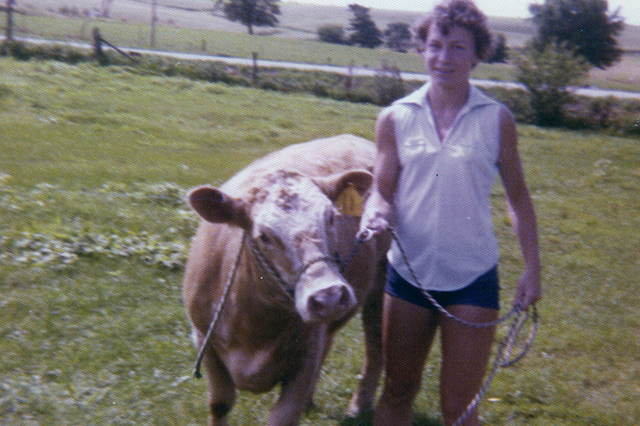
Whitson showed heifers as a teen. Here, she teaches a calf to lead.

You hold the female record for spacewalks (10) and you’re third overall. What is it like to spacewalk?

PW: It’s like being in a spaceship built for one. And your spaceship is providing your oxygen. It’s providing the pressurization and it’s getting rid of the carbon dioxide. It’s controlling the temperature, just like a regular spaceship does, but it does it inside of one little spaceship.

What is the hardest thing to get used to in space?

PW: Your whole life is spent in gravity and when you don’t have it anymore, you have to really adapt everything in your life. You don’t think about how many things would just be different. The paper floating off your desk, you floating out of your chair. You couldn’t type on your computer because it would push you away.

You spent 665 days in space, which is a record. Did you ever get bored up there?

PW: Some of the tests are a little bit boring now and then, but I guess I stayed motivated because I recognized that even if I was fixing the toilet or cleaning the vents, I was helping keep the space station alive. I was living and working in space, and for me, that was enough motivation to keep me going. If you don’t have anything to do, you can always look out the window and there is always something amazing to see.

Is there something that you really miss about space?

PW: Being there.

Editor’s note: This interview was condensed and lightly edited for clarity and brevity.

With support from Verizon, Microsoft, Land O'Lakes, Inc. and Tractor Supply Company, 4-H will empower teens to help close the opportunity gap caused by the growing digital divide

CHEVY CHASE, MD (May 17, 2021) - National 4-H Council is announcing a vast expansion of its 4-H Tech Changemakers program supported by Verizon, Microsoft, Land O'Lakes, Inc. and Tractor Supply Company. Established in 2017 with support from Microsoft, 4-H Tech Changemakers trains and equips teens to teach adults digital employability skills that include online job seeking, social media marketing, software use, and more. The $8.5M investment from the coalition of partners, which includes $7.5M from Verizon, will allow 4-H teens to bring vital digital skills to more than 50,000 adults across 164 communities, with a focus on rural communities and communities of color.

Inequitable access to the internet and digital skills are contributing to a growing opportunity gap in areas like education, employment, healthcare, social fulfillment, and entrepreneurship. The FCC estimates that more than 21 million people don't have access to high-speed broadband internet, with other recent reports indicating the issue may be significantly more wide-spread. This lack of access has a substantial negative economic impact on affected communities-which are disproportionately rural and those of color-including decreased job readiness and fewer opportunities for employment. One recent study estimates that if the digital racial gap is not addressed, 76 percent of Blacks and 62 percent of Hispanics could "get shut out or be under-prepared for 86 percent of jobs in the US by 2045."

The 4-H Tech Changemakers program seeks to close this opportunity gap by making digital skills accessible to those who need them most. "This program empowers young people to identify which skills are most needed and by whom in their community, and then to go out and teach them," explained Jennifer Sirangelo, President and CEO of National 4-H Council. "In this model, teens leverage their digital skills to give back to their communities while building critical leadership and organizational skills."

4-H, as the positive youth development (PYD) organization of the nation's Cooperative Extension system, has the unique ability to reach young people in every state, territory, county, and parish across the country. The 4-H Tech Changemakers program will be implemented by 23 Land-Grant Universities (LGUs), of which 11 are Historically Black Land Grant Colleges and Universities (HBCUs). This localized approach-which puts university faculty and trusted Cooperative Extension professionals at the center of implementation-will ensure maximum impact in the communities that need it most.

"At Verizon, we see digital inclusion as a necessary building block for creating greater societal equity." said Rose Stuckey Kirk, chief corporate social responsibility officer for Verizon. "This is why Verizon has invested in 4-H Tech Changemakers. This program is innovative in the way it equips 4-H'ers-who are both digital natives and trusted voices in their communities-to not just teach digital skills but build the vision for what a more inclusive future looks like."

Through 4-H Tech Changemakers, teens become credentialed through formal training in how to teach digital skills to adults. They also receive technology to support their projects, assistance from 4-H professionals and coalition partners, and training in ways to effectively engage their communities. To date, this powerful, youth-centered program has reached more than 10,000 adults with digital skills training in collaboration with Microsoft, the program's founding partner.

"Broadband access is critical to helping young people and adults develop digital skills for today's jobs," said Vice President and Lead of Microsoft Philanthropies, Kate Behncken. "We helped launch 4-H Tech Changemakers to align connectivity with digital skills training and are thrilled to see other companies recognize the importance of encouraging students to be digital advocates in their communities."

Rural Americans are 10 times more likely to lack high speed internet access than their suburban or urban counterparts. Research indicates that roughly 60 percent of farmers in the U.S. lack sufficient connectivity to run their business, while 25 percent of farms have no internet access whatsoever. That means that many farmers, ranchers, and agricultural workers are being left behind.

"Land O'Lakes is pleased to support the 4-H Tech Changemakers program, to equip individuals to leverage the tools necessary to compete and thrive in today's economy, bolstered by adequate broadband access," said Tina May, vice president of Rural Services at Land O'Lakes, Inc. "Through this collaboration and our work on the American Connection Project, we see the potential for real change and more prosperous individuals, families and communities."

Tractor Supply Company, a long-time supporter of 4-H, has expanded their partnership to include 4-H Tech Changemakers.

"With nearly 2,000 Tractor Supply Stores around the country, our business is all about supporting rural Americans. We recognize the importance of connectivity and digital skills and believe that the inclusive, multi-generational connection of the program will provide community benefits that extend beyond digital skills. We are excited to support the 4-H Tech Changemakers program," said Hal Lawton, President and CEO at Tractor Supply Company.

In 2021, the program will engage youth through Cooperative Extension at the following LGUs: Alcorn State, University of Arizona, University of Arkansas, Auburn University, Alabama A&M, Florida A&M, University of Georgia, Kentucky State, University of Nebraska-Lincoln, North Carolina A&T, Prairie View A&M, Purdue University, Southern University and A&M College, Texas A&M, Tennessee State, Tuskegee University, Virginia State, Virginia Tech, Washington State, West Virginia University, West Virginia State, and University of Wisconsin.

To learn more, visit 4-H Tech Changemakers.

About 4-H

4-H, the nation's largest youth development organization, grows confident young people who are empowered for life today and prepared for career tomorrow. 4-H programs empower nearly six million young people across the U.S. through experiences that develop critical life skills. 4-H is the youth development program of our nation's Cooperative Extension System and USDA and serves every county and parish in the U.S. through a network of 110 public universities and more than 3000 local Extension offices. Globally, 4-H collaborates with independent programs to empower one million youth in 50 countries. The research-backed 4-H experience grows young people who are four times more likely to contribute to their communities; two times more likely to make healthier choices; two times more likely to be civically active; and two times more likely to participate in STEM programs.

Learn more about 4-H at 4-H.org, find us on Facebook at Facebook.com/4‑H and follow us on Twitter at Twitter.com/4H.

About Verizon

Verizon Communications Inc. (NYSE, Nasdaq: VZ) was formed on June 30, 2000 and is one of the world's leading providers of technology, communications, information and entertainment products and services. Headquartered in New York City and with a presence around the world, Verizon generated revenues of $128.3 billion in 2020. The company offers data, video and voice services and solutions on its award-winning networks and platforms, delivering on customers' demand for mobility, reliable network connectivity, security and control.

About Land O'Lakes, Inc.

Land O'Lakes, Inc., one of America's premier agribusiness and food companies, is a member-owned cooperative with industry-leading operations that span the spectrum from agricultural production to consumer foods. With 2020 annual sales of $14 billion, Land O'Lakes is one of the nation's largest cooperatives, ranking 232 on the Fortune 500. Building on a legacy of more than 99 years of operation, Land O'Lakes today operates some of the most respected brands and businesses in agriculture and food production including Land O'Lakes Dairy Foods, Purina Animal Nutrition, WinField United and Truterra, LLC. The company does business in all 50 states and more than 60 countries. Land O'Lakes, Inc. corporate headquarters are located in Arden Hills, Minn.

About Tractor Supply Company

Tractor Supply Company (NASDAQ: TSCO), the largest rural lifestyle retailer in the United States, has been passionate about serving its unique niche, targeting the needs of recreational farmers, ranchers and all those who enjoy living the rural lifestyle, for more than 80 years. Tractor Supply offers an extensive mix of products necessary to care for home, land, pets and animals with a focus on product localization, exclusive brands and legendary customer service for the Out Here lifestyle. With more than 42,000 Team Members, the Company's physical store assets, combined with its digital capabilities, offer customers the convenience of purchasing products they need anytime, anywhere and any way they choose at the everyday low prices they deserve. At March 27, 2021, the Company operated 1,944 Tractor Supply stores in 49 states and an e-commerce website at www.TractorSupply.com.

Tractor Supply Company also owns and operates Petsense, a small-box pet specialty supply retailer focused on meeting the needs of pet owners, primarily in small and mid-size communities, and offering a variety of pet products and services. At March 27, 2021, the Company operated 177 Petsense stores in 23 states. For more information on Petsense, visit www.Petsense.com.

The need for access, equity and belonging remains critical, as we continue to bear witness to the devastating effects of discrimination and injustice on our communities. As the chairs of the 4‑H Program Leaders Working Group, Access, Equity and Belonging Committee (AEBC), we believe that the Cooperative Extension System is ideally placed to advance the important work of ensuring access, equity and belonging amongst our youth.

Every person deserves to feel a sense of belonging and value, but for this to happen, we need to commit to practically, emotionally and intellectually transforming ourselves and our communities. As a system, Cooperative Extension has long realized that we will not be able to solve the complex problems of our changing world if we don’t encourage a diversity of values, perspectives and beliefs. This is where the 4‑H PLWG, AEBC comes in.

The purpose of the Committee is to support the 4‑H System’s opportunity statement. 

We are committed to:

  • reaching 10 million youth who fully reflect the demographics and social conditions of the nation by 2027;
  • providing opportunities for all 4‑H youth that are grounded in Positive Youth Development;
  • embracing the rich diversity of the youth, families and communities that comprise our nation; and
  • working to close the widening gap in wellbeing and economic prosperity for youth and communities.

We believe that when we build a more inclusive, diverse and equitable organization, all 4‑H members will excel in social mobility and communities will thrive.

Access refers to ensuring that everyone has the opportunity to take part in all Extension programs and activities. Studies have shown that youth who enjoy access to diverse cultures and experiences show “evidence of enhanced learning and better preparation for participation in a democratic society, and generally possess enhanced cognitive skills along with a clearer sense of identity.” [1]

Equity means giving everyone the same opportunities in life by eliminating the barriers that exist for marginalized members of society. While equality aims to provide the same things to all people, equity considers that different people need different things in order to enjoy full and healthy lives.

Belonging is a feeling of community. When we feel like we belong, we can be our authentic selves and are comfortable speaking out as we don’t fear retaliation. Belonging has shown to have a positive impact on young people, as they feel more engaged and motivated if they believe that they are valued for their unique contributions.

We encourage you to engage with our three online self-directed modules, which are designed for Extension administrators, 4‑H professionals and volunteers who would like to create a more inclusive organizational culture:

  • Module One: Introduces foundational terms related to cultural competencies and equitable practices (Extension administrators/4‑H professionals).
  • Module Two: Explores the dimensions of culture (Extension administrators/4‑H professionals).
  • Module Three: Describes how to work toward cultural competency; lists the attitudes, skills and knowledge that are required to be culturally responsive; and explains how to recognize and improve an organizational culture (Volunteers).

Our website also offers curated resources and materials to supplement the learning from the modules.

Authentic dialogue and the development of one’s cultural competencies and empathy require lifelong self-reflection, learning about diverse groups and communities, and a commitment to better understanding the historical barriers that exist for marginalized groups in society. Please join us on our exciting journey to provide every young person with an equal opportunity to succeed!

Dr. Fe Moncloa is a 4‑H Youth Development Advisor, UCCE Santa Clara County
Dr. Nia Imani Fields is an Extension Assistant Director, Maryland 4‑H Program Leader (University of Maryland)


[1] Office of the University Provost | Middle Tennessee State University (mtsu.edu)

Young people are resilient. However, there are moments that we all face that can sometimes turn our world upside down. This was the case for Ben, who was faced with uncertain circumstances when his father was deployed to Iraq—a challenge many military families face. Thankfully, 4‑H offered Ben and his family the support they needed during a difficult time.

“4‑H filled the gap in my life by providing me community, confidence and connection,” Ben explained. “And for that I’m eternally thankful to be a military kid and a 4‑H’er.”

4‑H offers much-needed support to military-connected youth, giving them opportunities to discover their spark, build confidence and curiosity, and most importantly, foster a sense of belonging and consistency during uncertain times.

We’ve seen that life-changing impact through the personal stories of our youth leaders:

Sophia, who launched a program to help military kids cope with the effects of deployment.

Amelia, who joined forces with her local 4‑H club to provide care packages to veterans.

Tay, who found comfort and connections when joining 4‑H after his dad served two terms in Iraq.

For the entire family, resiliency is a core component of the 4‑H experience, as military families navigate the difficulties surrounding deployment and reintegration, frequent relocations, and other challenges related to military life. The peace of mind that comes with knowing your children are engaged in high quality programs with caring adult mentors further supports military mission readiness for our service members who put their lives on the line for us every single day.

The support 4‑H provides is made possible through the 4‑H Military Partnership, a collaboration of military and land grant university partners working together for military-connected youth, families, and communities in the U.S. and abroad to thrive.  In FY19 alone, more than 63,000 military-connected youth participated in 4‑H opportunities and over 2,400 military Child and Youth professionals increased their capacity to empower youth with the skills to lead for a lifetime through 4‑H positive youth development training.

“Whether it’s how to make someone feel welcome, or it’s public speaking, leadership, communication skills, or developing life-long friendships, 4‑H provides so many pathways for youth to learn, grow and work towards a brighter future,” Ben shares. “4‑H is an amazing organization; it’s more than just a club, it’s truly a home! I was lucky it was there for me as a military kid, as a nervous middle schooler, and today.”

Learn more about the 4‑H Military Partnership

The worldwide coronavirus pandemic took so much from people over the past year. It also showed how far people will go to help others.

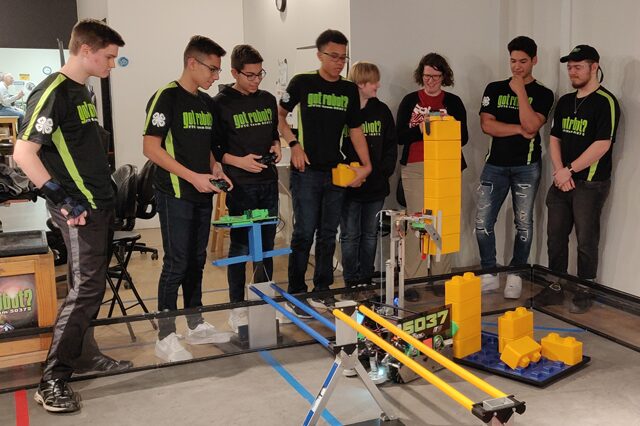
As life came to a grinding halt and health officials called on the public’s help to flatten the curve, nearly all group, in-person activities were cancelled due to social distancing. For a 4-H teen robotics team in Elgin, Ill., that meant a competition season lost, but also an opportunity to help their community.
 
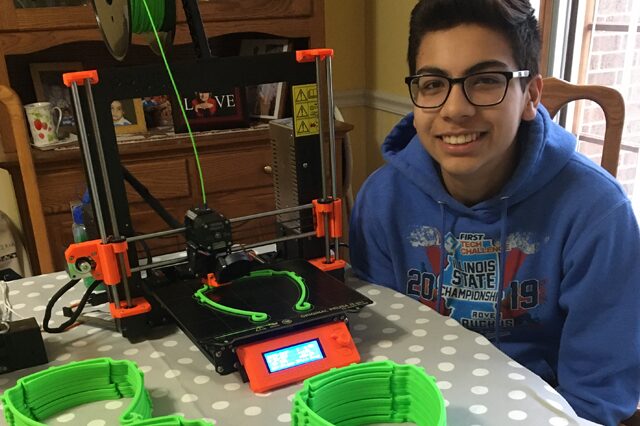
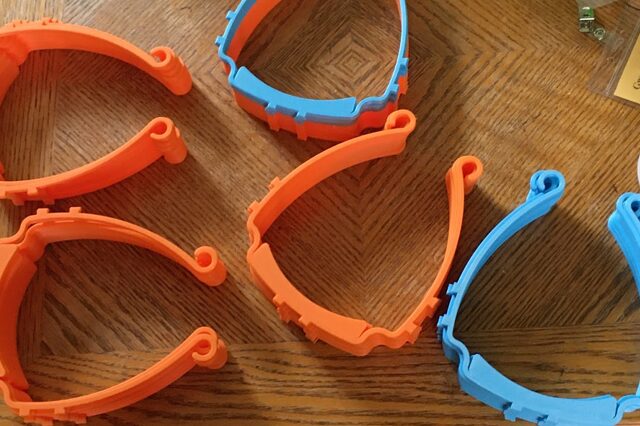
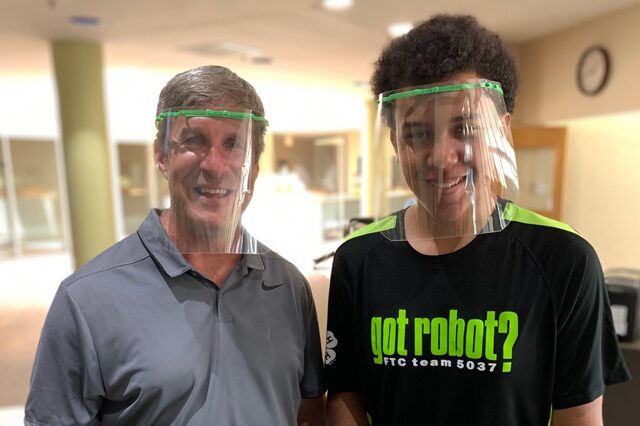
With school now on Zoom and all other activities wiped from the calendar, the “got robot?” FIRST Tech Challenge Team quickly put their newly gained free time to use by making face shields for health care and other frontline workers – tested and approved by the Kane County Coroner’s Office.
 
Using open-source instructions and designs found online, the team of about 11 changemakers printed and assembled the masks in their homes. At its peak, the team ran as many as 10(ten) 3-D printers in homes. Some were borrowed from school. Some families purchased them. A local dentist loaned his printer. Running around the clock, the printers made 40 headbands per day. Depending on the size of an order, a single printing run could last as long as 10 hours.
 
“[W]e were happy to get up in the morning, start printing, have some breakfast, [and] do some school. Hopefully, a little past lunchtime, it would be at least over halfway done,” said Brock Russell, 18, a “got robot?” member. “And then before dinner you would take it off, start a new print, maybe clean up some old ones that you’ve already got printed, and just repeat the process every day.” 
     
After printing the pieces, they filed down rough edges, punched holes in the plastic shields, and packaged the parts with instructions before shipping. They used a Google Drive spreadsheet to record and track orders. Team members and their families were responsible for delivering the face shields in their local communities using their local contacts and networks.
      
Early on, the STEM team reached out to local hospitals to see if they needed more PPE.
    
“We asked, ‘Hey, how bad is it?’ And they responded with, ‘It’s 10 times worse than you imagine.’ They were washing masks, reusing gloves, bringing homemade cloth masks in, which were not medical grade at all,” Russell said. “And after we donated a couple [face shields], word of mouth just kept going and it kept getting bigger.”
 
The shields went to local hospitals, the coroner’s office, police and grocery workers. Postal workers also received some, said club member Raymond, 15.
    
“[T]hey didn’t have very much protective equipment unless they brought it from home. Especially in the early days and the mail never stopped. It probably ramped up if anything, so yeah, postal workers were another big one that we were able to give to and help and they were extremely grateful for it,” he said.
  
By the end of April, they had printed 4,000 shields. In May, the team set up a GoFundMe account to offset the cost of supplies, such as filament, eventually raising more than $4,300, which was even more than they needed. As a result, they redirected nearly half that money to other critical educational needs in the community. One of those initiatives was supplying backpacks filled with STEM educational activities in both Spanish and English to local students, in partnership with the local library. Separately, the group has also used 3-D printing to make prosthetic hands for children in developing countries.

The face shield printing reached peak production in the summer, and then as nationwide PPE production caught up, demand for the “got robot?” masks decreased by September. As of mid-March 2021, they had distributed nearly 7,300 face shields. Although many of the face shields were used in their suburban Chicago community, some of the shields went as far as Colorado and Georgia, and some found their way to Puerto Rico and Mexico.

The reach of the shields and the impact on the community surprised Burrage.

“Originally, I thought we could get these out to some people and they would help some people, but it would kind of be something that would last for maybe a month at the most, and then they would get discarded or whatever, but they’re still in use now,” he said.

Part of the impact came from lessons learned in 4-H, such as how to work as a team and the empowerment to accomplish projects, said team mentor and Russell’s mother, Susan Russell. “It was inspiring as a mentor to see that they believe so much in what they were doing. And they’re like, ‘We can do this, we got this.’ There was no fear of the numbers. There was no fear of the amount of outreach,” she said. “It was like, a bunch of factories really pumping these things out and it was quite amazing.

”Kane County 4-H Program Coordinator Doris Braddock has watched the evolution of the “got robot?” team for several years. Along with the community service, they share their time and knowledge whether helping with robotics competitions or teaching at summer camps, she said.

“So anytime we need something in the robotics line, I feel confident I can call on these youth and they’ll step up to the challenge. Very proud of them,” she said.

The teens of “got robot?” are creating positive change in their community. Find out how you can be recognized as a changemaker by applying for the 4‑H and Invisalign® ChangeMakers Program!

"got robot? 4-H Club Creates 3D-Printed Face Shields for First Responders
National Agriculture Day is March 23 here in the U.S., and it has me thinking about the long, unlikely road that led me to agriculture and the importance it plays to the future of my own family and this bigger global community I’m a part of.

Despite my role today and the great pride I have in my work, the truth is, I didn’t think agriculture was for me.

I mean like, not at all.

I grew up on a farm near the small town of Millersville, Missouri. I’m proud to say it’s the same farm my mom, dad, brother and more than 200 of the world’s finest Black Angus cows occupy today.  But, as a teenager, I was convinced I wanted nothing to do with ag once I left the farm.

I worked alongside my dad many days after school, most weekends and every day during the summer. As many of you know, one scorching July of baling hay – the old-fashioned way, with square bales – can quickly turn a person off the idea of farming for a living. As I did my chores, drove tractors, cared for cows and tended to crops, I dreamed of going someplace like Chicago or New York, anywhere but Millersville.

But I learned that sometimes you can’t really appreciate what small-town America and what agriculture has to offer until you leave and come back.

My parents were horrified when I announced my intention to major in Art History and English. While reluctantly supportive, my two very practical parents put their blind faith in me and a power higher than any of us to help guide my path. But what’s really interesting is that English and Art History eventually put me on a career path that took me as far away as the high-tech PR industry in cities like Seattle, Silicon Valley, Houston, Austin and Dallas before leading me straight back to farming first at Monsanto and now at Bayer.

I started to realize what I should have known from the beginning: All the cool things my dad did on the farm, all the biology and science, I loved all that stuff. I just wasn’t very good at them from a technical perspective. But what I was good at was taking those complex ideas and translating them into concepts that were simple to understand and communicate. I can feel my dad giving me that knowing “I told you so look” right now as I write this.

And that’s what my job at Bayer now allows me to do – which is talk about some pretty mind-blowing science we create for farmers every day and explain how that science works to benefit our entire world. The wonderful things that are happening in agriculture impact everyone on the planet, and science is at the core of it all.

National Agriculture Day is a perfect moment in time to have a focused, important conversation about the intersection of science and agriculture and opportunity. And that’s what’s so awesome about 4‑H – they bring people into that conversation.

I’m proud of the work we do at Bayer and the rich tradition of every ag institution participating in National Agriculture Day. Way back when, I was a 4‑H kid. I showed steers at the local county fair, grew prize-winning tomatoes with my grandma in her garden, and went to the Southeast Missouri District Fair in Cape Girardeau to exhibit them all. My mom took me to ceramics classes through 4‑H. I learned how to tie knots and macramé. I went to summer camps where I met lifelong friends.

All these wonderful programs continue to help close the agriculture gap by showing kids what’s possible for their futures, shaping them in ways they might not even be aware of yet. In 4‑H, I even learned public speaking skills that eventually prepared me for my role in communications. Being a 14-year-old kid full of nerves speaking in front of a crowd turned out to very helpful as a professional later in life.

Now, I have kids of my own. And while they don’t seem interested in agriculture either – the way their dad was at their age – it’s hard to say where their journey will lead them. These days I feel like my own father … gently pushing the opportunities an agri-business degree might open up to them.

My dad’s got this great saying: “The older you get, the smarter I’m going to become.” So, if anything, my path proved his old adage true. My parents are proud that I’m as passionate as I am about the work I do in food and agriculture, and the way it supports the work that they and my brother do on the farm. The experiences in 4‑H helped prepare me for a life and career I’m blessed to have.

So, in an odd way, maybe we were both right.

Although I’ve grown up on a farm my whole life, I didn’t come from a 4‑H family. In fact, it wasn’t until I was in third grade that I even began to understand what 4‑H was. Some family friends encouraged me to get involved with some of the programming that 4‑H has to offer, and after talking to them, I knew I wanted to get involved. I went to their house, and I immediately fell in love with all of their cute, fluffy cows. That one positive experience with them turned into a 10-year career that was filled with a broad variety of programs, competitions, and even starting a family livestock business.

As my 4‑H career progressed, I wanted to pass on my knowledge to the future generations of agriculturalists. I not only wanted to teach people about some of the programs I became involved with, but I also wanted to provide them with opportunities that they couldn’t get anywhere else. I began to reach out to students at my school and invite them to come to my house, do their homework, and learn about a variety of potential areas of interest through hands-on experiences. In my time doing this I brought 12 new members to the 4‑H program, and many of those have begun their own cattle herd and have continued my legacy left on them to educate others.During my freshman year of high school, I made a new friend. Her name is Anna, and she has down syndrome. While I was feeding my cows at the fair, she ran up to me and said “I do that,” which to her meant that she wanted to get involved with agriculture but didn’t know how because her abilities were different than mine. Together, we got involved with a program called PossAbilities. This program partners an older 4‑H’er with a member with a disability. These members spend time working on their projects together and learning new things. Today, Anna is active in 4‑H and she now has her own beef herd that all started because we believed in each other’s abilities.Because of 4‑H, I found my passion. I found that I love to work with livestock, but more importantly that I love to educate and advocate for others. My journey began because one person believed in me, and my journey is continuing because of resources like 4‑H at Home. Had I not gotten out of my comfort zone to get involved with 4‑H at a different level, I never would have found my passions.

While I have been stuck at home during this pandemic, I find myself wondering how I can continue to impact those around me. There is one specific resource that has still allowed me to be involved in 4‑H, and that’s 4‑H at Home. This provides activities on a wide variety of topics that can be done with friends and family. For example, you can do a hands-on activity involving agriculture, which isn’t a topic that is covered in the classroom at some schools. 4‑H at Home can introduce young people to new areas of interest, and once an activity is completed it will recommend other activities for you so you can continue your learning journey.

Here are some of my favorite activities that kids can enjoy at home, while exploring different aspects of agriculture:

You can visit 4‑H at Home and use the filter tool to find activities related to agriculture, animal science, and so many other topics. It’s a great resource for young people, and I am thankful for my friends, family, leaders, and organizations for finding new and innovative ways to get involved in 4‑H programming, even while I’m stuck at home.

Madelyn is the 2021 4‑H Youth in Action Pillar Winner for Agriculture, sponsored by Bayer.

National 4‑H Council and the Invisalign® brand have launched a partnership to empower and recognize young people who are creating change in their communities through acts of kindness and service—big and small. Because everyone—especially our youth—should be seen and celebrated for the good they are doing in the world.

I caught up with Kamal Bhandal, VP of Global Brand and Consumer Marketing for Align Technology, to talk more about the Invisalign® ChangeMakers Initiative and how the mother of two is inspiring her children to be a positive influence in their community.

What is a ‘ChangeMaker’?

Kamal Bhandal (KB): Simply put, a ‘ChangeMaker’ is someone who springs into action to solve a problem for the greater good of a community.

In what ways do you think the Invisalign® ChangeMakers Initiative will inspire young people to become change agents in their community?

KB: Everywhere you look, young people are actively driving change within their communities. In some instances, it may be a young person who leads a local blanket drive to donate to the local shelter, or it may be the young leader who activates their local school district to provide school lunches for families during the pandemic. There are many more examples all around the country, and often these are local stories that aren’t widely known, but provide tremendous impact in the community.

Align Technology’s Invisalign brand, in partnership with National 4‑H Council, has launched the Invisalign® ChangeMakers initiative to shine a light on these stories and elevate the young people who are driving change within their communities and bringing smiles. In doing so, we hope that more young people can see how teens just like them and feel connected to a larger youth community. Our collective goal with this partnership is to spotlight those inspiring stories so that every young person can see themselves as someone who can drive positive change within their communities.

Can you share some of the work Align Technology leads to inspire change in communities and how today’s youth can help support those efforts?

KB: Align is committed to improving the lives of our employees, customers, patients, stakeholders, and the communities in which we live and work. Our philanthropic philosophy is to support organizations whose visions tie closely to our own – improving smiles, empowering our customers through partnerships with learning institutions and foundations, and supporting and educating teens.

We are committed to developing youth leaders around the world. Here in the US, we’re actively partnering with leading organizations—like 4‑H—who are also committed to shaping and developing youth. Other partners include Junior Achievement including their S.H.E. Leads program, Boys & Girls Clubs of America,  and Cristo Rey San Jose High School.  Our partnerships with these organizations include mentoring, program support, as well as workshops that cultivate critical business and STEM skills, corporate work-study programs, and internships. Today’s youth can support these efforts by getting involved with the local chapters of any one of these programs.

As a mom of school-aged children, how are you inspiring them to be ChangeMakers? Why are those teachings so important?

KB: As a mom of a teen and a tween, I try to focus on a few things: (1) exposing the kids to a range of perspectives; (2) fostering empathy for others; and (3) supporting areas of individual interest. The teen years are a critical time in brain development as teenagers have an increased capacity to appreciate various perspectives. By learning about different communities and various ways to solve problems, it not only helps increase awareness of the variety of challenges that exist within communities, but it also stimulates more creative thinking on how problems can be solved. When it comes to having empathy for others, we try to create learning experiences that foster a sense of empathy—such as through volunteering or random acts of kindness—and provide support for a specific area of interest that is important for each of them. However small or large the individual interest area may be, we try to support and encourage the kids to drive change that will create positive impact, and also experience how that feels.

How do we continue to give young people a platform to share their ideas, experiences and innovation, and how will those ideas impact the future?

KB: Organizations like 4‑H that celebrate and support youth in cultivating their ideas are critical. Today’s youth are full of ideas and creative solutions that can help drive positive changes that will enhance the lives of others who are a part of their community – large or small. To give young people a platform to share their ideas, it’s critical that we:

  • Create communities to help our youth feel that they are part of a bigger movement. People crave feeling a sense of belonging—being a part of a community—and young people especially need this today. If surrounded by other ChangeMakers who are trying to drive change within their communities, youth today may be inspired to take their own ideas and spring into action.
  • Offer mentorship to advocate and make connections to unleash creativity– our youth need to feel that there are people in their corner advocating for their ideas, cultivating those ideas to bring them to life, and helping remove roadblocks if and when needed along the way. So many of us have networks full of relationships that may assist a young leader in bringing their idea forward – it’s on all of us to make introductions to people who may help a young person move forward and bring their ideas to life. Talented youth who are full of ideas about how to drive positive change are everywhere. We must provide platforms and mentorship that nurture and unleash their creativity—our future depends on it.
Recently, I had the pleasure of meeting Jehiel Oliver, an Ohio 4‑H alumnus who is leading ag innovation on a global scale. He is the founder and CEO of Hello Tractor, an agricultural technology company that connects tractor owners with smallholder farmers in need of tractor services. Under his leadership, Hello Tractor serves more than 500,000 small farmers in Africa with access to over 3,000 tractor owners.I learned more about Jehiel’s work, his family’s history in agriculture, and how he thinks young people today can drive more agriculture innovation.

Where did your 4‑H story begin, and what was the experience like for you growing up?

Jehiel Oliver (JO): I was a part of 4‑H from the first through third grades in Cleveland, Ohio. It was my teacher who was administering 4‑H curriculum and introduced me to the 4‑H program. There were so many different things we learned, including agriculture. 4‑H is what introduced me to agriculture. I’m from the east side of Cleveland, and we don’t have farms. So that was one of the first introductions to figuratively and literally getting my hands dirty.

Who were some of your inspirations growing up?

JO: Family is always a primary source of inspiration. I come from a very hardworking family that always prioritizes doing things with your time, like taking action within your community. That has defined my career. Even where I am today—and my decision to go into investment banking—was driven by a gap that I saw within my community. I saw people who didn’t understand finance and didn’t have the same resources other communities had. So I figured that if I can develop this skill set, I can be of value within my community. That evolved to broadening my perspective globally. I can use finance to benefit global communities, which led me into agriculture—using finance to help farmers across Africa and parts of Asia where Hello Tractor operates.

Can you share some of your family history in agriculture?

JO: My great uncle, who I knew very well, used to work at John Deere as a technician for over 30 years in Alabama. And what was inspiring for me to learn was he used to volunteer at Tuskegee University towards the end of George Washington Carver’s career. He is also responsible for introducing many agriculture best practices that we know of today. He worked as a Cooperative Extension agent with Thomas Monroe Campbell, the first Cooperative Extension Agent and helped launch the Extension System. Together, they supported ex-slaves and Black sharecroppers to introduce best practices into their farming activities. That work allowed them to grow more, earn more income, and be better stewards of the land. And I’m doing the same thing in countries in Africa and Asia, which kind of brings his legacy full circle.

Why do you think it’s important to tell stories like that of your uncle and other African-American farmers and pioneers in agriculture? 

JO: Our history often gets overlooked. That’s why Black History Month exists because those stories aren’t always being told. However, in understanding those stories, you begin to see yourself in new spaces because you can trace back. I have a legacy in this industry. It wouldn’t be so difficult for a young person to see themselves as a farmer if they knew that some of the best farmers in American history were African Americans. I think having that understanding is important. It certainly gave me a lot of confidence as a professional and brought even more excitement to the work that I was doing.

What inspired you to start Hello Tractor? 

JO: I wanted to be as impactful as possible, and I’m also a big believer in using commercial markets to solve massive problems. You scale the solution and address issues by leveraging commercial players who have financial interests in supporting you in solving the problem. I started my career in finance, where I eventually worked in microfinance—which is popular in parts of Asia and Africa. These were banks that generally serve lower-income populations to provide loans and other financial services that typically aren’t extended to those populations. That attracted me to this idea that I can use my financial background to support low-income communities in these emerging markets, leading to an awareness of farmers’ challenges. Many of the borrowers in these banks are low-income farmers who make their money on the farm. However, many of the microfinance institutions would not lend to agricultural activities because of the risks. That piqued some curiosity on supporting farming in these developing countries and supporting the farmer while minimizing the risk. I landed on mechanization, and as a result, founded Hello Tractor.

Farmers pay for mechanization services every year. It’s something that they need as it increases their income, yield and productivity. It also addresses some of the changes affecting farmers in emerging markets, such as rapid urbanization and aging farm populations, and depleting laborers. So, machines are needed now more than ever, and Hello Tractor was my solution to this labor gap in these rural communities. If you’re growing on a small plot of land—like most of our farmers do—you can’t afford to own your equipment. But having access to a tractor is just as good. We built a circular economy model around this concept that farmers can book services from a tractor owner that will be affordable, reliable and convenient. And as those tractor owners deliver those services, they can earn income. It’s been a little over six years now, and we’ve seen some extraordinary success stories coming out of the work that we’re doing through Hello Tractor.

What are some ways we can provide young people with meaningful experiences and opportunities to discover their passion for agriculture, especially when they feel like those opportunities are out of reach? 

JO: I think there’s a wealth of opportunity for a young person, especially now with technology and innovation taking hold in agriculture. Now is the time to get in front of the innovation curve, learn as much as you can, and bring those learnings back to the farm. I think curiosity will be an essential ingredient to their success as they think about a career in agriculture. There are so many ideas that can fill the gap.

What advice do you have for Black 4‑H youth and young alumni who want to positively impact the world through their work?

JO: I’m so impressed with these young kids that I come across who, for them, the sky quite literally is the limit, but have already overcome so much. The tools that are developed as you overcome all these challenges are opportunities. I think a lot of times, we look at the wrong side of the narrative. We think about challenges, and there’s this prevailing narrative around bias towards Blacks and women—which I can’t speak to directly. But if you think about the other side of that narrative, you have overcome all these obstacles that it takes a special kind of person to overcome. I guarantee you that it is unique, and it’s something that you can build on. It shouldn’t be viewed as a limiting factor; it should be seen as an asset. That pressure creates diamonds out of coal, and there are so many little diamonds around us who don’t know that that’s what they are. So, we must help those young people recognize that in themselves. Anyone who faces adversity and gets through these high-pressure situations, there’s value in those experiences, and it’s something of which you should be proud.


*The Cooperative Extension System is a nationwide, non-credit educational network. Each U.S. state and territory has a state office at its land grant university and a network of local or regional offices. These offices are staffed by experts who provide useful, practical, and research-based information to agricultural producers, small-business owners, youth, consumers, and others in rural areas and communities of all sizes.

nationwide

This interview is a part of a series of blogs supporting 4‑H’s Community Impact program emphasizing Diversity, Equity, Inclusion – an effort sponsored by Nationwide®

Nationwide, the Nationwide N and Eagle and Nationwide is on your side are service marks of Nationwide Mutual Insurance Company. © 2021 Nationwide

Pittsburgh Steelers linebacker Avery Williamson has quite an impressive NFL career that spans seven years. What’s also inspiring is his love of farming. The fourth-generation farmer and Tennessee 4‑H alumnus has a passion for agriculture, and he’s paying it forward to the next generation of diverse farmers.

I caught up with Avery to discuss why it’s important to find your passion and create more opportunities for diversity in agriculture.

What was life like growing up on your family’s farm?

Avery Williamson (AW): I grew up on my family’s farm in Milan, Tennessee. It was right down the street from where my grandpa and great-grandpa’s farms used to be. I spent a lot of time outside as a kid and started helping my dad around the farm when I was six years old. My dad was a truck driver, so when he was away, he would leave me in charge and give me responsibilities on the farm, including feeding and taking care of our cows. It wasn’t easy at times because I’d usually have to work on the farm before school or afterwards when most of my friends were out having fun.

After I went to college and entered the NFL, my dad continued to work on the farm after retiring. During my second year in the NFL, I learned that one of my teammates had a farm. So that inspired me to invest in our family farm. I purchased new equipment, more cows, and the rest is history. I love it. Unfortunately, I don’t get to go back as much as I want to right now, but it’s something I really love. I’m passionate about farming, and it’s what I want to do when I retire. I think managing a farm is something that not many people think a Black athlete would be doing.

How did your experience in agriculture shape who you are today?

AW: My dad always said that the hard work I did on the farm made me tough for football. It instilled a strong work ethic and sense of responsibility at a young age. When I was in 5th grade, I knew I wanted to get into football, so to work out, I built a track in our hay fields to pull a car tire back and forth every day, rain or shine, in between school and my farm chores. I eventually worked my way up to a tractor tire before I went to college.

In elementary school, I learned a lot about agriculture and taking care of cows through Tennessee 4‑H. 4‑H supported my passion and interest in farming, building skills that helped with our family farm and in business which I still use to this day.

Why do you think it’s important to uplift stories like yours or those of other Black farmers? 

AW: It’s so cool for kids to hear these stories because it could inspire them to explore careers or interests in agriculture. The world runs on agriculture—from the clothes we wear to the food we eat. We’ll rely on young people to bring fresh ideas and talent to the agriculture industry in the future. That means making sure all voices are heard. As an athlete, I have a great platform. So hopefully telling my story and stories of my family will inspire others.

What are some of the challenges facing Black farmers today?

AW: For my family, even growing up, we continue to face racism. Others would see the hard work we put into our farm, the resources we have, and think we aren’t deserving of them because we are Black. A year ago, someone opened the gate to our farm, and nearly all of our cows got out. We experience these kinds of incidents to this day. But we never let it deter us from what we love to do. We’re proud that our family has always had our own land, all the way back to my great-grandpa.

In what ways are you inspiring young people to find their passion, as you found yours, whether in agriculture, sports, or other interests?  

AW: I try to lead by example and help young people to see their own potential by continuing to show my work ethic and my passion. I’ve stayed consistent. I tell kids all the time that even when you are successful in something, you have to keep pushing. Continue to motivate yourself through the good and bad moments.

So, what brought you back to 4‑H, and why are you partnering with the organization? 

AW: My 4‑H and agriculture experiences helped shape who I am today. I am so much more than a football player because of it. So I wanted people to see that side of me and to pay it forward. Through my partnership with 4‑H, I’ve been able to share what a day in the life of a farmer is like by inviting aspiring farmer, Ohio 4‑H’er Joyona Helsel to my farm. We had so much fun. We rode in my tractor, baled hay, and picked fresh vegetables from the garden. Joyona even tried a beet for the first time. I love to share these experiences with young people and show them that there’s more to farming than they might think. And I hope to continue to open up my farm to more kids. I want to use my platform to give kids opportunities and experiences that could inspire an interest in agriculture.


What are some other ways we can continue providing young people with meaningful experiences that will impact and change the course of their future?

AW: Hands-on experiences are key. For example, it’s essential to get kids out on the farm when it comes to agriculture. Let them experience it. Every kid learns differently. Along with traditional classroom learning, kids need the opportunity to see it, live it, and experience firsthand what interests them. It can be life changing.

What advice would you give to a young person who has a passion for agriculture and wants to find their purpose in the field? 

AW: Don’t give up on what you love to do. There are a lot of opportunities, especially for Black farmers. For any person of color, you can be successful in agriculture.


This interview is a part of a series of blogs supporting 4‑H’s Community Impact program emphasizing Diversity, Equity, Inclusion – an effort sponsored by Nationwide®

Nationwide, the Nationwide N and Eagle and Nationwide is on your side are service marks of Nationwide Mutual Insurance Company. © 2021 Nationwide