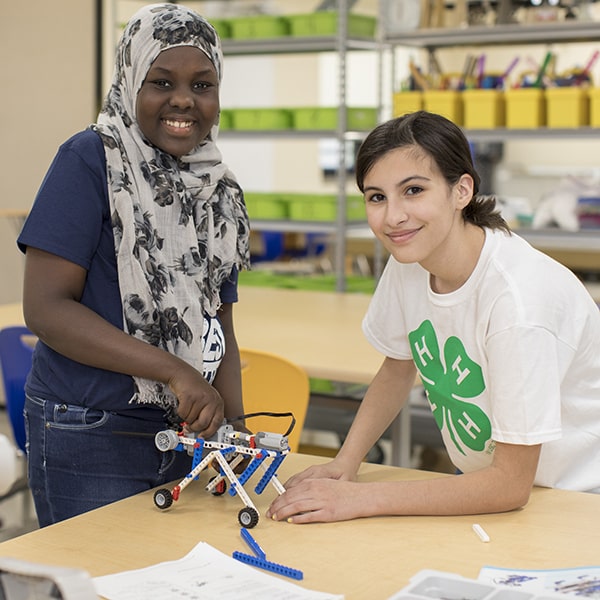
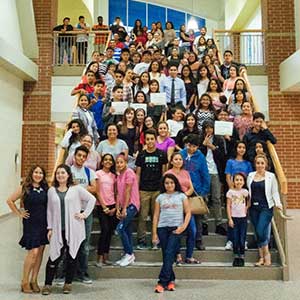
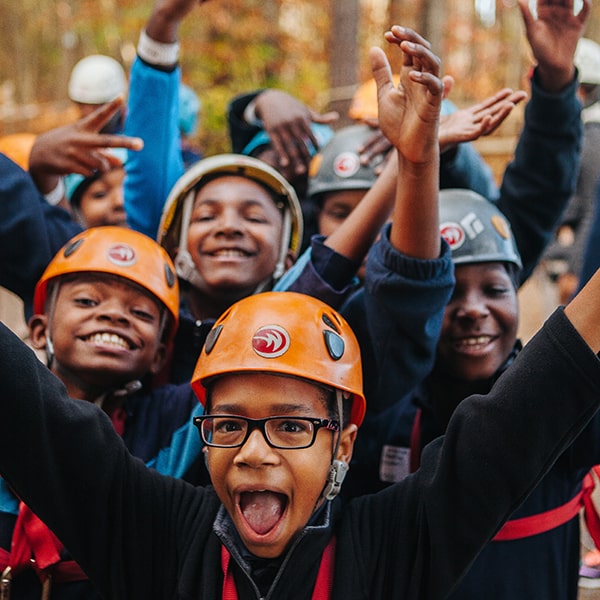
Are you looking for fun and educational activities to keep your kids busy and engaged at home? Each week, 4‑H will be sharing four at-home learning resources from 4‑H programs across the country. Visit the links to learn more about the activity and check back every Monday for new ideas and hands-on, educational resources for all young people.

Learning History & Creative Arts While at Home

Recommended Age: Grades 3-12

Courtesy of Virginia Cooperative Extension, Virginia 4‑H

In this reflective history and creative arts activity, kids use the resource guide and online video provided by the Toronto Symphony Orchestra to reflect on and learn about the history of the music.

Learn the History of Music

Virtual 4‑H Space STEM Camp

Recommended Age: Grades 3-5

Courtesy of Texas A&M AgriLife Extension Service, Texas 4‑H

Sign up for interactive experiments with educational and how-to videos that cover the topics of space rovers, space foods, space rockets, and space rockstars.

Sign Up for Space Camp

Plant a Seed for Tomorrow

Recommended Age: Grades Pre-K – 12

Courtesy of Purdue Extension, Indiana 4‑H

Strengthen your green thumb by registering for Plant a Seed for Tomorrow. The free six-week course that will teach you and your family how to grow your own at-home garden – from site selection all the way to harvesting!

Register for Free Gardening Classes

Cloverbud Click It, Print It, Do it

Recommended Age: Grades K-2

Courtesy of Ohio State University Service, Ohio 4‑H

This list of 50 different hands-on, creative activities is perfect for teaching younger kids basic skills for everyday life.

Start Learning with Your Little One

Since 2008, 4‑H has challenged young people across the country to solve issues in the community and around the world through STEM learning and exploration through 4‑H National Youth Science Day. This annual event introduced youth to various science, technology, engineering and math (STEM) concepts with easy and fun STEM topics relatable to real-world issues.

National 4‑H Council consulted with 4‑H professionals, volunteers, 4‑H’ers, and partners on ways to improve the 4‑H NYSD experience. One of the most important things we heard is that it has evolved to explore topics beyond just science, and the challenge kits are used throughout the year in 4‑H clubs, classrooms, camps, and after school settings nationwide.

That’s why we’re excited to announce that 4‑H National Youth Science Day is now the 4‑H STEM Challenge. The new name reflects the spirit of the program, allows us to reach more kids, encourages easier event planning, and showcases the impact of STEM programs in communities year-round. The challenge—developed this year in collaboration with Google, and with support from our national partner Bayer—is still an annual initiative to inspire kids everywhere to take an interest in STEM topics through hands-on learning.

Here are some of your questions answered about the 4‑H STEM Challenge:

What is this year’s challenge theme?

Today, we announced the 2020 4‑H STEM Challenge is Mars Base Camp. In this challenge, designed by Google and Virginia Cooperative Extension, youth will learn about Mars missions and get to know the red planet. In the process, they will learn about various concepts from computer science to space agriculture.

When can I join the rest of the country in showcasing the STEM Challenge in my community?

Mark your calendars for 4‑H STEM Month in October! It will be the perfect time to showcase how you are participating in the 4‑H STEM Challenge and see how other groups across the country are celebrating. However, you can do the challenge anytime throughout the year and beyond.

Sign up for our newsletter to learn more about 4‑H STEM Month and ways to get involved.

How can I participate in this year’s 4‑H STEM Challenge?

Bring the challenge to kids in your community by purchasing the challenge kit. The kit will include everything you need to lead the challenge and all the necessary materials to participate. Kits will go on sale in July.

Sign up for our newsletter to get updates on kit sales and the Mars Base Camp activities.

Are there other ways to celebrate 4‑H STEM Month?
Along with doing the 2020 Mars Base Camp challenge, 4‑H offers additional activities to do during the month. Check out the 4‑H STEM Lab or past STEM Challenge projects.No matter when or how you choose to celebrate, you can share your experience on social media using #4HSTEMChallenge! You can learn more about the 2020 4‑H STEM Challenge by visiting 4‑H.org/STEMChallenge.
“A penny saved is a penny earned” – says pretty much nobody, anymore. And while you may not miss that clichéd saying, it’s a fact that, too often, children grow up without access to basic financial literacy education. Across the country, formal financial education in schools is scant to non-existent, which means it’s up to parents and other care givers to teach kids the all-important life skills of financial literacy.

4‑H is here to help. That’s why we’ve collaborated with the financial services firm TD Ameritrade to create a new series of research-backed financial literacy activities that make it easy and fun for parents to educate their kids on the value of financial literacy, the hidden costs of credit, and other essential money smarts.

These activities are geared toward children from grades 5 to 10 to ensure we’re reaching kids when they are old enough to understand money, but before they’ve likely started earning it and spending it for themselves. The goal? To give the next generation the tools they need to make smart financial decisions throughout their lives. Giving young people those tools will help ensure them develop a healthy relationship with money and finances rooted in practicality, and not in fear or impulse.

Check out the activities below to keep your kids engaged and learning.

  • Do I Really Need That?: You might want a new pair of headphones or sneakers, but do you truly need them? In this intuitive and fun exercise, kids learn the difference between wants and needs, and begin thinking about budgeting and prioritizing to get the things they need, and maybe some of the things they want, too.
  • Save Smart: Through hands-on internet-based research, kids learn the differences between community banks, national banks, online-only banks and member-based credit unions, and the pros and cons of each.
  • Charge It?: Credit cards are helpful in many ways, but if you don’t pay your bills in full each month, their cost adds up – fast. In this activity, kids pick something they really want, then figure out the true cost of buying it with a credit card.

These and other fun activities live within the 4‑H STEM Lab, our home for a wide variety of hands-on activities designed to instill curiosity and critical thinking, and to help kids develop critical skills to be prepared for life. They’re fun, easy to do, take less than an hour, and each comes with a level-of-messy rating, so you know what you’re in for.

Don’t worry: These financial literacy activities are no-mess. Fizzy Foam Fun, on the other hand, rates higher in the messy meter with its colorful foam fountain.

TD Ameritrade is committed to delivering financial education and helping people build confidence to make smarter, more disciplined financial decisions. Like us, they understand that learning about personal finance while building life skills like mindfulness, impulse control and goal setting can help set young people on a pathway to financial health. With access to the right tools and mentors, we can help young people establish healthy financial behaviors early on, helping them avoid common financial pitfalls and making them more likely to achieve financially healthy futures.

We’re proud to work with TD Ameritrade to help make that job easier – and more fun –by offering these valuable resources to all parents and educators.

Tell us what you think, and what you’d like to see more of, by reaching out to us on social media.

Please keep in mind TD Ameritrade® commentary is for educational purposes only. Member SIPC. All investing involves risks, including risk of loss.


Results Showcase Need for More Support to Close the Growing National ‘Broadband Gap’ in Rural Communities

CHEVY CHASE, MD (March 24, 2020) – A new survey by National 4‑H Council and Microsoft Corp. found that teens without broadband Internet access are less optimistic about their social and economic mobility.

Twenty-one million people living in the United States, including 17 million living in rural communities, do not have access to broadband Internet, according to the Federal Communications Commission, making a challenge out of everyday tasks like looking for jobs, applying to college and connecting with peers. The survey examines what this lack of high-speed Internet means for young people, and the results indicate these challenges create barriers to opportunity and can have a long-lasting impact on a young person’s self-confidence, belief in their career prospects and likelihood of attaining financial success — all traditional aspects of the American dream.

In furthering its mission to empower youth to become innovators and leaders in their communities, National 4‑H Council partnered with Microsoft to explore digital access for teens. The survey, which polled over 1,500 youth between the ages of 13-19 nationwide, was commissioned by the two organizations to explore the impact of broadband access and digital skills on how youth participate in educational, social and community activities. Key findings include:

  • 20% of teens living in rural areas lack access to high-speed Internet.
  • Almost half of teens surveyed said they’ve struggled to complete homework due to slow Internet connections.
  • Rural teens are also less likely to feel a sense of belonging or be involved in social causes in their community without regular access to the Internet.
  • Lack of access to broadband internet can significantly interfere with teens’ self-confidence. Teens without access are:
    • less confident around graduating high school, future prospects for jobs and financial success, and
    • less optimistic about their social mobility for higher education and their careers.
  • 8 in 10 American teens said high-speed Internet access could change their community for the better by improving the local economy.
  • Of the teens surveyed who plan to leave their hometowns, 34% cite poor Internet connectivity as reason for their decision. This figure jumps to 43% for teens living in rural areas.

“Broadband has become the electricity of the 21st century and is transforming every part of the American economy,” said Microsoft President Brad Smith. “Although most of us take broadband for granted, many in rural areas don’t have access to a high-speed connection. As a company, we’re focused on bridging that gap through our Airband initiative and working with partners like 4‑H to ensure everyone has the access and skills they need to prosper in the digital economy.”

As part of their joint goal of working to close the rural broadband gap in communities across the country, National 4‑H Council and Microsoft are empowering 4‑H teens across 15 states to lead digital skills trainings, teach the value of digital tools and find technological solutions to real world problems through the 4‑H Tech Changemakers program. By positioning digital skills as essential to succeed in the modern economy, the 4‑H Tech Changemaker teens are helping to improve non-urban communities’ paths towards economic mobility.

“If I go out and I try to get a better education, I can’t necessarily come back and use those skills here because the internet access is terrible and there isn’t much digital innovation” said Eli a 4‑H Tech Changemakers teen leader who has been teaching local farmers how drones can help them manage their crops. “But with the 4‑H Tech Changemakers program we’re bridging the digital divide in our county one family, one household, and one farm at a time. That’s creating more opportunities for my generation and the ones to come”.

“In today’s ever evolving and technology dependent society, digital skills and broadband access are necessary tools to achieving our goal to develop America’s youth to become leaders,” said Jennifer Sirangelo president and CEO, National 4‑H Council. “We’re so proud that young people participated in this survey and gave their voices to this issue. Our partnership with Microsoft on the 4‑H Tech Changemakers program is not only equipping teens with the digital skills they need today, it’s also preparing them and our country to compete in a global economy dependent on digital technology tomorrow”.

To learn more about 4‑H Tech Changemakers and to download campaign resources, please visit the 4‑H MEDIA CENTER.

About 4‑H

4‑H, the nation’s largest youth development organization, grows confident young people who are empowered for life today and prepared for career tomorrow. 4‑H programs empower nearly 6 million young people across the U.S. through experiences that develop critical life skills. 4‑H is the youth development program of our nation’s Cooperative Extension System and USDA, and serves every county and parish in the U.S. through a network of 110 public universities and more than 3000 local Extension offices. The research-backed 4‑H experience grows young people who are four times more likely to contribute to their communities; two times more likely to make healthier choices; two times more likely to be civically active; and two times more likely to participate in STEM programs.

Learn more about 4‑H at www.4-h.org, find us on Facebook at WWW.FACEBOOK.COM/4‑H and follow us on Twitter at WWW.TWITTER.COM/4H.

About Microsoft Corp.

Microsoft (Nasdaq “MSFT” @microsoft) enables digital transformation for the era of an intelligent cloud and an intelligent edge. Its mission is to empower every person and every organization on the planet to achieve more.

For more information, press only:
Ashley Gordon, Public Relations, National 4‑H Council, (301) 961-2830
agordon@fourhcouncil.edu

Microsoft Media Relations, WE Communications for Microsoft, (425) 638-7777
rrt@we-worldwide.com

Across the country, communities are facing unforeseen challenges due to the impact of the coronavirus (COVID-19). For 4‑H, our network of 500,000 volunteers and 3,500 4‑H professionals have had to quickly understand the impact of COVID-19 and respond with swift action to support our young people and communities. While this time of uncertainty has presented new obstacles to navigate, our commitment to positive youth development is unwavering and 4‑H remains present to support the six million young people we serve in every county and parish and all kids who need educational resources, mentorship and a sense of belonging in this time.

Through our community of more than 100 universities and America’s Cooperative Extension System, 4‑H is working diligently to continue to fulfill our mission because our work is too important, especially now, as communities across America experience the impact of school closures. We recognize it can be stressful for parents and families to find resources available to maintain a sense of normalcy and make sure kids don’t get off track in their daily development. And while some schools are implementing a virtual learning plan, others don’t have the resources to continue student lessons. 4‑H is committed to providing free and low-cost online and print educational resources to support 4‑H’ers and families while schools and clubs remain closed. Please visit 4‑H.org/Legacy to learn more.

We will continue our work to ensure young people and communities have the resources to stay connected and engaged throughout this time. We don’t know what the coming weeks will bring, but what we do know is that Cooperative Extension’s 4‑H program is prepared to rally around our young people. Working together we will get through this and our young people will thrive.


As communities across America experience the impact of school closures it can be stressful for parents and families to find resources available to maintain a sense of normalcy and make sure kids don’t get off track in their daily development. And while some schools are implementing a virtual learning plan, others don’t have the resources to continue student lessons.If you are looking for ways to keep your kids engaged during this impromptu time off, 4-H offers learning resources that are hands-on, fun and engaging. Check out these five fun at-home educational activities:

    1. Inspire your kid to do
      4‑H’s free Inspire Kids to Do™ activity guides collectively feature over 100 activities that will turn your home into a learning oasis! Your kids can learn essential life skills like giving back, health and wellness, cooking, and leadership.
    1. Family fun comes first
      If the entire family is spending extended time at home, you may be wondering how you can make the best of your time together. Plan activities that everyone can participate in that are fun and educational. Try some family recipes (featured in the free downloadable Healthy Living Activity Guide) to bring the household together!
    1. Take a homeschool approach
      If you don’t want to break your kids from the structured learning that is adopted in many classrooms, 4-H Curriculum can help. From photography to cooking, robotics to entrepreneurship, each 4‑H Curriculum is developed and supported by an accredited university and includes full lesson plans, instructor guides, and student worksheets.
    1. Create your own learning lab
      Science, technology, engineering and math (STEM) skills are applied to many school subjects and everyday tasks. The free 4-H STEM Lab uses basic STEM concepts and learning to bring you fun activities for kids of all ages. You can sort activities by grade and topic, as well as see items needed for each experiment. Also, each activity shows the mess level—a great added feature for at-home experimenting!).
    1. Combat cabin fever with mindfulness
      With extended time at home, it’s easy to get a little stir-crazy—for both parents and kids. Our guide to mindfulness is a great way to protect and care for your mental health, staying clear- and level-headed and relaxed.

Thinking about using any of the above tips? Use hashtag #InspireKidstoDo on social media to share photos of your kids doing any of the activities to give other parents ideas on engaging with their kids!


Teki Hunt’s 4‑H experience began in a diverse Arkansas community, where she participated in a multitude of projects, from fashion to shooting sports to cooking, to name a few.

Teki received her undergraduate degree at Spelman College, a historically black college for women.  Although she did not attend an 1890 land-grant university*, she knew the value and impact that those institutions have on communities. Teki is now director of 4‑H Youth Programs, as well as co-program director of the Peace Corps Prep Program at the University of Arkansas Pine Bluff (UAPB).

Teki shared with me how her passion for early childhood development and special education led her to spearhead the development of the university’s 4‑H program.

Please can you tell me about your 4‑H experience in your community?

Teki Hunt (TH): I started 4‑H in the second grade in 1981. In the lower grades, the focus was on arts and crafts. When I entered the 5th grade, I participated and competed in events at the county office, such as bicycle safety, BB gun shooting, archery, gardening, and cooking. I even won for the county and competed in the state bicycle safety competition.

What were some of the standout skills you learned in 4‑H, or what experiences did you have that helped build the foundation of where you are today?

TH: The one thing that stood out for me was the interactions I had with other people during contests and presentations. I was accustomed to getting up in front of people at church, but it was a different, unfamiliar audience in 4‑H. I needed to be confident and comfortable, no matter where I was or the audience to which I was presenting. We were encouraged to step outside the box and expand our worlds. I think 4‑H is still good at that!

Were there any influences growing up that led you to study child development in college – whether it was a person or an experience that you had?

TH: Initially, I wanted to pursue a career in pediatrics because I always liked working with kids, so I started pursuing a degree in pre-med. However, I switched to child development because I wanted to build an ongoing relationship with kids. After babysitting a child with down syndrome—my first babysitting job—I ended up studying and earning my master’s degree in special education at the University of Georgia (UGA). That experience was a turning point in my education and career.

What did it take for you to get to where you are today? Did you face any challenges as an African American woman in your profession or when pursuing your education? If so, how did you overcome those?

TH: Our community was mixed when I was growing up. My Mom worked at a hospital as a nurse, and my Dad is an attorney, so we always interacted with people from different backgrounds. It wasn’t until I went to graduate school that I was treated like I didn’t belong. UGA was integrated and had been for a while.  When I was there, the students weren’t very accepting of me. I stuck it out, utilizing the graduate student support group and the multi-cultural center on campus.  I also attended a local multi-cultural church, so I found places of acceptance.

After graduate school, I joined the Peace Corps, with the hopes of working with open-minded individuals who wanted to assist in developing countries. Unfortunately, I was the only Black in my cohort and experienced stereotyping, both in the training lessons and personally. I was even told I wasn’t American because of my skin color and how I blended in with the native Dominicans. Although speaking up didn’t help, after completing my training, I was readily accepted in the community where I served.

After college and the Peace Corps, what led you back to 4‑H to work with Cooperative Extension**?

TH: I returned to Arkansas to work in special education; I served in various early education centers that needed childhood special education services. The UAPB childcare center was one of the centers where I was assigned through the educational cooperative. In 2011, I was offered an adjunct position at the university to teach child development courses. Although I was hesitant, preferring to work with children under five, I accepted the opportunity and I liked the experience. Later, because I grew up in 4‑H, I was asked to help start the 4‑H program at UAPB. After helping co-advise the Collegiate 4‑H club, and earning the role of Assistant to the Dean, I was officially tasked with launching the 4‑H program. I was named the first Director of 4‑H Youth Development Programs at the university and learned the full scope of 4‑H through attending conferences and researching 4‑H programs in other states.

Can you talk a little bit about how 1890 land-grant universities and University of Arkansas Pine Bluff are continuing to open doors for African American students and youth, and expanding knowledge in communities?

TH: A lot of students don’t realize all the careers and opportunities that are available. However, when they attend a land-grant institution, they see the influence of USDA. We teach them the importance of agriculture and the science that powers it. We introduce students to their passion. We—and all historically black colleges and universities (HBCUs)—invest in the future success of our students. We want to make sure our students truly understand the value of our programs.

How do you think schools or other youth organizations, including 4‑H, can follow the example of the 1890s when it comes to encouraging more diversity and empowering young people to seek out more leadership roles?

TH: We need to encourage them at an early age, expose them to the career options available, and engage them when they’re still curious and open to new thoughts and experiences. It’s important to help kids recognize they have value and let them know that they can teach the teachers. We’re learning and growing together.

Where do you hope to see these kids in the future?

TH: I would love to see them engaged in a career that they love, giving back to their communities, and mentoring others like they were mentored in 4‑H. 4‑H and UAPB encourage kids and students to see beyond what’s in front of them and work with people who don’t look like them. I want them to spread their knowledge and understand the value in themselves and those around them.  I hope they explore beyond their communities and bring back ideas that will make their communities, land-grant universities, and the world better.


*The Morrill Act of 1890 requires each state to show that race was not an admissions criterion, or else to designate a separate land-grant institution for persons of color. Among the seventy colleges and universities which eventually evolved from the Morrill Acts are several of today’s historically black colleges and universities (HBCUs).

**The Cooperative Extension System is a nationwide, non-credit educational network. Each U.S. state and territory has a state office at its land-grant university and a network of local or regional offices. These offices are staffed by experts who provide useful, practical, and research-based information to agricultural producers, small-business owners, youth, consumers, and others in rural areas and communities of all sizes.


Manola Erby, who grew up in a small Mississippi town outside of Meridian, credits her experiences and the support system she had growing up for the opportunities she had.

“My Mom couldn’t afford to send me to college,” she remembers, “but the administrators at Alcorn State University [Alcorn] and my community rallied around me. They made sure that I had the resources I needed to go to college and be successful.”

As the Youth Specialist and Program Leader at Alcorn State University, Ms. Erby develops 4‑H programs in career readiness and leadership, leads workshops and training sessions for educators, and sources opportunities for young people in the community from youth-serving organizations. She took some time to share with me why she gives back to the community that supported her.

Where did your 4‑H experience begin, and how was the experience?

Manola Erby (ME): It all began in a small community called Shiloh. I was eight years old; it was 1966 or 1967. We had a small 4‑H club with about 10 members called the Shiloh 4‑H Club. We met monthly—at the Shiloh Baptist Church or in a member’s home—but it was usually at my home. It was still quite segregated at the time, so there were only African American kids in our club.

We learned various skills, including meeting management, parliamentary procedures, and life skills—all things you need to know to be successful in life. There was a formal dress code for club meetings, teaching us how to dress for an occasion. Club officers were required to develop a meeting agenda, which was reviewed by a volunteer leader or a parent. I served as President for three years, so that helped me to learn a lot of leadership skills. The experience helped me to become a leader. It inspired me to take on other leadership roles in my community and school.

Do you recall some of the projects and activities that you did in 4‑H?

ME: I participated in the food and nutrition project, where I learned about cooking and kitchen safety. My father died when I was five, requiring my mother to have two jobs. She left for work early in the morning and came home late in the evening, but because of what I learned in 4‑H, I was able to cook for my brother. There was also a requirement every February during Black History Month to participate in a public speaking contest. I won first place twice and second place three times. I was quite a shy kid. Participating in 4‑H developed my confidence.

Do you think your 4‑H experience influenced your collegiate studies?

ME: Yes, it played a significant role. I made up my mind when I was about 10 years old that I was going to attend Alcorn. Our 4‑H club used to take college tours, and Alcorn was the first stop. We even toured the Home Economics department. I fell in love with the school, from the campus to the people. After that experience, I knew I wanted to be a Home Economics teacher, just like many of those who inspired me.

What led you back to Alcorn for your career?

ME: After earning my master’s degree at Iowa State University, I returned to Mississippi and began teaching Home Economics in the public-school system. There was a position open at Alcorn for a home economist, which included an opportunity to work in the community. I interviewed, was hired, and fell in love with the work I was doing.

When you look back on your life, can you share some of the challenges you faced and how you overcame them?

ME: Being an African American woman, I had to work 10 times harder than the average professional. A lot of doors were closed, and at times, people didn’t think I measured up until I got there. As an African American who graduated from a historically black university, when others learned that I had received a degree from Iowa State University, sometimes the doors opened a little bit wider. The support I received, the skills I learned, and the mentors I had at Alcorn gave me the confidence, tenacity and knowledge I needed to be successful at Iowa State and beyond. I left Iowa knowing that I could compete on any level. Today, I love what I do—working with underserved communities—and it’s a passion of mine. That’s what 1890* universities do. They support the underserved and underrepresented who have limited resources.

Can you describe how 1890 universities are continuing to open doors for others and expanding knowledge in the community?

ME: I think we’re continuing to give underserved, limited-opportunity rural families resources that they wouldn’t be able to get anywhere else. We provide students with internships, so when they leave high school, they’re equipped to go into the workforce, especially if they can’t afford to go right into college. When youth attend college, it’s our job—through specific programs—to make sure they’re equipped with the tools they need to be able to graduate. Jacqueline Davis-Slay is a graduate of Alcorn State University, and she is now the legislative director at the Agricultural Research Service of the United States Department of Agriculture (USDA-ARS). We have graduates from all walks of life who have gone on to lead successful careers, and I feel like we had a part in that.

How do you think schools and programs like 4‑H can continue to encourage more diversity and inclusion while empowering minority youth to seek out leadership roles and be more involved in their communities?

ME: We need to do less traditional programs and get young people involved in things that they like and want to do. We’ve done focus groups to find out from young people what they want to do so we can develop those programs that will interest them the most. We have a 4‑H modeling team that does a full production every year at the local high school. They learn how to do tasks like lighting and sound. Some kids like to fly drones, and others are interested in hip-hop. Because we’re small and have access to small rural communities, we can encourage more African American kids to get involved in 4‑H with non-traditional programs, especially if they initially shy away from us because they aren’t interested in agriculture.

What do you hope young people will gain from the opportunities and experiences you provide, and where do you hope to see them in the future?

ME: I hope they gain a sense of confidence in themselves like I did when I was in 4‑H. I hope they build leadership skills that they can take into a classroom, a courtroom, or their communities. I hope the public speaking skills they learn will allow them to voice their opinions, be outspoken, and speak their piece. I hope they’re running this country! I hope they’ll be the next President. The next writer. The next judge. The next educator. Tomorrow’s university president.


*The Morrill Act of 1890 requires each state to show that race was not an admissions criterion, or else to designate a separate land-grant institution for persons of color. Among the seventy colleges and universities which eventually evolved from the Morrill Acts are several of today’s historically black colleges and universities (HBCUs).
Dr. Dawn Mellion-Patin grew up in Iberville Parish, Louisiana, where she was encouraged to join her local 4-H club, which had a majority Caucasian membership at the time.

“There may have been one or two African American kids in the local 4-H club,” she remembers. “Now that I think about it, those of us who joined 4-H were hand-picked; I believe my teachers were trying to integrate 4-H.”

Although Dr. Mellion-Patin did not grow up around agriculture, she received undergraduate, graduate, and doctorate degrees in the field, as she realized early on that was where she belonged. Today, Dr. Mellion-Patin is Vice Chancellor for Extension* and Outreach at Southern University. She shared with me her journey in agriculture, as well as her views on the impact of 1890 land grant universities**.

What was your 4-H experience like for you?

DMP: I was an active 4-H’er in elementary school from 1977 through 1980. Before joining, I noticed 4-H’ers were showing their projects—from animals to sewing to cooking—at our local annual fair. I think our teachers wanted us to have similar opportunities and experiences.

What are some of the stand-out skills or experiences you may have taken from 4-H that became the foundation of where you are today?

DMP: I would have to say confidence. I’m from the deep south of Louisiana, and when I was in elementary school, schools were just beginning to integrate. There were 30 kids in my class, 25 white students—with the majority placed in higher aptitude classes—and five black students. By encouraging me to join 4-H, my teachers made sure that I was exposed to more learning opportunities and experiences—like what my white classmates receivedwhere I gained confidence and improved my public speaking skills.

You talked about the influence of your teachers. Did you have any other mentors growing up who paved the way for you?

DMP: When I was growing up, my minister, doctor, and several other people in the community rallied behind me. However, most of my mentors have been individuals at various levels of my education. I have mentors who would not let me quit even when I wanted to. Sometimes it just takes people to lift your hopes. These types of mentors understand the importance of giving back and being of service to the community. I like to think that I’ve done the same for my students.

Did 4-H influence your decision to major in agriculture? 

DMP: My first major was pre-med chemistry, and 4-H did not influence that. I started focusing more on agriculture and realized very early on that it was where I was supposed to be. I changed my undergrad major to plant and soil sciences. When I got into agriculture, I remembered my 4-H experiences and started reading more about the field. It was wonderful learning about and studying agriculture for the first time! As a kid, I did not associate my involvement in 4-H with agriculture, but by the time I got to college, everything came full circle.

What led you back to Extension after finishing college?

DMP: I received my master’s degree in agricultural education at Southern, and those studies took me from being a student of Extension to a practitioner of Extension. When pursuing my doctorate at Iowa State University, I decided to major in Extension agriculture and Extension education, because I knew the positive impact 4-H had on me as a child. After receiving my doctorate, I had an opportunity to go back to my alma mater, where I earned an outreach and a teaching appointment. In 2003, I resigned from my tenure teaching post and joined Extension full-time.

What did it take for you to get to where you are today, and how did you overcome the obstacles of being an African American woman in your profession?

DMP: It took self-confidence, for which I can credit my mentors who always encouraged my growth and development. Reading also enables me to feel more confident and comfortable in conversations and situations in which I may lack experience.

I was also in the Louisiana Army National Guard for eight years, before attending Iowa State. When you have that type of experience, it sets you apart from your peers. When my studies became challenging or when I experienced unbelievable isolation in graduate school, I had to dig deep. As African Americans, we’re always told, “You have to be better; you can’t be average; you have to do more.” It was something I heard from the 1st grade, so I never got comfortable and continued pushing for more.

How are 1890 institutions continuing to open doors for students, and how are you expanding that knowledge in the community? 

DMP: Two of the biggest things that these universities contribute to future generations are exposure and a combination of compassion and tolerance. We fully understand the challenges that some of the students face who come through the door. We still receive first-generation college students, students who come from marginalized backgrounds, and students who’ve had a rough way to go—both African American and Caucasian. A lot of the university staff were also first-generation college students, so we understand and show compassion for their struggle, and offer a lot of encouragement.

What do you think it will take to empower more minority youth to seek out leadership roles through youth development organizations and schools? 

DMP: There needs to be more exposure to impactful opportunities. Through a grant program, we have several gardens for elementary and middle school students. Access to these gardens has inspired the kids to consider agriculture as a major at Southern University. A lot of kids just aren’t familiar with the career opportunities available, so it’s essential to show them.

What is your vision for the next generation of African Americans in education, leadership, and agriculture, or any other profession?

DMP: I would like them to have a broader reach, a more significant focus, and increased opportunity. My generation feels responsible for uplifting our communities. In this new age of technology, nothing should be limited to a community any longer. I want the next generation to be bold enough to step through the doors that are opening and open new doors. I hope that they have the confidence to know that they belong, to have the skillsets to make them valuable contributing members of society, and to have the wisdom to know what they need to accomplish.

*The Cooperative Extension System is a nationwide, non-credit educational network. Each U.S. state and territory has a state office at its land-grant university and a network of local or regional offices. These offices are staffed by experts who provide useful, practical, and research-based information to agricultural producers, small-business owners, youth, consumers, and others in rural areas and communities of all sizes.**The Morrill Act of 1890 requires each state to show that race was not an admissions criterion, or else to designate a separate land-grant institution for persons of color. Among the seventy colleges and universities which eventually evolved from the Morrill Acts are several of today’s historically black colleges and universities (HBCUs).


4-H alumni aren’t the only ones with a 4-H story to tell. For many of those involved in 4-H, their experience began as a volunteer. That was the case for Dr. Maurice Smith, Assistant Professor and 4-H Youth Development Extension* Specialist at Virginia State University (VSU).

In 2008 in Sussex County, Virginia, Dr. Smith—who was attending Virginia State at the time—was introduced to 4-H by his mentors, who also happened to be 4-H Agents in the counties of Prince George, Greensville/Emporia, and the City of Suffolk. They suggested he volunteer at a local 4-H Camp.

“As a young black male—and as a junior in college—it wasn’t the norm to say, ‘I want to go to a camp and be outdoors,’” he recalls, “so going to my first outdoor camp was a shock!”

After becoming a camp volunteer, his passion for youth development began. In his current role, Dr. Smith works with state programs and program teams on civic engagement and leadership development. In addition, Dr. Smith conducts research related to civic engagement as it pertains to urban minorities, serves on many 4-H committees, and is an advisor to the VSU 4-H Collegiate Club and Virginia 4-H Ambassadors Academy.

During our conversation, Dr. Smith shared why he believes that it is vital to promote agriculture to young people, as well as how he is getting more African American youth involved in 4-H.

mauricesmith-young-camp

Please share how your 4-H experience began.
Dr. Maurice Smith 

MS:
My 4-H journey started as a camp volunteer. I was finalizing my studies at Virginia State University, majoring in agriculture, business, and economics, and my mentors encouraged me to come to camp to mentor youth in my area of study, as well as share my local perspective on agriculture. While volunteering, I noticed a change in learning and behavior that a child can go through at camp that I’d never seen before. This experience and the advice of my mentors helped me frame my perspective, which inspired me to pursue a career in 4-H, youth development, and agriculture.


Did you have any experiences in grade school that may have led you to want to work with youth and be a mentor?
MS:

Growing up, no, however, my grandparents’ family were surrounded by agriculture. My father and mother pushed me to major in agriculture because of the scholarship opportunity and resources available in agriculture at Virginia State.I think we had a 4-H program in Sussex County. However, there were difficulties, including getting African American parents to understand the importance of 4-H. That’s why my research on African American youth and families is instrumental in helping strengthen enrollment.

It sounds like you have a passion for working with youth and mentoring them. Can you share what you hope young people will gain from being in programs like 4-H that will help them to expand their knowledge of agriculture?

MS: I hope they gain leadership and social skills, as well as a sense of belonging. A lot of these small things can help them as they start their careers and make them lifelong contributing citizens. Young people also need to learn a sense of awareness. In 4-H, instead of saying, “I know what I want to do and be when I grow up,” there’s a different perspective. Instead, the question is, “What types of skills do you need to be successful in what you want to be when you grow up?” We’re preparing young leaders to be successful in their futures.

How do you think schools and other organizations like 4-H can encourage more diversity and inclusion, and how can they empower more minority students to be leaders or seek out leadership roles?

MS: I think there needs to be a constant and continual branding of 4-H. My research revolves around the involvement of the African American community and parent involvement in 4-H. For example, to recruit more African American young men into 4‑H, do we have our coaches and barbers who serve as role models volunteering? Do we have African American leaders in the community serving as volunteers? Are church groups, community groups, fraternities, and sororities volunteering? Does our 4-H merchandise appeal to African American audiences?  I want to come up with new and innovative ideas to get the African American community more involved.

Can you tell me how Virginia State and other 1890 land-grant universities** or historically black colleges and universities (HBCUs) continue to open doors for students and expand knowledge in communities?

MS: Our current president, Dr. Makola Abdullah, and his wife are instrumental in working with 4-H. They love 4-H. His wife is helping us create a program in the surrounding localities on STEAM awareness, utilizing VSU student leaders and activities to come up with initiatives to work with 4-H. We had a big STEM camp in January 2019 with the university president and our colleagues to raise awareness of 4-H. Now we are coming up with more ideas to increase funding for the 1890 universities. We are thinking of ways to raise funds to help the poor, socially disadvantaged and underserved youth in this state who might want to attend Virginia State, but do not have the funds.

Lastly, how are you strengthening enrollment in 4-H, and what do you hope members get from participation?

MS: We plan and develop 4-H programs according to the needs of the community, but we should think more about the interests of the child. Along with collaborating with VSU, we must include those insights, so we have interesting programs, and are maintaining inclusion, enrollment, and excitement in 4-H.

*The Cooperative Extension System is a nationwide, non-credit educational network. Each U.S. state and territory has a state office at its land-grant university and a network of local or regional offices. These offices are staffed by experts who provide useful, practical, and research-based information to agricultural producers, small-business owners, youth, consumers, and others in rural areas and communities of all sizes.**The Morrill Act of 1890 requires each state to show that race was not an admissions criterion, or else to designate a separate land-grant institution for persons of color. Among the seventy colleges and universities which eventually evolved from the Morrill Acts are several of today’s historically black colleges and universities (HBCUs).