
Whilst we load your content.
Mike Snyder (MS): We are a space-based manufacturing company that specializes in leveraging the unique properties of the space environment to develop solutions to commercial, industrial, research and defense challenges. In 2014, we were the first company to manufacture in space with our 3D printer on board the International Space Station (ISS). We flew a second generation of the device to ISS in 2016 where it’s printing every week for customers. We’ve expanded upon our 3D printing technology to develop capabilities and products for a variety of commercial and defense applications. Made In Space was founded in 2010 by myself and three other co-founders, with the idea of helping humans live and work in space. Our most recent experiment, fiber optics, utilizes the effects of microgravity to create a better product in space than here on Earth. Our goal with fiber is to produce the material in large enough quantities for sale and use back on Earth. We’re also involved with many other cool projects such as Archinaut, an in-space additive manufacturing and assembly robotic technology, as well as in-space recycling and technologies that harness in-situ resources to build habitats and other structures on planets such as the Moon and Mars.
Where did your 4‑H experience begin?

MS: So I got in at the Cloverbud age as soon as possible, but I was also around before that because [my sister] was already heavily involved. I would go to meetings just as a fly on the wall. I don’t know how old I was, but I was pretty young. I went through the Cloverbuds and then went straight from that to where I can do the work and projects of the older kids. I got into that as soon as I could. I was actually kind of an oddball. I was into insects and rockets, primarily. Those were the two things that I always went to the state fair for, and I always won county. I don’t know if I’ve ever lost an insect showing ever since I started.
The club experience was great. I really believe it helped me. It accelerated my ability to speak in front of people. It also helped me in terms of contextualizing, telling a story, and getting my points across, without having to be asked specific details, which was the format of judging. You’re in front of the experts in whatever field your area of project is. This is where you needed to know your stuff. It’s intimidating as a child, to start off like that when you’re ten years old, in front of people who have these life experiences and know a lot more than you, trying to convince them you’re legit and you learned things from your project.
It was interesting because every year I would build on the previous year. I wouldn’t just sit idle. My next year’s rockets were better than the previous year’s, my insect collection grew, and my knowledge base grew. It really put me in a lifelong learning mentality in terms organizing and presenting my work. I was able to see something from start to finish and understanding how a project schedule works. Not waiting until the last minute the night before your project is due to do your work, although I’d done that a couple of times (laugh). It helped me mature as a professional a little earlier than a lot of folks that didn’t have that experience. It was very beneficial to me.

You mentioned organizing and presenting as key skills/values learned, but were there other top skills and values you learned during your time in 4‑H?
MS: There were definitely other skills. The project-based ones are very technical and kind of sparked my curiosity. The livestock ones were more taking care of animals, from washing to feeding to cleaning up their waste. That was like a job within a job that, in the end, you sold off your animal and got a check for your hard work. I raised pigs, chickens and rabbits, and each animal teaches you a different thing and gives you a different perspective on life in general. Definitely how the farm world works and how our ecosystem functions, specifically regarding how what we do today, affects our tomorrow. Those are some of the lessons where you see the fruits of your labor. You might go through some trials and tribulations to achieve it, but you can’t give up because you’re responsible for these animals. You just have to keep pushing through no matter what happens. I had injury once that lasted a few weeks, and I couldn’t participate in a time-efficient manner. I couldn’t get my hand wet. So I’d have to take twice as long to clean things and do things because I could only work with one hand, so it gives you a new respect for how to get the job done and be clever at how to do certain things. That’s another thing that kind of resonates with me today.
After your experience in raising livestock and participating in other traditional 4‑H projects, was there a key moment in your education or experiences as a young person that led you to pursue a career in engineering?
MS: You know, I’m kind of an oddball in that respect. It’s hard to trace back when I wanted to do engineering, but from all accounts, it was almost simultaneously when I escaped the womb. I’ve never not wanted to do what I’m doing today. I’ve had times where I wanted to be multiple things, but there was always a time when I wanted to be an aerospace engineer and work on stuff for space. I don’t know when that moment was, but it’s been a lifelong dream of mine. So I did everything I thought could benefit, and that included 4‑H and the projects I picked.

Many of the alumni I’ve talked to had a very traditional experience in 4‑H. Like yourself, they participated in mainly ag-related projects. You seem to have ventured beyond that with your interest in rocketry. Share your thoughts on the evolution of 4‑H and how you think the organization is preparing today’s young people to be leaders in STEM.
MS: I feel like towards the end of my stint, I started to witness a transition happening. And I think it had a lot to with more people having computers inside their homes. The projects kind of changed and the way the materials were presented was different and more engaging. The project books included more hands-on experiments and fewer words attached to those experiments. Instead of reading 20 pages until you get to an experiment, there was one every five pages. I think the evolution signified the healthy transition of how we present knowledge and how we learn, and there are subject areas that are useful. Things that I may have learned growing up may be irrelevant today because certain aspects of technology are overtaken with the decreased need to do or learn those things.
I sometimes do nerd out a little bit and look at what they’re doing, like with the rocket project, for example. I like how the new format for a lot of the projects are pretty interesting and how they are presented. I really think inspiring and giving young people the ability to learn things in an easy, straight-forward fashion and then allowing them to take it to whatever level they want is really helpful. For example, a lot of STEM activities are start-to-finish. I think 4‑H is more about a collection of work where you have reference material that is start-to-finish, but what you do with that material can take on many forms. That fosters the creativity in young people and gives them a chance to build something that doesn’t necessarily look like the first specs of their presentation or collection of work, but they can own it. And when you talk about STEM, that’s a great way to learn those types of activities. Not just putting together a robot from a bunch of kit parts, but taking a bunch of parts and putting together a robot that serves a function that you may think is useful. I think a lot of the project-level learning I had allowed me to do that. I can take it and do what I wanted after I learned the base material, which was very beneficial.
As you look back on your career growth, what were the challenges you faced?
MS: School was very easy for me until I got to college, where I woke up pretty fast. I think the way I learned projects in the summer with 4‑H assisted me in that because I usually would do subject areas that had nothing to do with which I was familiar. I would often pick up one or two projects that I had no clue what was going on, just to learn them. That ranged from electrical projects to computer programming projects. I realize that it was a different world in college, not necessarily the subject matter, but how you’re tested and the expectations. I was relatively bored in high school and just kind of showed up to take tests and was reading what I wanted to read in class. But the organizational skills and how to go about learning that I gained in 4‑H were really beneficial to have that in my back pocket to immediately be able to adapt.
What are your thoughts on ways we can encourage young people to pursue leadership opportunities in STEM?
MS: The STEM career part is very interesting because I find it difficult to engage folks with all the options available. Becoming involved in a STEM field at the beginning of your life is very exciting. And then you get into higher education, and it’s still exciting. There’s a middle ground where people lose interest, and I haven’t figured out why that is. But I was just thinking back to when I was in junior high, and half of my class wanted to do something that was in the technical/STEM field. When I looked at the numbers, I roughly recall the number of students that wanted to do engineering was in the double digits. However, there were only four people from my graduating class, I think, that ended up with an engineering degree. So what happened in the middle?
I think people get distracted, and I think you have to keep people continually engaged with different things that are meaningful to them. Something that’s just cool only has a limited life. You have to think, not just cool, but useful. And if you can attach that to a message that is useful for both the individual and the collective, there’s a double whammy. But I think people aren’t connecting at the individual level enough, and that’s why you see drops in the interest in STEM fields. I’m sure there’s also peer pressure and peer activities that are involved with that drop as well. But frankly, people just lose interest and then don’t have the opportunity to regain it. So I think just keeping them interested, giving them options, letting them know options exist, and things to do in that field exists, I believe to be very useful.
Do you think that thought applies when it comes to achieving more diversity in STEM leadership?
MS: Absolutely. I think whatever lens you’re looking through, some people either don’t feel like they belong or are welcomed. Part of this could be because of disinterest. So if you keep them interested and feeling involved and welcome, I think youth from all walks of life will stay engaged. Something happens that causes folks to feel like they can’t or shouldn’t do something, and we need to fix that. I think by making everything available and making everyone feel welcome is the best path there. Working towards a goal together is what we should be focusing on, not who is working on that goal.
What is your vision for the next generation of STEM leaders?
MS: Well the next generation has some interesting topics at hand, especially with how computational intelligence is increasing and things like machine learning are really taking root. There are going to be some ethical questions on what we can do in the future, as well as questions on what to work on next because there’s always going to be something to work on next. I feel like we may go full circle from living off the land and going completely technological in society and then going back to figure out how to regain the land. I feel like there’s opportunity in the future to pave the way for what STEM looks like 200 years from now.
I started off my year as the 2017 STEM Pillar winner in February with a film crew and members from National 4‑H Council arriving at my home in Mogadore, Ohio. We filmed for a few days at my home and school to create my Pillar Video. I had such a wonderful time getting to know all the crew and Council members and had a wonderful start to my experience as a Pillar winner.
In March, I began readying myself to embark on what has been the adventure of a lifetime. I flew out to Washington, D.C. for the official 4‑H Legacy Awards ceremony. I had a wonderful stay at National 4‑H Conference Center and enjoyed sightseeing in the D.C. area. While in D.C. I got to meet three of the most inspiring and driven youth I know: Amelia Day, Bryanne Sanchez, and Bubba Sugarman, the other three 2017 Pillar winners. We had media training, photo sessions, tours, hung out with each other and our families, and an overall amazing week. When the night of the Legacy Awards came around, it was so surreal. Just being in a room with so many incredibly influential and powerful people was an experience beyond words. I met some of my biggest idols and found so many new incredible people to look up to. The representatives from my sponsor, HughesNet, were an absolute delight to sit with at the ceremony and just as wonderful as we kept contact throughout the year.

When I returned from D.C., I had a lot of local paper interviews, and I was even interviewed for RFD-TV. I loved sharing my journey and my message of empowerment with the world. In May, as the school year was beginning to wind down, I set off on my next trip. I flew all the way from Ohio to San Diego California! I had the incredible opportunity of serving as a speaker on a STEM Mentors panel at the U.S. News and World Report STEM Solutions Conference. I got to meet Ursula Burns, Susan Hockfield, and Ellen Ochoa, some of the most powerful women in the STEM world.
When summer rolled around, I had an even busier schedule than during the school year. The week I got off of school, I headed straight to Washington, D.C. on a bus full of other Ohio youth to participate in Citizenship Washington Focus (CWF). I had a great time and met a lot of new people. When I returned from D.C., I headed straight to 4‑H Camp for my third year as a counselor. Once camp was over, it was time for the County Fair life skills project judging and then the State Fair. As soon as I got back home from the state fair, I was onto the next pillar activity. I headed back to Washington, D.C. to host the 4‑H National Youth Science Day Preview Event, hosted by HughesNet.

When I got back home from my final trip to D.C., it was time to prepare for the County Fair. This year I was named the 2017 First Runner-Up Portage County Fair Queen. I had a whole booth at the Fair dedicated to my time as the STEM Pillar winner and had a wonderful time representing 4‑H.
For my final event as the 2017 STEM Pillar winner, I went to New York City to help host 4‑H National Youth Science Day. I had a great time working with all the students and meeting STEM Ambassadors from around the country. I also had the opportunity to present trophies to two of the three 4‑H NYSD sponsors, HughesNet and Lockheed Martin, and thank them for their continued support of 4‑H.
The past year has been filled with so many incredible opportunities. I’ve had an abundance of new adventures and visited so many new places. Most importantly I met some pretty incredible people and made some amazing new friends. The 4‑H Youth in Action title certainly came with a lot of responsibilities, and they were all incredible. I would never trade my experience for anything in the world. I am forever thankful for National 4‑H Council and all of their sponsors for growing the leaders of tomorrow and making the best better.


As a 4‑H alumna, I know this organization gives young people something invaluable: inspiration to learn. 4‑H’s hands-on programs engage students in the learning experience and offer the opportunity to turn concepts into reality. Whether it’s baking, sewing, growing or giving back, 4‑H members gain confidence, discipline and motivation to continue learning, as they have for more than a century.
For the past 75 years, JOANN has also been on a mission of inspiration. We aim to inspire creativity in everyone, and to help them continue to create using their hearts, hands and minds. This is where our organizations perfectly align, and I am very excited to officially announce our partnership with National 4‑H Council this week. From our 4‑H Rewards program, which offers members a 15% discount on all JOANN purchases, to in-store learning opportunities and special events, we hope to inspire the more than 6 million 4‑H members, staff and families discover their creativity.
Regardless of focus area, we know 4‑H members can find their Happy Place creating with us. Some ties are evident, such as those who might use our fabric and notions to pursue an interest in fashion design. Other opportunities may be less obvious, such as decorating a prize-winning pig’s pen, icing the perfect cake for a bake sale, or making no-sew blankets for a local charity project.
By promoting learning as beyond school curricula, we can help young people grow into well-rounded, inspired and self-motivated leaders. I’m confident that together, JOANN and 4‑H will inspire millions of members, volunteers and many others, to continue learning and to continue creating throughout their lives.


The signing of this Act resulted in the establishment of 19 land-grant universities, which opened doors for African-American students who were given equal learning opportunities through scientific research and extension programs by higher learning institutions.
From the 1890 website:
“This act required each state to show that race was not an admissions criterion, or else to designate a separate land-grant institution for persons of color. Among the seventy colleges and universities which eventually evolved from the Morrill Acts are several of today’s historically Black colleges and universities (HBCUs).”
These colleges and universities, which represent about 17% of all HBCUs, are home to well-renowned past and present leaders. Many notable historical figures who played a major role in the development and advancement of the 1890 land-grant universities include Booker T. Washington and George Washington Carver (both of Tuskegee University).
The 1890 Land-Grant universities are “finding answers today and preparing for tomorrow,” through education, research, and programs designed to advance their communities and strengthen the knowledge of young people, families and future leaders. Much success can be attributed to the work of the 1890 land-grant system:
These are just a few of many success stories from institutions that are committed to “serving the underserved and reaching the unreached.” (APLU) Most importantly, these institutions have adopted 4‑H programs, arming youth with leadership skills to help them thrive today and in the future, while empowering their families and peers to do the same.
While we celebrate the significance and impact of the 1890 land-grant universities, it is important to remember they are a part of a much larger HBCU system. These 106 institutions (all established before 1964) are making it possible for African Americans to advance in learning and in careers while advancing the world.
According to a 2013 discussion paper published by APLU, Repositioning HBCUs for the Future, over 335K students in the U.S. were enrolled in HBCUs in 2011, 83% of which are African American. Of the total student HBCU enrollment; 29% were enrolled at land-grant universities.
HBCUs are also making impactful contributions to the number of minorities receiving degrees and entering particular fields. In 2011, 32.6K bachelor’s degrees were awarded by HBCUs. More specifically, 22% of bachelor’s degrees earned by African Americans at HBCUs are in STEM fields.
“The National Science Foundation found that a third of all African American science and engineering doctorate recipients nationally completed their undergraduate education at an HBCU,” stated by the APLU. “In fact, African American students attending HBCUs are more likely to go to graduate or professional schools than African American students from other institutional types.”
When it comes to innovation, HBCUs are making major strides in groundbreaking research, with at least 100 patents being awarded to these universities. As of 2011, seven out of 18 institutions awarded patents are land-grants:


When I think of mentoring and what the relationship means, there’s one particular word that I feel is at the core of why any mentorship exists: Future. Both the mentor and mentee build a relationship in the hopes of improving or positively affecting the other’s future. They share or grow a common bond/interest that could ultimately lead to a continued connection. They learn from one another and draw from the skills, knowledge, and experiences of the other in the hopes of having foresight into opportunities to come. Whether directly or indirectly, a mentor and mentee are a part of each other’s future.
In 2002, St. Louis 4-H and Kansas City 4-H set out to help prepare youth for their future and created 4-H Youth Futures, a program described as an “extensive college orientation program.” The collaboration brought together 40 local high school students who were given the opportunity to connect with one another and gave them the knowledge and skills to take charge of their futures. Today, 4-H Youth Futures serves nearly 1,000 youth across the state of Missouri, through the grant-funded 4-H National Mentoring Program.
The 4-H Youth Futures program is one that I have always admired. It is opening doors for True Leaders to become first-generation college students, top scholars, and future leaders in their communities.
In honor of National Mentoring Month, I had the pleasure of connecting with two active members of the program: Tommy E. Thomas III, mentor, CLOVER Youth Development Specialist in Jackson County; and Raul Lares-Cruz, 4-H Youth Futures Kansas City program mentee. From both the mentor and mentee perspective, they how the futures of Missouri youth and their communities are looking brighter because of the impact of the 4-H Youth Futures program.
"[Mentor and mentee] learn from one another and draw from the skills, knowledge, and experiences of the other in the hopes of having foresight into opportunities to come."
Tommy: I began my involvement with the 4‑H Youth Futures program upon starting my role as a 4‑H Youth Specialist with the University of Missouri Extension in October 2016. I took over all responsibilities for the National Mentoring Program Seven – Youth Futures program including program implementation and mentor/mentee recruitment.
Raul: I got involved in 4‑H Youth Futures because of the college advisor at my high school. She told me about the program, and I thought I would benefit from it.
How has the program made an impact on your life?
Tommy: 4‑H Youth Futures has made an impact on my life by allowing me the opportunity to encourage traditionally underserved students they can indeed attend and graduate from college. Our program provides services to students and families who previously may not have been encouraged to go to college. This program means a lot to me!
Raul: This program influenced my life in many ways. I learned there is a lot of money out there that goes unclaimed. The most significant impact 4‑H Youth Futures has made in my life is learning not to give up on my dreams because of financial challenges.
Why do you think it’s important for youth to have a mentor?
Tommy: I believe its pertinent for youth to have mentors because having someone else you can communicate with provides an additional resource for success. Mentors in our program have all graduated from college, so we share our stories (positives and challenges) about our collegiate experiences. I want students in our program to know if we can make it, they can as well!
Raul: It is important to have a mentor because mentors will help guide you through all the things you need help with.
"Not everyone is able to have a mentor, but those who do should be glad to have one."
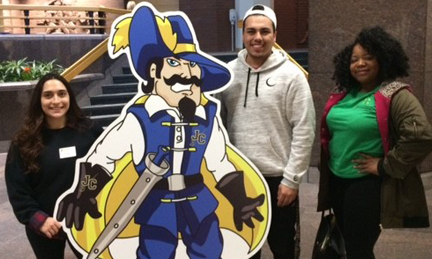
Raul, how have you seen an improvement in your relationships with your family and peers since being a part of Youth Futures? How has the program changed your life?
Raul: Since I started 4‑H Youth Futures, I noticed a difference on how I talk to my peers and my family. My points of view are much different from what they used to be. Previously, it was hard for me to think about going to college because of my family’s financial situation and my status as being an undocumented student. Now, my family and I are more aware of opportunities so I can go to college.
As an adult mentor, what growth have you seen in Youth Futures members as a result of the program and mentor-mentee relationships?
Tommy: Over the last 12 months, I have seen 4‑H Youth Futures members grow in several areas, including confidence, knowledge about being successful in college, and a greater understanding of their local communities. Many of the members in our program started as bashful high school students who wanted to go to college but had no idea how to do it. Now, students know how to command a room by speaking about their collegiate and professional goals.
How does your community benefit from the Youth Futures program?
Tommy: I feel our community benefits from the 4‑H Youth Futures program through becoming more connected. We have numerous partners who work with our program such as educational institutions, companies, and non-profit organizations all within our community. The youth in our program can experience first-hand how people and organizations in our community can all work together to achieve goals.
Raul: My community is getting a big opportunity that not a lot of communities have. Not everyone is able to have a mentor, but those who do should be glad to have one. My community is benefiting from having the opportunity to have mentors from 4‑H Youth Futures who can show us things about college we would not know about.
And how have you kept youth engaged in the Youth Futures program?
Tommy: I want to make sure youth continue to be engaged in our program by making it fun! We know students have a plethora of other activities they could be involved in, so not only do we provide amazing information, we make sure everyone has a great time in the process!
"You can never be around too many people who want to help you succeed!"
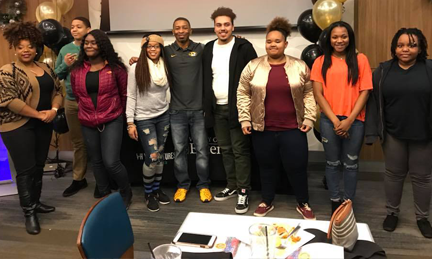
How do you think having a mentor can have a positive impact on a young person’s relationship with their family, peers or others in their day to day lives?
Tommy: Mentors can provide a positive impact on a young person’s relationship with family by providing additional encouragement for youth. There are many negative influences in the lives of youth today, so we want to give families as much support as possible.
Raul: Having a mentor is a positive impact because not only do they teach you how to apply for colleges and scholarships but they also teach you how to pay for college. Mentors also help us with improve our public speaking and not being so shy around other people.
Lastly, what advice would you offer to a young person who may be seeking or considering having a mentor?
Tommy: Do it! Reach out to your local schools, faith-based institutions, and community organizations about connecting with a mentor. You can never be around too many people who want to help you succeed!
Raul: My advice for anyone seeking a mentor is to get one as soon as possible! Mentors provide opportunities that help you become more informed about getting into college and finding scholarships. I am not saying if you do not get a mentor you cannot make it to college, you will just be more informed and prepared for everything.
The program described here is funded through grants from OJJPD, Office of Justice Programs, U.S. Department of Justice. Neither the U.S. Department of Justice nor any of its components operate, control, are responsible for, or necessarily endorse, this page (including, without limitation, its content, technical infrastructure, and policies, and any services or tools provided).
Chevy Chase, MD (January 29, 2018) – The nation’s largest youth development organization is teaming up with a leading craft retailer to ensure young people everywhere have access to hands-on learning. National 4‑H Council and JOANN Stores today announced a joint effort that will help more kids learn by doing, creating and making. Through a combination of material donations, member discounts, special programs and in-store giving, current and future 4‑H members across the U.S. will benefit from the collaboration.
“Studies show many students lose their natural love of learning between kindergarten and their senior year of high school,” said Jennifer Sirangelo, president and CEO, National 4‑H Council. “4‑H programming allows students to participate in projects where they can design, create and make for themselves. These hands-on experiences are proven to rekindle a love of learning, strengthen creativity and imaginative thinking, and improve motor skills, coordination and self-esteem. Our partnership with JOANN will allow us to expand those experiences and help more students across the nation continue to learn and grow.”
Current and lifetime 4‑H members, parents, volunteers and staff can save 15 percent off all in-store and online purchases with JOANN’s 4‑H Rewards program, and the retailer will give a minimum 2.5 percent of every eligible transaction to support 4‑H programming. Kicking off the joint effort in stores, a campaign across JOANN’s nearly 900 locations will allow customers, 4‑H members and supporters to share their hearts by purchasing $1 and $4 Paper Clovers throughout February. Proceeds will help to equip local Clubs with resources to reach more young people in need. Additionally, Saturday, February 3, all 4‑H members are invited to visit their local JOANN stores to hand-make Valentine’s Day cards for local senior citizen centers, children’s and veterans’ hospitals, and others in need during the month of love.
“We know every child is unique, and we all think, learn and grow differently,” said Jill Soltau, president and CEO of JOANN. “We’re glad to be partnering with 4‑H to give more young people the opportunity to learn by using their hearts, hands and minds. The programming 4‑H provides offers invaluable skills that members can use throughout their lives, and we are committed to helping future generations embrace creativity and learning.”
Proceeds from February’s Paper Clover campaign will directly support 4‑H programs in the local communities in which they are purchased. Each Paper Clover will include instructions for a special Valentine’s Day craft idea that customers can create to share with someone special. With the $4 Paper Clover, customers will also receive a coupon for $4 off their next purchase.
To learn more about the rewards program and events, visit 4‑H.org/JOANN.
4‑H, the nation’s largest youth development organization, grows confident young people who are empowered for life today and prepared for career tomorrow. 4‑H programs empower nearly six million young people across the U.S. through experiences that develop critical life skills. 4‑H is the youth development program of our nation’s Cooperative Extension System and USDA, and serves every county and parish in the U.S. through a network of 110 public universities and more than 3000 local Extension offices. Globally, 4‑H collaborates with independent programs to empower one million youth in 50 countries. The research-backed 4‑H experience grows young people who are four times more likely to contribute to their communities; two times more likely to make healthier choices; two times more likely to be civically active; and two times more likely to participate in STEM programs. Learn more about 4‑H at 4‑H.org, find us on Facebook at www.facebook.com/4H and on Twitter at https://twitter.com/4H.
For nearly 75 years, JOANN has inspired creativity in the hearts, hands, and minds of its customers. From a single storefront in Cleveland, Ohio, the nation’s leading fabric and craft retailer has grown to include nearly 900 stores across 49 states and an industry-leading e-commerce business. With the goal of helping every customer find their creative Happy Place, JOANN serves as a convenient single stop for all of the supplies, guidance, and inspiration needed to achieve any project or passion. For store locations, project ideas, and a full product offering, visit joann.com.
“For my club, my community, my country, and my world.”
For every 4-H program or club, this final line of the 4-H Pledge is at the forefront of their learning and experiences. For the 4-H National Mentoring Program implemented by Texas A&M University Extension, there is an emphasis on “country,” particularly with regards to those who served it.
In partnership with the Hidden Heroes Military Caregiver Community (HHMCC), youth mentees had the opportunity to give back to those who fought tirelessly for our country. The HHMCC—managed by the Elizabeth Dole Foundation, Caring for our Hidden Heroes—is a network of military caregivers, from all eras, to connect with one another and provide resources and support. The Elizabeth Dole Foundation’s mission is to strengthen and empower American military caregivers and their families by raising public awareness, driving research, championing policy, and leading collaborations that make a significant impact on their lives.
Mentees participating in the program were tasked with making weighted lap blankets for seven wounded warriors. After researching the benefits of the weighted blankets for the service members’ ailments, and how to make the blankets, the youth teamed up to sew, design and mail the completed blankets, ensuring their arrival by the Christmas.
The program described here is funded through grants from OJJPD, Office of Justice Programs, U.S. Department of Justice. Neither the U.S. Department of Justice nor any of its components operate, control, are responsible for, or necessarily endorse, this page (including, without limitation, its content, technical infrastructure, and policies, and any services or tools provided).


In celebration of National Mentoring Month and to highlight the work of the National Mentoring Program, I connected with Jim Antal, Associate Administrator of the Youth Development, Prevention, and Safety Division at OJJDP, to get his insights on the importance of mentoring and how youth and families benefit from the program.
What is the core purpose of the mentor/mentee relationship?
Jim Antal (JA): I believe the purpose of the mentor/mentee relationship is built on three principles – respect, support, and growth. This relationship, like all relationships, is only successful if it is a “two-way street.” Mutual respect is the foundation for the relationship. This translates to how we speak to one another, how we respond to actions and words, and simply being there when you say you will. As this foundation of respect is formed, the opportunities for support and eventually growth will surface in a truly meaningful way. These three principles, when realized bilaterally, can lead to a life experience that both the mentor and mentee will cherish forever.
Who were your mentors (both personal and professional) and how have they attributed to your success today?
JA: My mentor, although I don’t think I ever called her that, was a former supervisor while working at Catholic Charities. Her passion for the work we did and her energy was always a motivator. She consistently emphasized the importance of our work (which was at times very administrative) and connected it to the ultimate benefits for the children and families we served as an agency. Her encouragement, and the personal time she took to teach me, led to many opportunities for me – including the chance to write and implement a grant program that was ultimately funded by OJJDP. Her characteristics and approach were thankfully something that I had experienced at a young age from my parents – both of whom I would consider my mentors.
Explain why the partnership between OJJDP and 4‑H is so important to young people in the program.
JA: The partnership between OJJDP and National 4‑H Council helps to expand mentoring services for at-risk youth across the country as a part of the OJJDP National Mentoring Program. The connection and broad reach of 4‑H programs help to grow the mentoring movement and ensure that youth involved in the programs receive high-quality mentoring services. The promotion and expansion of high-quality mentoring, grounded in best practices and research, is a core goal of the OJJDP National Mentoring Program. Cooperative Extension’s 4‑H program is well suited to deliver these services to youth in communities across the country, including rural, urban and suburban.
"A strong, positive mentoring relationship built on respect, support and growth can serve as a model for youth about relationships. "
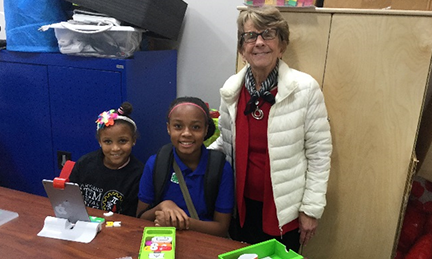
How can communities benefit from programs like the 4‑H National Mentoring Program?
JA: I think communities benefit from the structure, support, and leadership that 4‑H offers through their signature programs. The logo and reputation of 4‑H symbolize stability and connection to others. I grew up in a rural community within Maryland, and my experience with 4‑H was always tied to agriculture – in particular, horses and other livestock. However, my experiences and exposure to 4‑H programs grew with my work in OJJDP. I see that the benefits for communities go well beyond an agricultural program, but one of support and opportunity for youth and community members.
Share your thoughts on the impact mentoring can have on a young person’s relationship with their family and peers?
JA: A strong, positive mentoring relationship built on respect, support and growth can serve as a model for youth about relationships. Many of the youth served by OJJDP-funded programs have experienced some form or level of trauma, which can directly impact their ability to develop and sustain healthy relationships with family and friends. This includes the ability to manage conflict, share experiences, listen, and provide support. While a mentoring relationship is not a cure for family conflict, it can help to act as a support in times of stress and hopefully offer lessons or guidance that a young person can use in the future.
What does it take to maintain the relationship between mentor and mentee?
JA: I think that mutual respect is a great foundation for a lasting relationship between mentor and mentee. It is also important for the mentoring organization to take the time at the match phase to consider shared interests and explore as well as clarify expectations for both in this relationship. Beyond the match, it is also critical to offer ongoing support for the mentor to help anticipate and manage any issues that may arise over the course of the relationship. Acting on an island, or feeling isolated is not a recipe for a long and positive mentoring relationship.
"It is important to realize and accept that you don’t have to do this alone, and that you are not expected to be a ‘super person’."
JA: Access to information permeates our society today, so finding any service – including a mentor – is as easy as typing a few words into your computer search engine. However, I would certainly recommend that you ask yourself a few questions before engaging in this search. What is prompting me to seek a mentor? Is it a crisis, or seeking guidance/counsel? How often do I want to meet with a mentor? Where and when am I comfortable meeting with a mentor? What do I expect to get out of a mentoring relationship? It would be helpful for someone looking for a mentor to understand their motivation for seeking a mentor and their expectations for that relationship.
What advice would you offer to someone who serves as a mentor to young people?
JA: I would certainly recommend that they take advantage of any and all resources made available to them by the mentoring organization that made the match. This includes training, ongoing consultation, and resources or suggestions for mentor activities. It is important to realize and accept that you don’t have to do this alone, and that you are not expected to be a “super person.” The OJJDP National Mentoring Resource Center has a variety of resources for mentors and mentoring programs. The website can act as a one-stop shop for questions and resources.
Why do you think having a mentor, at any stage of your life, is beneficial?
JA: The demands of life and work can be overwhelming, or at least stressful. Sharing these experiences with others who can provide perspective, support and guidance can help to avoid a crisis or offer direction during bad times and be there to celebrate life’s small and big successes.
The program described here is funded through grants from OJJPD, Office of Justice Programs, U.S. Department of Justice. Neither the U.S. Department of Justice nor any of its components operate, control, are responsible for, or necessarily endorse, this page (including, without limitation, its content, technical infrastructure, and policies, and any services or tools provided).
Over the course of several days, the group spent time growing and harvesting produce at the local Promear Community Garden. The opportunity was a rewarding one for the youth as the garden helps contribute to meals for their families, many of which receive government assistance. Participants spent their time weeding and watering the garden, as well as learned the significance of the plants in the garden and how to make organic plant spray. Community garden owners Mr. and Mrs. Predgen also treated the families to a lesson in food preservation with a canning demonstration.
The event/project proved to be a success as YFP families came together to support one another and their community.
The program described here is funded through grants from OJJPD, Office of Justice Programs, U.S. Department of Justice. Neither the U.S. Department of Justice nor any of its components operate, control, are responsible for, or necessarily endorse, this page (including, without limitation, its content, technical infrastructure, and policies, and any services or tools provided).