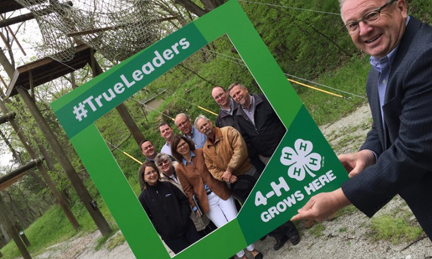
David A. Smith, president of Boys & Girls Clubs of Greater Kansas City

David A. Smith grew up as a member of Boys & Girls Clubs, so when he dedicated his career to youth leadership, it made sense that he would find his way back to the organization. After serving as the assistant basketball coach at the University of Missouri in Kansas City and working with YMCA, he is now president of Boys & Girls Clubs of Greater Kansas City. Also, he’s been a mentor to me for many years. I spoke with Dave about the importance of building and maintaining a strong mentorship, and how to apply these insights in career and life.


When you were growing up, who were your mentors?

David Smith (DS): My mother was my biggest mentor. She raised five boys—I was the youngest. I credit her for my work habits and conscientiousness. I would go to her with questions, and she would say, “When you’ve exhausted every other resource you have, I’ll help you.” She was a tough customer! She was certainly my first and biggest influence.

I grew up in BGC where we had role models more than mentors. I think of mentoring as an ongoing situation where you expect regular interaction and discuss specific topics. A role model is someone you see and emulate and aspire to be like. I had several role models in BGC. They were mostly coaches. After college, I was introduced to professional people who mentored me. One was a dean at the University of Missouri here in Kansas City. After I had left the university world, I went to work at the YMCA where I met a guy named Dan Logan who mentored me in resource development and nonprofit management.


Since my time working at Boys & Girls Clubs of Greater Kansas City, you have been an influential mentor to me. What is your approach to mentoring others?

DS: I think my style as a human being is a coaching style. I was the assistant basketball coach at the University of Missouri at Kansas City after I finished my graduate work so that style emerged then. I was responsible for these young student athletes. I did all the recruiting. I was the one who sat at the kitchen table with their mothers, grandmothers, and fathers and committed myself to their well-being. That coaching style continues today in my approach. I just always want to see people reach their potential—whether they see their potential or not.


You have mentored not just me but many others in the youth development sector. How has the experience impacted you professionally?

DS: I think mentoring is a good management tactic, particularly if you’re mentoring people in your organization. The stronger people are around you, the better your product and performance is.  It just makes sense to invest in people around you so that they can be the best they can be.


Do you think having a mentor early in a career plays a part in success and growth later on?

DS: I believe that mentors come in different sizes, shapes, colors and packages. Accordingly, mentors appear in various parts of your life and career. In the early parts of your career mentors can influence your structure, foundation and how you behave professionally. As you progress in your career, you need mentors for different things. I’m 65 years old and have spent four decades in the working world, and I’m still mentored by people today. I am mentored by board members, funders or donors who I have a strong relationship with. Just this morning I thought about a benefactor I want to sit down and talk with about some personal things, and I’m pleased that I have those relationships.


We’ve maintained our mentor-mentee connection for many years. What does it take to maintain those kinds of relationships?

DS: First of all, both people have to feel like it’s a good use of their time. And I think you need to understand or agree on expectations regarding how often you meet or how long. Do you have a set schedule or is it as-needed? I’ve been mentoring one young man for what must be 15 years. He was a young professional when we met, and our mentoring relationship has transitioned from sitting down seriously four times a year to maybe doing that once a year. Because he’s got two little babies, and things have changed! But there’s no question that the relationship is solid, and he knows any time he wants to call me, he can count on me to be there.


What advice would you offer to someone who’s mentoring youth?

DS: The key is rapport, but you can’t force rapport or force a relationship. As an adult mentoring youth, you have to be very comfortable with yourself because these kids aren’t necessarily going to show you they’re interested. You have to trust your ability to connect and understand that the connection will get shaky sometimes. You have to develop trust.


How would you advise someone to look for mentors?

DS: There are effective ways at each stage of your life. As a young person, you can look to school personnel or get involved in organizations like 4‑H or Boys & Girls Clubs.

As an older professional, you’re better at identifying resources. You can take note of people who you think would be good mentors, and you approach them and talk to them about it. Or you ask someone to help you identify a mentor. Someone told me once that you should have some mentors that don’t look like you. It gives you a different perspective or framework from which to work. It challenges you and broadens your learning.


Why do you think having a mentor, at any stage of your career, is beneficial?

DS: It must have been 20 years ago that I stumbled upon the realization that I didn’t have to have all the answers. What a glorious discovery that was! The weight of the world was lifted off my shoulders just realizing you can ask others for guidance instead of struggling on your own. The people around us have abundant resources that they’re often willing to share with you if they see that you will value the time and energy they put into it. It just makes sense to tap into those and learn from it.

If you’re able to share ideas and get feedback from someone you trust, it helps you reflect on your situation and come up with your answers. It’s one of the most valuable resources we have as individuals.

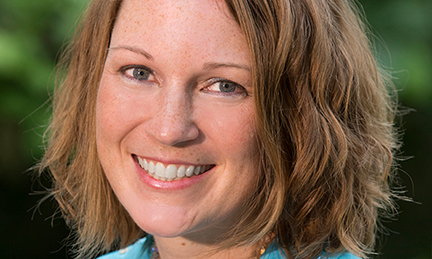
Chevy Chase, MD (January 9, 2017) – National 4‑H Council has announced the re-election of a new Trustee to its Board of Trustees, which comes as the Board strives to engage alumni, increase investment in 4‑H and reach millions more young people with a 4‑H experience.

Ken Hicks brings extensive business expertise to his role with 4‑H, having been a leader in the retail industry for over 30 years until his retirement as Foot Locker, Inc.’s Executive Chairman in May 2015. Prior to this role, Mr. Hicks served as the Chairman, President and Chief Executive Officer of Foot Locker, Inc. for five years.

Earlier in his career, Mr. Hicks’ passion for merchandising and marketing was evident during his time at Payless ShoeSource, where his role as President saw him overseeing all elements of merchandising, marketing, product distribution, direct product development and sourcing for 4,900 stores in seven countries. He then spent seven years at J.C. Penney Company, Inc., which he joined in 2002 as Chief Operating Officer for all of J.C. Penney’s stores and became President in 2005 overseeing all merchandising and marketing. During this time, in 2006, Mr. Hicks was first elected to serve on Council’s Board of Trustees.

“I’m excited to re-join 4‑H and support the continued expansion of 4‑H in all communities throughout America,” said newly elected Trustee Ken Hicks. “4‑H helps instill a sense of responsibility, courage and leadership in young people. In order to succeed and prosper as a nation, we need to have young people who have the skills and desire to grow and develop. 4‑H can help serve that need.”

This local and international experience, combined with Mr. Hicks’ learnings from his earlier roles as executive vice president and general merchandise manager for the Home Shopping Network, numerous senior executive roles at May Department Stores Co. and as senior engagement manager for McKinsey and Company, will assist National 4‑H Council’s Board of Trustees with its vision of growing 4‑H in partnership with America’s Cooperative Extension and land-grant university system and USDA. In addition, Mr. Hicks’ unique skill set will support the brand development of 4‑H nationwide.

Prior to entering the business world, Mr. Hicks graduated from the United States Military Academy at West Point, NY and served in the U.S. Army, attaining the rank of captain. Upon leaving the Army, he earned an MBA with highest distinction from Harvard Business School.

Mr. Hicks currently serves on the board of Avery Dennison Corporation and the advisory board of The NPD Group, and is a former member of the board of the Retail Industry Leaders Association and Board of Trustees of the International Council of Shopping Centers.

Mr. Hicks joins a diverse board made up of corporate executives, leaders from the nation’s land-grant universities, Cooperative Extension System and the U.S. Department of Agriculture, as well as 4 H alumni and youth leaders.


About 4‑H

As the nation’s largest youth development organization, 4‑H grows confident young people who are empowered for life today and prepared for career tomorrow. 4‑H programs empower nearly six million young people across the U.S. through experiences that develop critical life skills. In the U.S., 4‑H serves every county and parish through our network of 110 universities and more than 3,000 local offices. Globally, 4‑H collaborates with independent programs to empower one million youth in 50 countries.

The research-backed 4‑H experience grows young people who are four times more likely to contribute to their communities; two times more likely to make healthier choices; two times more likely to be civically active; and two times more likely to participate in STEM programs. 4‑H is led by a unique private-public partnership of universities, federal and local government agencies, foundations and professional associations. National 4‑H Council is the private sector, non-profit partner of the Cooperative Extension System and 4‑H National Headquarters located at the National Institute of Food and Agriculture (NIFA) within the United States Department of Agriculture (USDA).

Learn more about 4‑H at www.4‑H.org, find us on Facebook at www.facebook.com/4‑H and on Twitter at https://twitter.com/4H.

Mentoring is a powerful tool to help guide, empower and encourage others to reach their full potential. It’s a gateway to both learn and share a wealth of knowledge and experiences. Whether through peer mentoring, adult-child mentoring, or reverse mentoring, both mentor and mentee benefit in more ways than one.

Since January is National Mentoring Month, it only makes sense for us to celebrate what has been such an integral part of the 4‑H experience for so many years.

4‑H mentors are more than advisors; they are role models, educators, life coaches, and friends to the 4‑H kids in their communities. The partnership between a 4‑H mentor and young mentee is important because youth are encouraged to explore their interests and receive valuable, active support.

Here are just a few of the many 4‑H Mentoring programs that not only impact, but save young lives.

Missouri 4‑H: A Powerful Message Combatting Bullying

The Marshall Mentor Program helps youth understand the importance of empathy, courage, perseverance, kindness, and forgiveness, and it challenges them to put these traits into action when facing one of the most common social problems: bullying. The program was inspired by the book, “Marshall the Miracle Dog,” which tells the story of a courageous canine who overcame his battle with bullying. Marshall’s survival led to the creation of the Marshall Movement, which focuses on the importance of teaching kids anti-bullying and anti-animal cruelty.

Missouri 4‑H has implemented the Marshall Mentor Program and applied it to local schools and communities across the state. A young participant of the programs says, “The first way to stop bullying is to treat others the way you would like to be treated. Marshall changed lives and so can we.”

Washington 4‑H: Exchanging and Appreciating Culture through a Common Goal

2016 Standing Rock Reservation - YouTube

Youth and mentors of the Washington State 4‑H National Mentoring Program participated in a state-wide summer trip to North Dakota, Standing Rock Sioux Reservation. North Dakota 4‑H and Washington 4‑H are both a part of the 4‑H National Mentoring Program. Funded in partnership with the Office of Juvenile Justice and Delinquency Prevention (OJJDP), the 4‑H National Mentoring Program supports various initiatives that assist in the development of mentoring services in high-risk communities and populations. The goal is to reduce juvenile delinquency, drug abuse, truancy, and other problems and high-risk behaviors.

The trip was unique as the visit took place just before the Dakota Access Pipeline protests began. Through the cultural exchange trip, mentees of both programs had the opportunity to learn from and understand one another’s experiences, as well as grow an appreciation for the other’s history and culture. A smaller Washington 4‑H group later returned to the reservation to deliver supplies to protesters.

Louisiana 4‑H: Pledging their Hands to Serve the Community

Louisiana 4‑H - Flood Relief - Kids with Supplies

Louisiana suffered severe flooding during the summer. During this time, youth involved in the 4‑H National Mentoring Program came together to give back to communities in need. Pairs of mentors and youth spent time together collecting clothing, baby items, and school supplies, and delivering up to truckloads of items to affected communities. United Way in Lafayette, Louisiana was the recipient of the thousands of supplies that were collected by the group.

“The reach of the mentoring [program] is widespread and powerful,” says one 4‑H Agent when speaking about the program’s influence. “This kind of impact can’t be captured in an evaluation. The program has shaped teens into people who have responded in a quick and unselfish manner.“


Click here to learn more about 4‑H Mentoring.

Mentoring Curriculum:

From a young age, Michelle Munson loved learning. As she was growing up, her parents encouraged her to explore her interests in science, technology, engineering, and math (STEM) both at school and in 4‑H. Her experiences gave her the desire and confidence to pursue an undergraduate degree and two graduate degrees in STEM subjects and to launch her own software company, Aspera.

I had a chance to speak with Michelle about women in STEM and how early experiences can build the framework for later success.

When did you first know STEM was the path for you? Is there a particular moment or experience that sparked your interest?

Michelle Munson (MM): There wasn’t a single moment. There were many, many moments, both at school and in 4‑H. My parents were focused—not just on learning, but also on the practical applications of learning. When I was as young as seven, my mom helped me make some very advanced clothing designs that I would sew from scratch. We also did computing projects—when I was in fourth grade, my mom and I developed a database to keep track of what I was doing in 4‑H.

I stayed in science and engineering because I loved math and science and saw that they had a major impact on the world. I also wanted to create new things. My dad is a farmer who grows crops and raises animals, and my mom is a professor. They both emphasized the value of applying my knowledge to create things, so I ended up choosing engineering because it’s the application. I started a software company where we make new products from the ground up—that’s what I do for my job.

Tell me about the challenges you face working in STEM.

MM: I think the number-one challenge of STEM is it’s hard. The joy comes from mastering difficult subject matter. The problems that we tackle at Aspera are hard. There are no clear answers. The counterpoint is the joy of succeeding when you’re able to advance your own knowledge and reach solutions to complex problems.

Did you face challenges as a woman in STEM?

MM: I think that any challenges were hugely mitigated for me because of my environment. I started doing STEM-related projects when I was young, and quite honestly there was no discussion of being a girl. It just didn’t enter the conversation. I think one of the great things about 4‑H is that it is very balanced in that way. Girls and boys do the same projects—they do them together—and moms and dads are equally involved.

How did the skills you learned in 4‑H influence your career?

MM: The most important skills I learned were public speaking and leadership. Every moment of every day, everything I do relies on being able to communicate effectively, both in speaking and writing. In 4‑H, we did so much public speaking, as well as a lot of writing, to record our projects. I also had leadership roles the entire time I was in 4‑H.

When did you decide entrepreneurship would be your path?

MM: I didn’t make a decision to start a company until I was about thirty. But I think 4‑H gave me many of the skills I needed, as well as the courage and the comfort level with independent projects. I’d been doing independent projects in 4‑H since I was seven, and building a company is very much like that. You use all of yourself—all skills and all aspects. You form something that no one has ever done before. You have to implement your own plan. It’s typically ridden with lots of challenges you have to overcome. It’s very similar to many 4‑H projects.

That’s the essence of leadership, learning to work with people in your own peer group to get things accomplished. And I believe 4‑H does that better than anything in the world.

How do we get more girls and minorities in STEM? What barriers are there?

MM: We have to get young people involved as early as possible. This is where 4‑H projects are so wonderful. You learn the subject in a practical way from a very young age, and it helps you develop an interest in it. 4‑H has no limits to the types of projects you can do in all aspects of science. They help young women develop a sense of independence and counter all of the tendencies that deter confidence in science and math.

How can we get young women more involved in leadership roles?

MM: The same way—4‑H does something very special: it asks young people to start leading their peers when they’re seven or eight years old. You’re responsible for sending out the e-mail or making the phone call to organize the meeting or project, then standing up at the meeting and presenting some information and playing a role in that meeting. To me, that’s the most formative thing. From an early age, you develop a sense of self and self-confidence, and it can build on itself as you get older into middle school and high school. That’s the essence of leadership, learning to work with people in your own peer group to get things accomplished. And I believe 4‑H does that better than anything in the world.

What advice would you give young girls or women starting in STEM?

MM: Stay in the field. Don’t stop. It’s too fantastic to deviate from. And enjoy it. What’s great about science is there’s no limit to what you can learn and there’s no limit to what you can do with it in your career. It’s the foundation of society now, and its practical impact is unlimited.

Hello! This summer I had the absolute pleasure of attending Citizenship Washington Focus (CWF), where I stayed at the National 4‑H Conference Center. During my time here at CWF, I traveled with my delegation into the heart of Washington, D.C. to view the glorious monuments and memorials. Among these monuments and memorials were the Abraham Lincoln Memorial, the Vietnam Veterans memorial, the Marine Corps Memorial, and many more.

How did we get to downtown D.C.? There is quite a bit of walking during this week, but I can promise you we never had to walk to get from the 4‑H center to our destinations. For the most part during the week we rode on buses with the most polite bus drivers you could possibly imagine. However, sometimes on Fridays, delegation day, we didn’t use the bus as our form of transportation. Instead we ventured into the mysterious underground tunnels below the bustling city of Washington, D.C.; formally known as the Metro System.

If you are like me and you are coming from an area where public transportation is limited, then you are in for a treat. Washington, D.C. is full of something new and exciting around every corner, but below the ground is something like nothing else that could be found in the city above.

First, to descend into the underground of D.C., you’ve got to hop onto the escalator or trot down the stairs until you reach the bottom. Then, you will come upon these mysterious machines whose magical powers are to confuse and frustrate the riders of the Metro. These machines are where you can purchase a metro card and put an allotted amount of money on the card. The most important thing to remember when working with these machines on the metro is this; do NOT get frustrated by these contraptions. In fact, be pumped that you get this new experience to purchase a card that will give you complete access into the underground world of Washington, D.C.

Once you have purchased your metro card, take the time to read what train line you need to be on. There are six different colored train lines, all of them traveling to unique places throughout the city. If you have ever seen Harry Potter, then you must know that the metro is our version of Platform 9 ¾. The metro is today’s version of the Hogwarts express, because like the train that travels to Hogwarts, the metro also travels to some pretty magical places. So take it all in while you experience it and don’t just take it at face value. The metro is so much more than a grungy train underground. The metro is full of interesting people, exciting places, and a chance to make some memories while you’re here visiting Washington, D.C.

Written by: Karlie Wade, CWF PA 2016

WASHINGTON, D.C., December 12, 2016 – Leaders of National 4-H Council and the American Farm Bureau Federation today announced a newly established partnership during the signing of a memorandum of understanding between the two groups.

Recognizing the need to support agricultural education and highlight the impact ag plays in our daily lives, National 4-H Council and AFBF aim to ignite the desire of young people to embrace agriculture, cultivate innovation and empower them with opportunities to improve the world around them. Through collaboration on thought leadership and ag literacy initiatives, both organizations are committed to better link young people to agriculture of today and tomorrow.

“For more than a century, 4-H has provided young people with opportunities to spark and grow their interests in agriculture, giving them the courage, confidence and resilience to lead,” said Jennifer Sirangelo, president and CEO, National 4-H Council. “National 4-H Council is proud and excited to join forces with the American Farm Bureau Federation to help empower and develop young people with the workforce skills necessary to pursue careers in the agriculture industry.”

The Council-AFBF partnership will formally kick off in 2017.

“Farm Bureau has a long history of investing in young people with a demonstrated interest in not only farming and ranching but also agri-business and food-related careers,” said AFBF President Zippy Duvall. “We’re pleased to build on our tradition of supporting youth in agriculture through this formal collaboration with National 4-H Council.”

About 4-H

4-H, the nation’s largest youth development organization, grows confident young people who are empowered for life today and prepared for career tomorrow. 4-H programs empower nearly six million young people across the U.S. through experiences that develop critical life skills. 4-H is the youth development program of our nation’s Cooperative Extension System and USDA, and serves every county and parish in the U.S. through a network of 110 public universities and more than 3000 local Extension offices. Globally, 4-H collaborates with independent programs to empower one million youth in 50 countries. The research-backed 4-H experience grows young people who are four times more likely to contribute to their communities; two times more likely to make healthier choices; two times more likely to be civically active; and two times more likely to participate in STEM programs.

Learn more about 4-H at 4‑H.org, find us on Facebook at WWW.FACEBOOK.COM/4-H and on Twitter at HTTPS://TWITTER.COM/4-H.

Contacts

National 4-H Council Dvon Holland, Director, Integrated Marketing, 301-385-0430

About the American Farm Bureau Federation

With family members at the county or parish level in all 50 states and Puerto Rico, the American Farm Bureau Federation is the unified national “Voice of Agriculture,” working to enhance and strengthen the lives of rural Americans to build strong, prosperous agricultural communities. AFBF is the nation’s largest and most influential grassroots organization of farm and ranch families. Follow AFBF on Twitter (@FarmBureau) and Facebook.

“Brand in Action” is a series of interviews with 4-H leaders in states nationwide who are investing in the 4-H Grows Engagement Campaign to elevate the 4-H brand, raise resources to help grow the 4-H program and positively impact more kids in the future. This month, we feature Tracy Pracheil, Extension Educator at the University of Nebraska-Lincoln.

brandinaction-tracypracheil

Describe your role as an Extension Educator at the University of Nebraska-Lincoln Extension 4-H Youth Development. How long have you served in this position?

Tracy Pracheil (TP):  I am currently an Extension Educator at the Nebraska State 4-H Office with a focus on multimedia learning (using technology to teach and to learn) and marketing communications (internal/external). I have been in this role for 10 years. Prior to this role, I was a Communications Associate at the State 4-H Office for three years, where I focused on marketing communications and 4-H curriculum development support.

Why is it important to the University of Nebraska-Lincoln to grow awareness of Cooperative Extension’s 4-H programs in counties across the state of Nebraska?

TP:  It is important to grow the awareness of Nebraska Extension 4-H Programs across our state, because 4-H is open to all youth; it also has the opportunity to impact the future of all citizens in all 93 Nebraska counties. We strive to share stories and examples about how Nebraska 4-H helps young people achieve their greatest potential through the introduction of high-quality youth development experiences.  4-H helps Nebraska youth become advocates and leaders, who in turn have the ability to leave a lasting impact on their communities. We would like for everyone in our state to not only know this, but come to value the current and potential impact of 4-H.

Can you describe your recent efforts to align your state’s 4-H marketing efforts with the national 4-H Grows Engagement Campaign?

TP:  Nebraska 4-H regularly utilizes the 4-H Marketing Online Resource Center in order to align our state marketing efforts with the 4-H Grows Engagement Campaign. Images from the photo library were incorporated in numerous large banners and signs located throughout the 4-H Exhibit Hall at the Nebraska State Fair.

brandinaction-nebraska2

The Nebraska State 4-H Web site was redesigned to incorporate images and language that aligns with the campaign. Posts on the Nebraska 4-H Facebook, Twitter, and Instagram social media networks relate to the campaign using the relevant hashtags. We have created several Statewide Social Media Collection Stories using Storify.com to tell a larger story during special timeframes (National 4-H Week, State Fair, Shout Outs to #TrueLeaders). A collection of 50+ “Nebraska 4-H Helps Me Grow” short videos have also been created with the help of our 4-H youth and staff across the state. These videos were shared through a “Seek and Scan” game delivered through the Nebraska State Fair 4-H App that utilized QR codes; the videos are also being shared year-round through Nebraska 4-H social media networks.

Several additional resources have also been shared statewide. With the support of the Nebraska 4-H Foundation and a donor, we were able to purchase a #TrueLeaders photo frame for each county office in our state; we also updated various print materials to include language from the campaign. The Nebraska 4-H Foundation also incorporated the 4-H Grows campaign language into its annual appeal letter.

The Nebraska 4-H Foundation and Nebraska Extension 4-H Youth Development is one of nearly 28 universities that is making a long-term investment in the 4-H Grows Engagement Campaign to build the brand and raise resources to help grow the 4-H program and positively impact more kids in the future. Can you tell us more about your marketing and alumni engagement plans in the coming months?

TP:  Nebraska 4-H has been working very closely with the Nebraska 4-H Foundation and its trustees to align our marketing communications efforts with the campaign. Last year using our 4-H enrollment system, we began asking if our current 4-H youth have a parent that was involved in 4-H as a young person. With this information, we identified the counties that have the highest percentages of current program participants who also have 4-H alumni parents. An online survey has been sent to these parents in order to provide us with information about their entry into the 4-H program. We are planning to use this input from current 4-H alumni parents to assist with our marketing efforts in connecting with new 4-H alumni parents next year.

The Nebraska 4-H Foundation has also been collecting alumni stories that will be used for promotional purposes. A letter is also being developed that will be distributed to 4-H alumni who connect with us through the state and national 4-H web sites.

Are you satisfied with the progress of this 4-H partnership and work to date?

TP:  Yes. The target market research conducted prior to the development of the campaign appears to have provided valuable direction for creative messages. The resources provided on the 4-H Marketing Online Resource Center have allowed us to focus more on the delivery of promotional messages, rather than the development of promotional messages and materials; I believe this provides our staff more time to focus on delivering positive youth development through 4-H.

What are you most excited about as it pertains to this new 4-H campaign?

TP: I’m excited that the 4-H messages we are sending through local, county, and state channels are contributing to a much larger national campaign. Our partnership effort will lead to a much more powerful, unified message.

Citizenship Washington Focus is a week-long citizenship and leadership conference with tours of Washington, D.C., workshops, and committee meetings. For this conference, 4‑H’ers from all over the nation come to the National 4‑H Conference Center and are able to connect with other 4‑H’ers. Yet while CWF is a place where young people get to interact with their government and see how the democratic process works, CWF also creates other meaningful experiences and memories for participants. In addition to writing bills, attending a mock congressional session, meeting with real legislators, and developing leadership skills, 4‑H’ers at CWF create bonds with each other that are often maintained for years to come.

At first you wonder how a large group of teens with SUCH different stories and backgrounds can connect. Delegates for CWF come from all over the United States, some have met others from their delegation previously, but many meet for the first time at the airport or on the bus on the way to CWF. However, every week it seems that these different stories and different backgrounds are what help form these connections. Early on the first day, the delegates are a bit shy and talk to those that they already know, but by the end of that day, the delegates have begun their bonding journey. People who start with nothing in common end the week with shared experiences and memories that they share for years to come.

As program assistants, we enjoy working with the many delegates from different backgrounds and hearing the unique stories from everyone. I enjoy many parts of the week, but there is a moment every week that I look for. It is on Friday of every week of CWF, which is when we host the dance. The dance signifies that Citizenship Washington Focus has come to an end, which is sad, but the most beautiful thing happens after the dance. After the dance every week, after the last song has been played, there is always a group of delegates in a large huddle saying their goodbyes to one another and even shedding some tears. While it is the end of Citizenship Washington Focus, it is only the beginning for some. The beginning of the great things that will be accomplished, the beginning of the pathway to active citizens, and the beginning to many lasting relationships.

From the outside looking in, some might just see a large group of teens walking around, touring the nation’s capital. But as the program assistants, those of us who have the pleasure of working with the delegates, we truly get to see how all of these young people are able to come together and create wonderful things. The wonderful things may be the bills that they write and argue in the congressional session, but more often, they are the connections developed between each other as they are writing and arguing those bills.

Written by: Nosa Akol, CWF PA 2016

Chevy Chase, MD, (November 15, 2016) – The Department of Justice’s Office of Juvenile Justice and Delinquency Prevention (OJJDP) has awarded a $7 million grant to National 4-H Council in support of the 4-H National Mentoring Program. The grant comes as a part of the Department of Justice’s Office of Juvenile Justice and Delinquency Prevention’s national effort to strengthen, expand and implement youth mentoring activities to improve the lives of millions of at-risk and underserved young Americans.

This generous grant will provide funding to facilitate 4-H mentoring programs in nearly every state to keep kids safe, improve academic outcomes and prevent youth delinquency. These programs, led by Cooperative Extension and its network of 100 colleges and universities, were developed in partnership with the United States Department of Agriculture’s (USDA) Children, Youth and Families at Risk Program which sparks innovation in community-based educational programs for children, youth, parents and families.

According to The Mentoring Effect: Young People’s Perspective on the Outcomes and Availability of Mentoring, 76 percent of at-risk young adults who had a mentor aspire to enroll in and graduate from college versus half of at-risk young adults who had not had a mentor.1

“With the support of caring adult mentors, 4-H provides the guidance, tools and encouragement young people need to be prepared, confident and ready to tackle the challenges facing their communities, their families, and our nation,” said Jennifer Sirangelo, president & CEO, National 4-H Council. “This significant grant will allow 4-H program staff the opportunity to replicate proven 4-H mentoring programs that are producing positive outcomes in underrepresented communities across the country including reduced school drop-out rates and strengthened family relationships.”
As of 2015, the 4-H National Mentoring Program has served over 40,000 youth, resulting in significant outcomes in areas such as family relationships, perceptions of social support, and social competence.

__________________________________
1 Civic Enterprises/Hart Research Associates, 2014

About 4-H

4-H, the nation’s largest youth development organization, grows confident young people who are empowered for life today and prepared for career tomorrow. 4-H programs empower nearly six million young people across the U.S. through experiences that develop critical life skills. 4-H is the youth development program of our nation’s Cooperative Extension System and USDA, and serves every county and parish in the U.S. through a network of 110 public universities and more than 3000 local Extension offices. Globally, 4-H collaborates with independent programs to empower one million youth in 50 countries. The research-backed 4-H experience grows young people who are four times more likely to contribute to their communities; two times more likely to make healthier choices; two times more likely to be civically active; and two times more likely to participate in STEM programs.

Learn more about 4-H at www.4‑H.org, find us on Facebook at www.facebook.com/4-H and on Twitter at https://twitter.com/4-H.

Contacts

National 4-H Council Dvon Holland, Director, Integrated Marketing, 301-385-0430

It was a hot day here in Washington, D.C., but sitting next to the United States Marine Corps Memorial, just up above the city, one can take in the setting sun’s sky as it inspires the colors of our great Capital City to radiate vibrancy onto every surface.  Not only that, but it also inspires thoughts.  Thoughts of places: the Lincoln Memorial, the Capitol Building, the National Cathedral, the Kennedy Center, the Smithsonian Museums.  Thoughts of people: Dr. Martin Luther King Jr., Thomas Jefferson, Benjamin Franklin, our Congress, our Presidents.  Thoughts of life: our friends, family, our loved ones, our favorite holidays, favorite foods, events that we hated, events that we cherish.  Thoughts of one’s self: who am I, where am I going, and what will I do with my future?  As I sit overlooking the city, I remember why I came here to begin with, why so many others travel their distance to experience this place.  For many, these memorials are reminders of those who changed the world; for others, they are a symbol of how we can change ours.

My mind takes flight with this thought and carries me away to a neighboring treasure of our Capital City.  Approximately twenty-five miles west of here, in Chantilly, Virginia, sits the Udvar-Hazy Air and Space Smithsonian.  This museum is essentially an airplane hangar filled with the planes of yesteryear and the shuttles and spacecrafts that reference our tomorrow.  It is a symbol of the accomplishments of humankind and, even more importantly, a stepping-stone to our future. When entering this massive Smithsonian, guests experience the best in air and space, but what they truly find there, above all else, is imagination.  They see that even people who were told they couldn’t fly found ways to soar into outer space! Walking the halls of Udvar-Hazy, we are surrounded by aircrafts, above and below, side to side, being bombarded by their boldness and humbled by their precision. These are the products of thought, and passion, and hard work.  These are the products of true leaders.

Never lead your life entirely off of what you are told to be fact, but instead, use your imagination to be the change that you want to see in the world.  In the words of Albert Einstein, whom is memorialized among the great leaders of our National Mall, “Imagination is more important than knowledge, for knowledge is limited to all we know and understand, while imagination embraces the entire World and all there ever will be to know and understand….  Logic will get you from A to B… imagination will take you EVERYWHERE.”

As the words of the Nobel Prize Winner ring through my mind, I am promptly reminded of a story of bravery and independence, a story which can best be told by a visit to another of the local Smithsonian’s – the National Museum of American History.  Walking through this museum can be a bit overwhelming at times with exhibit after exciting exhibit featuring the great feats of United States Citizens through the years, but the exhibit that comes to my mind is the Greensboro Lunch Counter.  In the Eastern Lobby of the Second Floor solemnly sits four diner chairs and a single lunch counter.  As I contemplate these chairs, I move closer to them and take a seat.  My mind takes me away once more, not through space, but through time.  The year is now 1960.  I look up to see the surrounding diner, a busy place serving 39 cent banana splits.  Unimaginable, right?  A group of four young college students walk in and sit down at the lunch counter beside me.  Upon a polite meal order, the four students are promptly refused service simply because of what they look like and asked to leave.  The four refuse to leave and decide to have a sit-in and protest the discrimination instead.  I sit here alongside them, watching their faces as people pour in off of the street to harass the college students. As I stare at these four civilians seated next to me, I see what many people see when they gaze upon this lunch counter today in the Smithsonian: leaders.  These four college students were brave enough to hold their ground against those that tried to make them feel less than human, these young people showed an entire nation what true leadership means through patriotism, sacrifice, and a deeply-rooted human passion for liberty.

Still looking out over the city, I am reminded of another people in our history who sacrificed so much yet still held the values of liberty close even in the face of such adversity.  Sitting close to the Capitol Building is the Smithsonian’s National Museum of the American Indian.  Within the four floors of this museum, guests can experience the culture and history of the Native American people, tribes, and civilizations of the Western Hemisphere.  Wandering through its halls, I can’t help but remember those of whom contributed so much to a nation that once took so much from them, the Navajo Code Talkers.

During World War II, bilingual Navajo were specially recruited by the Marines to serve in standard communications units in the Pacific Theatre.  They were specifically recruited because of their culture. You see, the Navajo language was one of the rarest around and had been almost completely forgotten by even the Navajo themselves.  When it came to communications during World War II, the Japanese Military were relentless at cracking the United States’ coded messages, but by using the Navajo language, the Allies’ communications were undeniably strengthened and the Japanese did not prevail. We look to these Navajo Code Talkers as those who kept their culture close when so much of it had been stripped from them by the government leaders of the past.

I look over the grand buildings, memorials, and monuments of this city and I know that, just as the Navajo Code Talkers kept their language close to them, we too must continue to remember and teach the importance of these structures, these diner chairs, these stories of our past, for they are there to show us who we were, who we are, and most importantly, who we can be. As the sun sets upon Washington, D.C., the colors of my newly-adopted city begin to flicker off to sleep and I know that tomorrow is a new day, a new chance for thoughts, a new chance for passion, a new chance for action through communities, across the nation, and around the world.  Tomorrow is a new story.  What will yours be?

Written by: Phillip Nunes, CWF PA 2016