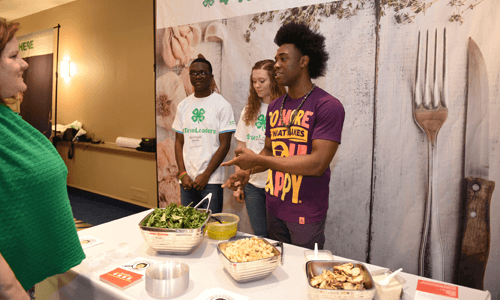
Fortunately, we live in a country that allows the general public to be actively involved in multiple levels of government. Unfortunately, there can be a lack of interest and frankly knowledge about candidates and issues, especially among young people. These young people are the future of our nation and it is our responsibility to educate and invigorate their desire for active citizenship. This idea of becoming civically engaged is especially important since we are electing a president this year. Citizenship Washington Focus is not only a program that has helped many youth learn about national issues and government processes, it’s a program that teaches youth how the government works by allowing them to learn by doing.

Delegates at Citizenship Washington Focus assume the role of representatives participating in the legislative process. Issues currently relevant to the country are thrown at them to discuss, this year the issues included hydraulic fracturing, campaign financing, cell phone data encryption, and GMO labeling. The delegates are divided into groups where they meet new people and discuss the issues, formulating arguments for or against one of the topics. Within these small groups, delegates who have less knowledge on the topics are able to learn more through delegates that are directly affected by the issue. Oftentimes the delegates have to challenge their own thoughts about an issue and create an argument for the opposition. This allows them to learn valuable skills about debating, but also opens their minds to ideas and situations that are new and thought provoking; allowing for deeper understanding of how and why issues are so complex. These ideas and arguments are presented like they are on Capitol Hill, in the form of bills.

Many are familiar with the classic Schoolhouse Rock song, “I’m Just a Bill,” which educates youth about the life of a bill; however, by actually sitting down, writing bills, and watching as the bills travel through a mock House of Representatives, delegates are able to participate in the process. As part of the process, the bills are brought before all of the delegates at a Mock Congressional Session, which is planned and run by delegates attending Citizenship Washington Focus. Everyone is given a chance to ask questions, debate, and vote on the proposed bills. Many delegates admit to initial disinterest in the bill writing workshops, but by the end of Congressional Session admit to genuinely enjoying the discussion of complex issues and learning to compromise.

While participating in their own mock legislative process, delegates at Citizenship Washington Focus are also able to see the actual legislative process in action and meet their own representatives on Capitol Hill. During these experiences, delegates have conversations with their representatives, explaining how they are becoming civically engaged at the 4‑H Center and discovering more about the jobs of our Congressmen and Congresswomen. Delegates also have the opportunity to question their representatives about problems in their states and what actions are being taken at a national level to combat the problems. During this past year’s session of Citizenship Washington Focus, a GMO labeling bill was working its way through the Senate and House. This allowed delegates to become educated about how industry and agriculture would be affected by this developing bill, which could personally affect the 4‑H’ers that had agricultural backgrounds.  As the delegates watched the action unfold on the floors of the House and Senate, they witnessed compelling arguments as well as unexpected protests and drama.

Overall, delegates seem to enjoy the experiences that Citizenship Washington Focus has offered for the past 58 years. From learning about the origins of law and order to discussing bills on their own “House floor”, I have personally seen unsurmountable growth within delegates, not only in their passion for civic engagement but also their speaking and leadership abilities. I saw this growth within a one-week period, I can only imagine what these civically engaged youth will continue to do. Citizenship Washington Focus is yet another example of how 4‑H grows true leaders. 

Mark Miller

CWF PA 2016
4‑H and Disney Conservation Fund collaborate for third year to promote first-hand conservation experiences through Connecting Youth to Nature (4‑H CYN) program.


CHEVY CHASE, Md. (September 9, 2016) — Kids are spending less time outdoors today. In fact, a new study estimates that the average child spends less than an hour outdoors each day. To combat this trend, National 4‑H Council will engage more than 10,000 urban youth to increase the time kids spend in nature through the 4‑H Connecting Youth to Nature (4‑H CYN) program. Disney Conservation Fund has supported 4‑H CYN for the past three years to bring youth into nature through programming that introduces them to local ecosystems and hands-on experiences. Connecting Youth to Nature also helps children develop a lasting interest in protecting and caring for the environment.

“Spending time in nature is one of the most important things a child can do,” said Jennifer Sirangelo, President and CEO of National 4‑H Council. “If you look at how nature affects young people, it really is miraculous: it can reduce obesity, alleviate stress and anxiety, boost creativity and cognition— and the list goes on. The beauty of 4‑H Connecting Youth to Nature is that it not only allows underserved youth to experience the wonders and benefits of nature first-hand, it prepares these youth to be good stewards of the environment as adults. It starts kids down a path where they learn to appreciate, understand and ultimately protect the environment.”

With immersive environmental activities that range from growing butterflies to testing water quality, the 4‑H CYN program will engage youth in urban communities across eight states where they will learn fun ways to protect and preserve the planet. Participating youth in California, Connecticut, Florida, Hawaii, New York, North Carolina, South Carolina, and Texas will engage in hands-on experiences through 4‑H afterschool clubs and summer camps.

Last year, the 4‑H CYN program exceeded its goals by exposing more than 13,000 youth, families and volunteers to the joys of nature and the outdoors. Through camps, field trips, afterschool programs, in-school projects, and teen-led enrichment programs, urban youth spent more than 100,000 hours in nature over the course of 10 months. As a result of the program, 90 percent of participating youth said they felt good when they are outdoors, 88 percent said they care more about the environment, and 78 percent said they feel it’s their responsibility to protect nature.

4‑H Connecting Youth to Nature ties into the Disney Conservation Fund (DCF) Reverse the Decline, Increase the Time initiative, which launched in April 2016 in honor of the fund’s 20th anniversary. The effort build on DCF’s conservation work over the last two decades and brings focus to two specific impact areas: 1) reversing the decline of 10 endangered animals and 2) increasing the time kids spend in nature to inspire them to care for the planet.


About Disney Conservation Fund

Established on Earth Day in 1995, DCF helps to protect the planet and connect kids with nature. Supported by Disney and guest purchases and contributions at Walt Disney Parks and Resorts, DCF has proudly contributed $40 million in grants to nonprofit organizations working in 115 countries. For more information visit www.disney.com/conservation.


About 4‑H

4‑H, the nation’s largest youth development organization, grows confident young people who are empowered for life today and prepared for career tomorrow. 4‑H programs empower nearly six million young people across the U.S. through experiences that develop critical life skills. 4‑H is the youth development program of our nation’s Cooperative Extension System and USDA, and serves every county and parish in the U.S. through a network of 110 public universities and more than 3,000 local Extension offices. Globally, 4‑H collaborates with independent programs to empower one million youth in 50 countries. The research-backed 4‑H experience grows young people who are four times more likely to contribute to their communities; two times more likely to make healthier choices; two times more likely to be civically active; and two times more likely to participate in STEM programs.

Learn more about 4‑H at www.4‑H.org, find us on Facebook at www.facebook.com/4‑H and Twitter at www.twitter.com/4H.

Since 2008, 4‑H National Youth Science Day has engaged millions of youth around the world in exciting and innovative STEM learning and experiences, from wind power to robotics to rocketry. This year, the 4‑H NYSD challenge is soaring to new heights with the 2016 National Science Challenge, Drone Discovery, developed by Cornell University Cooperative Extension.

This year’s hands-on science challenge explores the science behind drones and how they are being used to solve real world problems. Youth will learn everything from flight dynamics and aircraft types, to remote sensing and flight control, as well as safety and regulations.

While the official 4‑H NYSD event takes place on October 5, 2016 in Washington, D.C., clubs, groups and schools around the world are also inspiring the next generation of STEM leaders, all taking part in what is known as the world’s largest, youth-led science event.

Participating in 4‑H NYSD is easy:

  • Purchase a 4‑H NYSD Challenge Kit. Each kit includes all the necessary items needed to participate in the challenge, including youth and facilitator guide books and experiment materials. Kits are available for purchase now on the 4‑H Mall.
  • Register your event. Simply create a 4‑H NYSD membership account to receive helpful resources and materials and see your local event showcased on our national 4‑H NYSD map.
  • Join the conversation on social media. Share your event photos and videos using the hashtag #4HNYSD. Your event could be featured nationally!

So what are you waiting for? Put what you know about engineering, drones and flight into action. Purchase your kit, register your event, and get ready to take flight in this worldwide science phenomenon!

Wanted: Adventurers

Adventure: an exciting or dangerous experience

Walk up to any Citizenship Washington Focus (CWF) Delegate and they will tell you that CWF was one of the greatest adventures of their 4‑H careers. Even though this trip doesn’t completely fit in with the definition, we still think that speeding around the Washington, D.C. wonders at breakneck speed from sun up to sun down counts as an adventure.

Why do we feel this way?

Because we have learned so much in such a short period of time, and enjoyed all of it (or most of it at least)!

We have learned how to properly use a crosswalk (especially those of us who are from more rural areas).


We have learned how to live without sleep.We have learned just how many “squeezes” (slushies) we can eat in a day.We have learned how not to make security guards mad.

We have learned how to walk down the slippery stairs of the monuments without falling.

Funny? Yes.

Even though we might all look like we are goofing off, we are learning.

As we stood in the Lincoln, Jefferson, and Franklin Delano Roosevelt memorials, we learned how each of these men affected the world that they lived in, and how they continue to affect us today. As we read the inscriptions on the walls, the words hit us and they gave us hope.

As we viewed the beautifully crafted World War II, Korean War, Vietnam Veterans, and Iwo Jima memorials, we caught a glimpse into the passions and feelings that surrounded these eras.

As we listened to the cannons go off at Twilight Tattoo and watched the soldiers flip and spin their guns with an ease that looked as natural as breathing, we as delegates were filled with pride in our Army.

As we stood amongst the resting place of the over 400,000 active duty service members, veterans and their families in Arlington National Cemetery, we saw the ideas of sacrifice and courage in a new light.

As we talked to our senators and representatives we learned what it means to be a true and active citizen and we gained a new respect for the work that they do.

As we discussed different congressional issues, wrote bills and learned how the government works, our Program Assistants (PAs) impressed upon us the importance of being respectful and open-minded.

Needless to say, learning has been a big factor in the adventures we have had during this past week.

I think that the Communications Committee speaks for everyone when we say thank you to those who have made this trip possible.

First, to the chaperones. We know that you have probably gotten even less sleep than we have, but we appreciate how you are always kind and excited. Even though we might not always like your rules, we know that you only want us to be safe, and we appreciate that.

To our bus drivers, thank you! At the end of the day, when we are exhausted from trekking across the city, you are some of our favorite people to see. Thanks for taking care of us!

And finally, to our Program Assistants. We love you bunches! Thanks for sticking with us, even when we are delirious with laughter and lack of sleep. We appreciate that you love learning about the city and have passion for passing that knowledge on to us. Thank you for all that you do.

Each and every person has made this the greatest adventure of our 4‑H career! We have learned so much, we will never forget it. We have become smarter, aware, and gained a passion for being involved. We know that the adventure doesn’t stop at the end of this week. It is up to us to keep that adventure alive, and we know that CWF has given us the tools to do that.

If this sounds like an adventure you would like to partake in, contact your local extension personal, and help us keep the adventure alive.

May 16th, 2016. The day 10 young adults from around the country came together to facilitate Citizenship Washington Focus. Coming in, we knew we would be learning about the city from our mentors and from each other, but one thing we were not prepared for was how much we would learn from our delegates. Here are the top 5 things I learned from my delegates throughout the summer:

  1. You can sleep later. Nothing beats making memories with your friends. You won’t regret losing an hour of sleep because you were laughing, playing cards or making new friends. Sometimes I found myself longing for sleep while my delegates stayed up until the early morning with their new friends. By the end of the week, delegates left with new forever friends and so many memories to bind them together. This inspired me to make the most of every moment with my delegates and fellow program assistants.
  2. Timeliness, although important, is not everything. Now, I’m not going to use this as an excuse to be late to work or something important like a job interview, but in the scope of being in Washington, D.C. it’s okay to take a few extra minutes to take the sights in. It’s alright if I stay out a little later than planned to explore. Some experiences are once in a lifetime. Washington, D.C. was that for many of my delegates.
  3. We all have different opinions. This may seem obvious to many people, but it’s definitely put into perspective at a program like CWF. I had delegates from all regions of this country; from Florida to Montana to Texas. It was one of the most interesting things to see how thoughts varied by region and by person. It truly expanded my horizons and opened my mind to new thoughts and ideas I didn’t think I would have.
  4. When in doubt, laugh it out. Things almost never go perfectly as planned. Being flexible when situations arise and laughing it out when appropriate is something my delegates had to do every week. The moment I realized I just needed to laugh it out was Monday of week four at Mount Vernon. It was a lovely morning on the grounds, and on the way back to the 4‑H Center I discovered my pants had been split all morning. Lovely, right? At that point, what else could I do but laugh it out? I told my delegates the story later and they laughed too. Whether it was rain changing our plans around or switching the schedule up when things didn’t go according to the plan, my delegates taught me to roll with the punches and laugh it off as appropriate.
  5. Enjoy each moment. As a program assistant, it’s easy to feel complacent with the program because we repeat it many times. CWF is an amazing program and watching its impact on a new set of delegates each and every week taught me to enjoy each moment, no matter how many times I had done it before. The friendships created, the “aha!” moments and the marvel in delegates’ eyes at monuments and memorials. Those are the things that inspired me to enjoy each moment. Each delegation enjoyed it in a different way and I was proud to be along for that ride with them.

To conclude, my sweet delegates taught me this and so much more. It was a summer of growth for both the delegates and myself. These are lessons that will stay with me forever and I couldn’t have asked for a better way to learn them. Thank you, delegates.

Gabriela Valentin

CWF PA 2016

You can learn a lot at a fair, or, at least be reminded of what you should already know!

It is fair season in Maine. I counted 29 fairs listed on the Maine Association of Agricultural Fairs website. Maine has large fairs (like Fryeburg Fair and Skowhegan State Fair) and small fairs (such as Houlton Fair and Monmouth Fair). Windsor Fair, a large fair, touts itself as a “progressive fair.” Ossipee Valley Fair, small, calls itself an “old-fashioned” fair. Waterford World’s Fair says it is a small family fair. Union Fair says it is a large family fair. I assume they are both talking about the size of the fairs and not the families that attend! Union Fair, by the way, is famous for including the annual State of Maine Wild Blueberry Festival. Maine has at least 25 of those (festivals, that is), as well, including the Lobster, Moxie (a Maine soft drink), and the Internet Cat Video festivals!

Most of the agriculture fairs, large or small, old-fashioned or progressive, small family or large, have some 4‑H involvement – which keeps the 4‑H educators of Maine hopping during the summer. Don’t even try to connect with the 4‑H Educator in Kennebec County during fair season. She has FIVE fairs in her county. That almost seems UNfair! However, it is fair to say Maine enjoys its fairs.

On August 4, I got to go to the Bangor Fair (large). I was a 4‑H Educational Exhibits judge judging exhibits put up around the fair by 4‑H’ers, 4‑H Clubs and, in an “open” class, farms. Exhibit exhibitors can win some pretty good premiums too. First place was $450!

I learned a lot from these exhibits. I learned beef products are used in the process of brewing Guinness Stout, Holsteins came from the Netherlands, and, depending on how you look at it, a cow has either one stomach with four parts or four stomachs – the argument rages!

I also learned, or re-learned, some other things.

  1. Drink water.
    I didn’t need a bottle of water until our host gave me one, then I realized how much I needed it!
  2. If something’s worth doing, put your all into it.
    It was clear that some exhibitors valued their work. Others seemed to value the premium. The exhibitors that got the premium gained our respect for how much value they put into their work.
  3. If you are going to present information, talk like you know what you’re talking about.
    Act like you know what you’re talking about and speak so someone other than yourself can hear you. There were a few times during the afternoon that I thought I was going deaf. When I could hear them, I sometimes wondered if they believed what they were saying! But those who acted like they knew what they were talking about, and spoke so we could hear them, they got the most points.
  4. It is O.K. to delegate. One person can’t do everything. 
    Sometimes we think we can do it all ourselves. Most times, we can’t.
  5. Maybe, if the right approach is used, we all CAN get along.
    At least three tired, opinionated judges left alone in a hot room can!
  6. You have to keep track of your mileage if you want to get reimbursed.
    Darn.
  7. It’s not how large you are or how long you’ve been doing something that counts, it’s what you put into the “doing” that makes the difference.
    We saw some exhibits that were put up by high-powered organizations and farms with long histories that, too often, missed the mark. The exhibit that impressed us the most was put up by a little 4‑H girl, written in her own hand. She could have taught those big guys a lot!
  8. People won’t know you are 4‑H unless you tell them. 
    We get so used to being “4‑H” that we forget to use the name. Only one out of the 14 4‑H exhibits we judged included the name “4‑H” in the exhibit. By the way, that one won.
  9. It is best to leave before the crowds show up.
    Unless you are selling something!
  10. We like animals, especially cows.
    At the end of the day I asked a little girl what the best part of the Bangor Fair was. “The ANIMALS!” she said, then added, “Especially the cows!”
If you’ve been on social media recently you might have seen friends and family sharing their first jobs with the hashtag #firstsevenjobs. Thousands of people have been using it to share details of their very first jobs, and there are some great ones. For example, actor and former California Governor Arnold Schwarzenegger revealed he was once an ice cream scooper!

Part of the reason that these tweets are so popular is that they make today’s leaders seem so accessible. They remind us that we all started small and learned as we went. It shows that True Leaders aren’t born: They’re grown.

That’s an idea at the heart of 4‑H’s Grow True Leaders Campaign. No one is born a CEO or a governor—they grow into it. In 4‑H, we give young people the leadership skills they need to grow.

If the #firstsevenjobs hashtag shows us anything, it’s that first jobs often aren’t glamorous. But they’re so important for learning the fundamentals, like being honest in your work and being responsible. Those two qualities will be the basis of every great career, and you can learn them in the simplest of places. Take my first job, as a babysitter. I learned responsibility quickly because I was responsible for kids’ lives. (I also learned that when I earned a credential—my mom made me get a babysitting certification every year—I could charge a little more for my services.)

Then I was a waitress where I learned to report my tips honestly at the end of the day so that I could be taxed on that income. That was the year that my mom made me fill out my first tax form by myself. I was sixteen!

When you’re young you can also learn by watching your leaders. I worked as a wedding decorator—I can still make an arch out of helium-filled balloons— and later as a photo assistant. In both of those jobs, I was working for entrepreneurs and saw how hard they worked and how driven they were. It was a great lesson. In many jobs I worked for dynamic leaders that I was drawn to, and I wanted to be like them. In other jobs I had bad bosses, and I learned what I didn’t want to be, which was equally as valuable.

4‑H offers young people all sorts of ways to learn these skills. We teach leadership in formal ways to the young people we hire as interns, camp counselors and junior leaders, and to the officers at 4‑H clubs who learn to sit at the table and work with adults in a leadership setting. We also help kids learn these skills in informal ways, whether it’s by asking them to mentor someone younger, or asking them to speak publically to share a skill they’ve recently mastered. These things seem simple, but as the hashtag proves, they’re the beginnings of much bigger things.

No matter what activity you’re doing this summer, I hope all young people stop and take a moment to look at your leader and see what you can learn from him or her. You can learn from every leader you have, good or bad. And all of those things you see and hear and do this summer will be a part of the foundation that will launch you to a career one day. And soon enough you’ll be reflecting in your own #firstsevenjobs.

As we continue our spotlight of 4‑H Grown alumni and sharing the impact 4‑H has had on their lives, we are excited to celebrate a very special 4‑H alumna, Martha Ann Miller, who will be celebrating her 105th birthday on August 6!

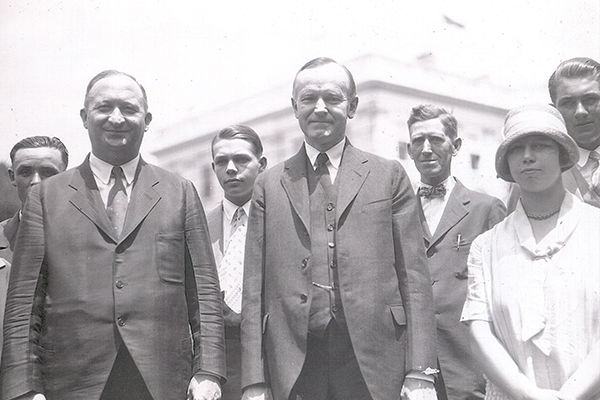
Martha Ann Miller is a phenomenal woman who is a strong part of our 4‑H and American history. Through 4‑H, she was named the State Baking Champion at the young age of 14, being the youngest to receive the award in Indiana at the time. As a result, she received a scholarship to Purdue State University, earned a trip to Washington, D.C., and was one of many 4‑H’ers to meet President Calvin Coolidge in 1926.

As an adult, Mrs. Miller became a teacher in Virginia in 1952, where she taught at the first integrated school in the state.

“The principal asked the teachers if we would be willing to teach black students,” she shares in her book, The First Century, And Not Ready for the Rocking Chair Yet. “Some teachers refused. I personally felt it was an insult to be asked this kind of question, and I, of course, volunteered, considering it an honor to have the students in my classroom.”

coolidge

Martha Ann Miller (right) pictured with President Calvin Coolidge (1926)

In the past year, Martha Ann Miller has shared her story in USA Today, visited the National 4‑H Conference Center for the first time, and walked the green carpet at the 2016 National 4‑H Council Legacy Awards.
Happy Birthday, Martha Ann Miller! And thank you for continuing to share your support and passion as a 4-H Grown alum!

Chevy Chase, Maryland – July 6, 2016 – Today, National 4-H Council announced it has been awarded a grant from Target Corporation (NYSE: TGT) for $100,000 as part of Target’s ongoing youth wellness efforts.

The grant will engage more than 750 youth and their family members in the greater Chicago area in the 4-H Food Smart Families program. The program aims to empower families through food knowledge and education to build sustainable solutions that confront food insecurity and improve health. Driven by 4-H teen leaders, youth participants will learn to help their peers and families learn about food – how to budget for it, use it, cook it and make choices that contribute toward their health and well-being.

“With more American families struggling with hunger and nearly 16 million children living in households that are food insecure, it’s more important than ever to provide families with tools to help them improve their overall nutrition and health,” said Jennifer Sirangelo, president and CEO, National 4-H Council. “The 4-H Food Smart Families program empowers teen leaders to deliver nutrition and food-skills education in their local communities that provide measurable, long-term impact.”

“At Target, we are committed to helping make wellness a way of life for our team members, guests and communities,” said Laysha Ward, chief corporate social responsibility officer, Target. “That’s why we are excited to partner with an impressive array of organizations who are already doing such important work to make an impact in the wellness space. Together, we will help remove barriers to wellness in our communities, working to increase the consumption of nutrient-dense food and physical activity of kids and families across the country.”

The grant is part of Target’s ongoing efforts to help make wellness more affordable, accessible and inspirational for its team members, guests and communities. Target also is partnering closely with local leaders and organizations in communities around the country who are experts in youth wellness and actively working to close the wellness gap for children. These efforts are part of Target’s long history of giving 5 percent of its profit to communities, which today equals more than $4 million every week.

Launched in 2014, the 4-H Food Smart Families program is now active in 13 states and has engaged more than 400 youth trained to be Teens as Teachers, serving as role models and mentors to influence positive changes in youth behavior. The program has a goal of reaching 250,000 kids and 650,000 family members in high poverty states by 2020.

About 4-H

4-H is a community of six million young people across America learning leadership, citizenship and life skills. National 4-H Council is the private sector, non-profit partner of 4-H National Headquarters at the National Institute for Food and Agriculture (NIFA) within USDA. The 4-H programs are implemented by the 111 land-grant universities and the Cooperative Extension System through their 3,100 local Extension offices across the country. Learn more about 4-H at www.4-h.org.

About Target

Minneapolis-based Target Corporation (NYSE: TGT) serves guests at 1,792 stores and at Target.com. Since 1946, Target has given 5 percent of its profit to communities, which today equals more than $4 million a week. For more information, visit Target.com/Pressroom. For a behind-the-scenes look at Target, visit Target.com/abullseyeview or follow @TargetNews on Twitter.

Contacts

National 4-H Council
Dvon Holland, Director, Integrated Marketing, 301-385-0430

Target Corporation
Jessica Stevens, Communications, (612) 761-6351
Target Media Hotline, (612) 696-3400

Lazarus Lynch is only 22, but he’s already making waves in the culinary world. Lazarus, whose father owned a restaurant, now offers healthier takes on classic soul food on his website, Son of a Southern Chef. He has appeared on the Food Network and the Cooking Channel, and he’s working on a cookbook. Unsurprisingly, he’s also a 4‑H alum.

Lazarus, who grew up in New York City, got involved with 4‑H as a sophomore in high school when he joined the group for a week in Washington, D.C., with other young leaders. “I remember on the last day, I cried because it was over,” he said. “I never looked back from there.”

At 22, Lazarus is now a youth member of the board of National 4‑H Council. “This is a group you’ll feel connected to forever,” he said. “I have lifelong friends because of 4‑H.”

We talked to Lazarus about how being a part of 4‑H helped him get where he is today.

How did being a part of 4‑H help you become a better leader?

Lazarus Lynch (LL): It taught me to be conscious of the world around me. That means taking note of the issues and the people around you and compassionately responding. Because being a leader is really about serving others.

4‑H also taught me how important listening is. When I traveled around New York, I would listen to the stories of kids who grew up on farms and whose parents were in 4‑H. I didn’t have that story, but I knew I could learn from them. Because at the end of the day we were all there for the same reason: We believed our voices mattered, and we believed in the ability of young people to respond to issues that mattered to us.

What makes 4‑H unique when it comes to growing true leaders?

LL: 4‑H believes in the possibility of young people. It teaches kids that we’re powerful, that we’re not broken, that we can do things—we can do great things.

It’s not just another after school program. It’s about creating a conversation that reflects service and that really inspires you to speak up. We were thinking about issues that others kids maybe had never thought about. Like, how will we feed 7 billion people by the year 2050? Or how do we use robotics and STEM to create different kinds of technologies for people with disabilities? Those were questions we were asking ourselves in high school.

lazlynch-gtlexperience-1
How is what you learned in 4‑H helping you become a leader in the culinary world now?

LL: 4‑H has taught me those soft skills you need to lead, like commitment and follow-through and responsibility. For example, my website, Son of a Southern Chef, requires my dedication and commitment. I think some people think it kind of happens organically, but there’s actually a lot of work that goes into it. So I use those skills every day.

It has also given me opportunities. Being a youth board member gives me a platform that I wouldn’t have otherwise, and I’ve met other board members I would not have gotten to meet otherwise. I’ve also worked for the Department of Agriculture in Washington, D.C., where I was learning about the farm bill or speaking one-on-one with the secretary of agriculture.

Your father was a chef and a restaurant-owner, and you learned a lot from him. You even called your website “Son of a Southern Chef.” In what ways was he a role model for you when it comes to leadership?

LL: My father was a business-owner all my life. He only ever worked for himself. He had a sense of confidence and leadership that I took for granted for many years.

He taught me about believing in yourself, believing that your dreams matter, and believing that you’re capable of pursuing your dreams. My dad barely passed high school because in his senior year my oldest brother was born. That was a real challenge for him, and he overcame that. He didn’t relent. He went to work, and then he started his own business when he was, like, 22.

He showed me a lot about being a man— what a man looks like today: Someone who takes care of their family, who provides, who is a good listener, who is a good father. He was just second to none, and that’s the kind of dad I want to be for my kids one day.