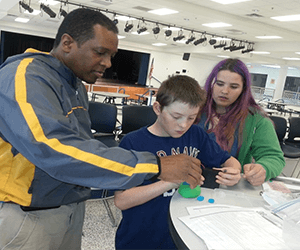
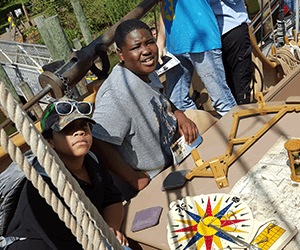
We continue celebrating and highlighting 4‑H Mentoring programs across the country, and the mentors who have changed the lives of youth in their communities by serving as role models, educators, life coaches and friends. In our final installment, we’re featuring the 4‑H Tech Wizards Mentoring Program at the University of Vermont.

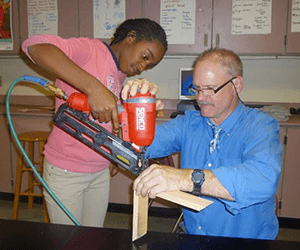
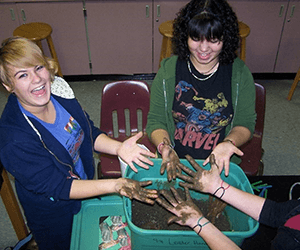
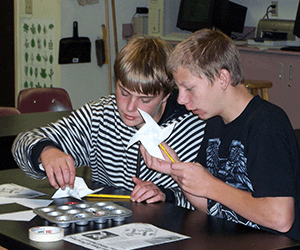
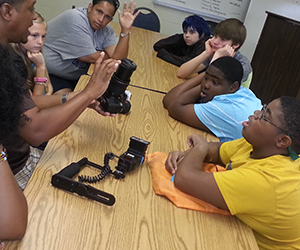
4‑H Tech Wizards is an after-school and in-school, youth mentoring program for underserved youth grades 4-12, that sparks youth interest in science, technology, engineering, and math (STEM) fields. Tech Wizards adult mentors are selected based on their experience in STEM fields and they teach kids about science and technology through project-based learning.

We chatted with Deborah Fajans, site coordinator and mentor in Westminster, Vermont, who shared her thoughts on the power of mentoring in the Tech Wizards program.

What is the main focus area of the program? What are its goals?

Deborah Fajans (DF): Tech Wizards is really a mentoring program, but we use science and technology as the hook to get culturally diverse, economically and physically at-risk children into our mentoring programs. Our main goal is to guide these children through tough times and making good choices for personal growth. During the science and engineering aspect of it, [the goals are] to develop skills, set a career path, and build self-esteem. It’s a great situation because they don’t know they’re being mentored, they don’t know that they are learning these science skills; it all happens in the context of fun.

What areas do you focus on most when mentoring a young person? Academics, career path, personal growth, etc.?

DF: My site is a residential school for children who are at-risk and cannot stay at home or are removed from the home. These children generally are confused or have low self-esteem, so the mentoring aspect of Tech Wizards is our number one priority. We also mentor in the context of science and engineering so academics is the next part. Tech Wizards is fused in every aspect of the school.

4htechwizards-mentor-3-1


Today, in many cases, youth development organizations have become the main source of mentorship and learning for young people, other than school learning. What does it take for families to become actively involved in a child’s upbringing, both during and after school?

DF: It is my belief that every family, parent or guardian is trying to do the best they can. I think families need training, meaningful ways to engage in their children’s experiences. I think the Tech Wizards program is right there, front and center, to provide that training. We may create activities for families to engage with their children, and we have family strengthening programs to help better mentor and nourish children. Tech Wizards’ training is culturally sensitive and responsive to what parents can and cannot give and we try to step in and train families to meet those needs for the children.

Share with us your most rewarding experience(s) as a mentor.

DF: On a personal level, I know that I’ve made a connection when I walk into a school and the faces light up. I also know when I’m making a connection when they come to me with their problems. I have learned to be totally receptive, to drop everything that I can and really listen. I can feel the connection because they have 100% of me, and I like that feeling.

I have a number of children that have gone on from the Tech Wizards program to use the science skills that they have learned and have set a career path for themselves.

4htechwizards-mentor-1-1


As a mentor, do you feel it is important to familiarize yourself with your mentee’s family/friends?

DF: I think it’s especially important, because many of the children at my site have been removed from their family. We have to work really hard to keep that connection going. We have Family Day, and I work really hard on those days. The school works very hard, and the child psychologists, to keep the mentors aware. I think many programs fail at these things because they have to flesh these issues out on their own. We train families to be better support systems, so it’s important to know the families.

Were you mentored as a young person? If so, who was your mentor and how did that person make a positive impact on your life?

DF: Well, I think everybody finds mentors along the way. Living one’s life – a child, even an adult – they need a roadmap. They may lose their way or they are in unfamiliar situations that there is always a need for a helpful friend or mentor to guide you through that. As a child, I can think of my high school English teacher [as a mentor]. I grew up in a small town and he encouraged us to be brave, to think about the bigger world, the bigger picture, and have the courage to go for it. I was mentored in my first job by a female supervisor who was vested in seeing young women make it up through the ranks. I’m even being mentored now by a university faculty member and Tech Wizards colleague who has been my guide for 14 years, helping me to achieve professionally. I owe a lot to that person.

In what ways do you think someone, at any age, can benefit from having a mentor?

DF: My philosophy is that mentors are everywhere, and they are needed often, in all stages of life. I think mentors can be a roadmap through life. You can’t know it all and solve all your problems by yourself. It takes a village to raise a child, and many mentors to get through life.

4htechwizards-mentor-4-1


In what ways do you think someone, at any age, can benefit from having a mentor?

DF: My philosophy is that mentors are everywhere, and they are needed often, in all stages of life. I think mentors can be a roadmap through life. You can’t know it all and solve all your problems by yourself. It takes a village to raise a child, and many mentors to get through life.

Do you think there should be a level of emotional preparedness?

DF: The Tech Wizards program has training for mentors. We have orientation sessions where we talk about ages and stages, where we train mentors on what to expect at different stages. A 7-year-old is going to look at a situation differently than a 13-year-old. We train a lot on the possible things that could happen.

What advice would you give someone interested in becoming a mentor?

DF: Well, I think they need to know that it is a very changeable journey. You can approach the mentorship thinking that you have these goals to achieve with your mentee but life kind of gets in the way, or changes it up. You need to be flexible. There are certain circumstances that may arise and you need to be there. You entered into this arrangement with this child that requires you to be focused and responsive. There may be instances where the mentee is calling the mentor for help, asking them to be there. If you don’t arrive, come early, or you don’t stay late during that time, you may miss some important signs and signals. That requires flexibility and learning on the mentor’s part.

No 4‑H educator strives for mediocrity. But all too often, successful proposals lead to grant funding and an increase membership. This is great! But beware of growth, it sweeps in and sets in motion a downward spiral toward mediocrity.

As a 4‑H program grows, we as leaders put systems, processes and structures in place to deal with complicated issues that arise as part of scaling. It’s at this point that we risk losing our appetite for innovation that motivated us to win that funding in the first place. We might fall back on the belief that, “This is the way it has always been done,” or else resort to tired lessons from best practices at association conferences.

Although systems and best practices are important for successful scaling, if you apply too many at once you risk razing the innovative spark inside you. 4‑H programs move from innovative to mediocre when they conform to the status quo instead of striving for innovation by moving quickly and pushing boundaries.

Now, as 4‑H leaders we must remember the systems that made our programs successful to begin with. Similarly, we need to stay wakeful, lest our programs succumb to mediocrity.

Here are four tips to maintain a culture of innovation as your program grows:

  • Think outside the 4‑H box: National and state 4‑H association meetings teach you how to run traditional programs, ‘best practices’ that work, but you’ll never hear about ‘next practices’ or the ideas that utterly failed and what your colleagues learned from their mistakes. Don’t use only best practices as building blocks if you want an innovative 4‑H program. Look outside of 4‑H for ideas and concepts that work in the world of business. New 4‑H programs thrive on innovation, not more of the same.
  • Cultivate a culture of innovative: Culture defines your 4‑H program. Do you want to have a dynamic, creative team? Then your culture needs to reward initiative, encourage communication and provide autonomy. You can’t just give lip service to the word ‘innovation,’ you have to ingrain innovation into your culture by honoring it with every decision you make. Prioritize open sharing of innovative ideas and listen closely to those teammates who think differently than you. Diverse perspectives help innovation flow.
  • Blaze your own trail: Commitment to innovation becomes even more critical as your 4‑H program grows because unfortunately, size encourages tradition. As the size of your staff grows, strict structures will appear more attractive in order to help keep things organized. Only your leadership will stave mediocrity. Question every best practice by asking, “What if we did the opposite?” Set your own course and ascertain the best way to organize your 4‑H program when it is small so the transition remains steady.
  • Reinforce agility: Smaller, agile teams collaborate better and can tackle new challenges more effectively than a large staff working in silos. When your team is small, use tools like Slack, Google Groups, Drive, Basecamp and Box to share openly about what everyone is working on. When you have established a collaborative nature in your 4‑H program, it will be easier to scale and bring on more people while maintaining a spirit of innovation.

As the grant funding rolls in for your 4‑H program, keep innovation at the nucleus of your leadership to prevent slowing slipping into mediocrity. Examine the traditional best practices, but be sure they’re a proper fit for your team culture before applying them. This type of focus will keep your program firmly anchored in innovation.

New 4‑H Mall Small Business partner Kelly Corbett sorted through 4,000 pounds of wool last year, but there was a time she didn’t know the first thing about sheep, let alone about running her own farm. Seventeen years ago she left her busy career to feed her creative side – and adopt a sheep – and has been a shepherdess, fiber artist, and all-around yarn goddess ever since.

Romney Ridge Farm in Woolwich, Maine is an oasis for Kelly’s 19 sheep, three dogs, two angora goats, and pony. The beloved sheep at Romney Ridge are shorn annually to produce the strong yarns used to create Kelly’s signature cute and cuddly animal felting kits. Kelly also supports fellow local small businesses by selectively purchasing fibers from other local fiber farms, and uses the steadfast and bold dyes of Cushing Dyes in Kennebunk, Maine.

These adorable American-made felting kits are now available on the 4‑H Mall. We welcome Kelly to our Small Business family!

Every child has the potential to be a true leader. However, kids today say they are missing experiences that grow the life skills they need – skills like confidence, responsibility, independence and compassion. In 4‑H, we believe in the power of young people, and want to provide them with opportunities needed to grow the skills they need to lead. We want to grow more True Leaders.

National 4‑H Council is excited to launch the Grow True Leaders Campaign to empower this generation of youth with encouragement and real opportunities to lead.

As the presidential elections spotlight the topic of leadership, we will give young people across the nation a forum to put their voices into positive action and to rally the nation in growing a generation of more true leaders.

The Grow True Leaders Campaign will engage young people and rally the nation to provide more youth with hands-on, youth development experiences that are proven to grow life skills, where they can learn by doing, grow from failure, express their ideas and use their influence to drive positive outcomes.

The campaign will also provide a forum for adults to champion the positive in today’s youth, recognize more youth as true leaders, and support 4‑H in providing more opportunities for youth to grow the skills they need to lead.

Between now and June 30th, join us by shouting out a child in your life who positively impacts the lives of others through service, passion and courage. “SHOUT-OUT #TrueLeaders” is a simple yet powerful way to leverage social media to recognize the kids who take responsibility in their lives and communities, who have the courage to try something new, and who never give up.

Visit www.4‑H.org/TrueLeaders

  1. Rally with us by joining our #TrueLeaders
  2. Thunderclap to share a positive message celebrating the good things kids do
  3. Shout-Out using hashtag #TrueLeaders on Facebook, Instagram or Twitter, sharing with others the great things kids are doing in your community

Help more kids get the opportunities in life and the recognition they deserve. Join 4‑H in shouting out True Leaders!

This week I was listening to an episode of Jacob Morgan’s The Future of Work Podcast where he interviewed Abhijit Bhaduri, the Chief Learning Officer of Wipro Group, to discuss the future of learning and careers. In his role, he prepares all 170,000 employees in his company to be “future ready.” Bhaduri helped me realize that we need to look at ourselves as apps that get updated and continuously improved upon.

This week I was listening to an episode of Jacob Morgan’s The Future of Work Podcast where he interviewed Abhijit Bhaduri, the Chief Learning Officer of Wipro Group, to discuss the future of learning and careers. In his role, he prepares all 170,000 employees in his company to be “future ready.” Bhaduri helped me realize that we need to look at ourselves as apps that get updated and continuously improved upon.

"The way we look at apps is the way we need to look at ourselves."

Have you noticed how often do your apps get updated? On average, an app gets an update 12-15 times a year. In fact, most popular apps are constantly introducing new features, better security and more intuitive interfaces to stay ahead of the curve.

Our work in 4‑H is very different from the work of IT professionals. Nevertheless, we need to regularly update ourselves. We are educating the leaders and scientists of tomorrow; we owe it to them to stay ahead of the curve in order to give them the best possible learning experiences.

"We are educating the leaders and scientists of tomorrow; we owe it to them to .. give them the best possible learning experiences."

Like apps that get updated, it is critical that we update ourselves by continually learning, reinventing ourselves and acquiring new skills. Attending one to three conferences a year is not enough anymore.

As the world becomes increasingly technical, many skills we have will be replaced by IF/THEN logic and our people skills will become even more valuable. So where should you start? Consider ‘The 20 People Skills You Need To Succeed At Work.

’I recommend designing a learning plan by carving out a few hours for professional development every month. You don’t need a travel budget or an expensive online membership. To quote Bhaduri, “the world is your content university.” Start with any one or more of these ‘30 Websites That Will Make You Unbelievably Smarter.’ I also highly recommend learn.extension.org.

4‑H Today is written, edited and published by National 4‑H Council.

Michelle Perez has lived and breathed 4‑H since she was seven years old. As a member of Kansas 4‑H, she was involved in a variety of projects including beef, swine, and poultry, in addition to creating her own projects that were the first of their kind.

Now the mother of two boys, whom she proudly describes as “born and bred in 4‑H,” Michelle serves the 4‑H community as part of the local County Fair Board, where she helps determine what awards will be provided for all project areas at the county fair.

When she became part of the awards committee, she wanted to make sure grand champions were honored with something extra special. After years of involvement in 4‑H as a youth, an extension educator, a volunteer, and a 4‑H agent, Michelle knew how much time and dedication 4‑H’ers put into their projects and the fair, and she wanted to honor them accordingly.

To meet this need, Michelle, with the assistance of sponsors and the County Fair Board, began a tradition of awarding grand champions with a belt buckle that matched their species. She very quickly identified that there were several species not yet represented, and contacted the 4‑H Mall.

With Michelle’s help, the 4‑H Mall has introduced three brand-new belt buckles: rabbit, poultry and sheep. Through her expertise and dedication to the 4‑H community, the 4‑H Mall has become more inclusive and now offers more 4‑H’ers the special gifts that highlight their great achievements.

We are so thankful for Michelle and for people like her, who have a passion for 4‑H and speak up to make the community better for everyone. See the new belt buckles on 4‑HMall.org, and keep your eye out for the 4‑H Mall’s newest addition – the dairy goat belt buckle!

We continue celebrating and highlighting 4‑H Mentoring programs across the country, and the mentors who have changed the lives of youth in their communities by serving as role models, educators, life coaches and friends. We are proud to feature the 4‑H Youth and Families with Promise (YFP) Mentoring Program at Virginia Tech.

4‑H YFP Mentoring – Virginia – The 4‑H YFP is a national program implemented to increase the developmental assets of youth and their families.

We spoke with Yvonne Earvin, Mentor Educator in Cumberland County, Virginia, who shared her thoughts and success of 4‑H YFP in Virginia and her personal insights.

What is the main focus area of the program? What are its goals?

Yvonne Earvin (YE): To help kids have a positive and personal relationship with caring adults in the community and to increase school attachment, providing positive experiences in connection to the school system. We look forward to youth succeeding academically.

4HYFP-3-1


What inspired the implementation of this program?

YE: We had so many challenges in our county and we wanted to provide extra support to young people.

Could you elaborate on those challenges?

YE: We saw young people that were in difficult situations with their families, dealing with social isolation, and underachieving in school despite being intelligent.

What areas do you focus on most when mentoring a young person? Academics, career path, personal growth, etc.?

YE: We have been working to explore social issues, problem solving skills, and encouraging fun. We also look for ways to connect families with the programs and to provide an additional support system.

Today, in many cases, youth development organizations have become the main source of mentorship and learning for young people, other than school learning. What does it take for families to become actively involved in a child’s upbringing, both during and after school?

YE: I think parent involvement is important and we have several activities that include parents. A lot of times, parents need the encouragement to be more active in their child’s life.

4HYFP-1-1


Share with us your most rewarding experience(s) as a mentor.

YE: I have one young man in our current YFP program that calls me on my cell, just to see how I’m doing. You really grow close with kids and this young man has always been full of hugs, which showed me that my work was appreciated.

Another young lady I worked with in the past before coming into this position had many personal challenges. She was able to graduate high school and attend college before ultimately becoming a deputy sheriff in Richmond. She calls me God mom. Her mother passed from a violent incident. When she started calling me God mom, it was unexpected but I didn’t stop it because of the attachment. I was shocked that she looked at me in this way.

As a mentor, do you feel it is important to familiarize yourself with your mentee’s family/friends?

YE: I believe so. I think it’s important that when families entrust their child with an organization that they feel comfortable with the relationship and the things that organization is doing for that child.

4HYFP-2-1


In what ways do you think someone, at any age, can benefit from having a mentor?

YE: I believe that at different points in our lives, we have different needs. Young people have different needs, like looking at college or dealing with career issues or family issues. Folks who have been through certain experiences can provide support to someone who is currently facing challenges.

Do you think there should be some emotional preparation?

YE: I would say yes, but the training we provide covers this, especially to make sure there aren’t any unresolved issues within mentors.

What advice would you give someone interested in becoming a mentor?

YE: I would say to get all the necessary information about the mentoring program, including the program goals and the type of activities. Get a clear understanding of the expectations before committing because once someone starts to look for you, the disappointment can be overwhelming.

Goal Setting is an Integral Part of 4-H Projects

“A goal without a plan is just a wish.” ― Antoine de Saint-Exupéry

Did you set goals for 2016, or were you too discouraged from past goal setting attempts to even try? Many people feel inspired around the New Year but feel puzzled about how to set clear and attainable goals. If you are confused about setting goals, ask a 4-H member for help! 4-H youth are leading the way in setting goals, working toward them, and evaluating their success.

4-H empowers young people to choose a topic that interests them and set goals for completing a project. At the end of the project year, members look back and describe how they did or did not

meet their goals, providing an opportunity to reflect on what caused them to succeed or not. Yes, I’m talking about Record Books! The Record Book is where they document their goals and explain how they achieved – or didn’t achieve them. Junior members start by setting two goals. Older members are required to set more. That’s right – 4-H ’ers don’t just wish, they set goals.

S.M.A.R.T. Goals

Before my daughter Julia joined 4-H as a third grader, she had never set goals. Luckily for us, that fall our county 4-H office held a goal-setting workshop led by older youth members. The youth described the five elements of S.M.A.R.T. goals and defined them as:

S – Specific
M – Measureable
A – Attainable (or actionable)
R – Relevant (or realistic)
T – Time-bound

The youth then led a game where they called out examples of goals and asked if they were S.M.A.R.T. or not. Some goals were missing one of the five criteria; others were complete. It was a fun way for the members to reinforce what they had just learned. We left the workshop with a solid understanding of what makes a goal S.M.A.R.T.

Achieving Goals Builds Confidence

Achieving goals is satisfying and builds confidence – a quality we all want to nourish in our children. Yet the process of working toward a goal is also a valuable part of the journey. My daughter hasn’t achieved her goals each year, and that’s OK. By setting goals and being accountable at the end of each project year, she is learning what she can realistically expect from herself. Sometimes the reason she hasn’t met her goals has been out of her control, but that’s OK too. Young people build resilience and grit when things don’t go their way but they don’t give up. And sometimes she has neglected to work on her projects, only to find that she did not achieve what she set out to accomplish. By taking responsibility for her own failure without blaming others, she’s taking a huge step toward maturity.

Looking Forward

Before the New Year fades into the distance, here are seven steps to setting and achieving goals:

  1. Set written S.M.A.R.T. goals and post them where you will see them often.
  2. Make a plan for how you will meet your goals.
  3. Schedule time when you will work your plan.
  4. Decide on milestones toward meeting your goals.
  5. Work your plan. Ask yourself “What is the next step I need to take to accomplish my goal?”
  6. Periodically review your progress to hold yourself accountable.
  7. Celebrate that you achieved your goals – or reflect on why not.

Effective goal setting is a skill that will help youth succeed in all areas of their lives, now and in the future. Have your club members set S.M.A.R.T. goals for their projects this year? Why not sit down together and review the five components of S.M.A.R.T. goals with them. Help them decide on their goals and follow the seven steps as the year progresses.

Then when the project year ends, you’ll have two reasons to celebrate: that they achieved their goals, and perhaps more importantly, they learned the life skill of effective goal setting.

California 4-H

Erika is a California 4-H volunteer and a mother of two children who both participate in 4-H. Here’s her story:

“4-H is very important to me, and gives me the opportunity to help my community. It is also an opportunity to support my two children in educational programs. I volunteer at many events in my community and I try to set a good example to my children. Sharing with others our time and talents is the best way to help! . . . We have two clubs and our vision is to open more! Ours is a small community with a large number of Hispanic and low-income students; 4-H will help many families!

THANKS 4-H!”

"El programa ayudara a muchas familias. ¡GRACIAS 4-H!" - Erika, California 4-H

Kyle is a Delaware 4-H alum who is currently majoring in agribusiness:

4-H has impacted Kyle’s life in many ways. It has given him the direction and guidance to work toward and achieve his goals. Kyle comes from what is considered to be an underserved community. His influence in that community and school has been felt throughout by achieving goals only hard work and determination can achieve. He has a powerful work ethic that has encouraged his fellow club members to reach for higher goals and accomplishments that is felt throughout his community. Kyle is well known in Sussex County for his many accomplishments and is an example to all young people that setting goals and working toward them can be done.

Georgia 4-H
Georgia 4-H’ers participated in great programming like Mentor Up, Citizenship Washington Focus, and Health Rocks!:Ka’Shawn attended Citizenship Washington Focus in 2014, and from that experience felt he would like to pursue a career in politics. Since his trip, he has been growing his leadership through taking on roles in 4-H by getting involved with his STEM Robotics club, becoming a junior Camp counselor at 4-H Healthy Living & STEM summer camps and at his local high school.
Royce, an Idaho 4-H’er, has served the Coeur d’Alene community for two years as a 4-H Food Smart Families teen advocate.
“Kids watch a lot of TV these days, so I like being able to teach them about how nutrition and healthy living can be fun too. I volunteer for Coeur d’Alene for Kids, and because of 4-H I have become a better mentor to them, and they look up to me more. I’ve had a hard time with public speaking—I’ve been shy. Being in this program, I’ve been able to break through that shell and it’s easier for me to talk to new people now.”
"Being in this program, I’ve been able to break through that shell and it’s easier for me to talk to new people now." - Royce, Idaho 4-H
Iowa 4-H and college student, Allison, stays involved in 4-H by serving as a 4-H club leader:
 
“4-H has been and still is so much more than a club or program, it is my true love, and when I was younger it was finally somewhere I could fit in and be myself, which is still true today. The most important thing that 4-H ever gave me was the confidence to believe in myself. This may not seem like much, but to me it was everything as it helped me through many difficult situations that I have struggled with in my life, including my life long fight with obesity. I have also had the great fortune to be one of five individuals from across the U.S. to serve on the National 4-H Healthy Living Team as a youth ambassador, specializing in nutrition, healthy eating, and weight management . . . Being chosen to join this team and represent 4-H, healthy living, the United States, and Iowa is the most humbling opportunity I have ever been given.”

"4-H has been and still is so much more than a club or program, it is my true love." - Allison, Iowa 4-H

Here is the story of Alexis, a Louisiana 4-H'er:
 
“This past year was the first year I became a member of the Louisiana State 4-H Food and Fitness Board. Being on this board has allowed me to further my knowledge and experience of living a healthy lifestyle. Coping with an injury throughout the past year, I could no long be as physically active as I used to, so I had to find ways to stay healthy. The Food and Fitness Board helped me discover new ways to do just that . . . The Food and Fitness Board has used the grant to plan events as well as go to different events to meet new people and go to new places. This helped increase my social skills and made me the well-rounded 4-H leader I am today.”

"This helped increase my social skills and made me the well-rounded 4-H leader I am today." - Alexis, Louisiana 4-H

Baltimore, Maryland 4-H
 
4-H’ers in Baltimore participated in Health Rocks!:
 
Baltimore has been regrouping and recovering from the recent April uprisings. Our youth have been put in some unsettling environments. As a result, the Health Rocks! curriculum has been such a precious gift per several of the parents and grandparents. We had the opportunity and privilege to spend quality time with those youth who normally would just hang out in the community. However, with rec centers closed they were eager to attend 4-H. The structured program provided has ignited youth old and young to come together and work the plan as they plan to work hard to be constructive and not destructive. Healthy lifestyle and healthy life choices has been included in their summer days, afternoons, and after school hours.
 
Michigan 4-H’er and active teen leader Ryan shares his story of 4-H leadership:
 
“4-H is important to me for several reasons. First of all, it is an opportunity for me to build skills in leadership, public speaking, showmanship, and many other categories. From singing my heart out as a camp counselor, to presenting projects and information to large groups, to properly showing a chicken to the head of the American Poultry Association, I’ve gained a lot of experience in real world situations and can now use that experience in the future.”
We continue our celebration of 4‑H youth impact across the nation, here are just a few of the many ways 4‑H empowered youth and built true leaders in 2015.

Jerry, a Mississippi 4‑H’er, serves as a Youth Health Ambassador with Alcorn State Eat4‑Health Program:

“I have been in 4‑H for 3-1/2 years. During that time, 4‑H has helped me learn a lot about leadership, teamwork and communication (public speaking). Being in 4‑H has also helped me develop better decision-making skills, it has helped me be more responsible and take charge of my life.

Participating in the Citizenship Washington Focus program has changed my life. Traveling to Washington, D.C. has given me a new look on life. Before this trip I was not sure where I was going but today I know I am going to college and I would like to be an educator. This experience helped me to learn more about 4‑H and my government, things that will help me be a better 4‑H’er and citizen. I have always been a little shy, but CWF gave me the opportunity to meet and interact with people from different backgrounds and communities. This gave me confidence in myself and my abilities.”

"Being in 4‑H helped me develop better decision-making skills, be more responsible, and take charge of my life." – Jerry, Mississippi 4‑H

Nebraska 4‑H
Nebraska 4‑H’er Emily’s story is one of 4 H skill and responsibility:

“4‑H has helped me amplify my love for agriculture, and build my skills in other areas that are important to me, such as: Citizenship, Sewing, Cooking, and Photography. 4‑H has also helped me to become a confident individual. I have helped improve my community by volunteering my abilities to do different community service projects with my club and with my friends. I love when I get the chance to participate in community service projects that younger generations are involved in because I feel like I am leading them to do good in their lives also.”

"4‑H has also helped me to become a confident individual." – Emily, Nebraska 4‑H

Jessica is a North Carolina 4‑H’er who has been showing goats since the age of 10. Now in college and an active 4‑H volunteer, she wrote a beautiful poem about her time as a 4‑H’er:

Showing days are over, It’s time for college
From a 4-leaf clover, I leave with my knowledge
From a girl who was once shy, and had no clue what to do in the ring
Saying goodbye with a cry, Especially in the spring
Showing taught me a lot, Most importantly responsibility
I gave it all I got, With much acceptability
Win or lose, Different judge every time, Can put you in the blues
But worth every dime . . .
I wouldn’t be who I am today if it wasn’t for this
Made a lot of friends along the way, Ones I’ll definitely miss
My goal in life is to help others, So that’s what I’m going to do
Make a difference in my life and another’s—Maybe yours too