
Top Business & Education Leaders Elected to National 4‑H Council Board of Trustees

Chevy Chase, MD— (December 10, 2015) National 4‑H Council announced today the election of a new chairman and three new elections to its Board of Trustees.

“We are honored to welcome these leaders to help guide and further National 4‑H Council’s goals of increasing investment and participation in high-quality 4‑H programs,” said Jennifer Sirangelo, president & CEO, National 4‑H Council. “This is an exciting time as the Board embarks on an ambitious plan to help reach millions more youth with the power of a 4‑H experience,” said Sirangelo.

The new Trustees join a diverse board made up of corporate executives, leaders from the nation’s land-grant universities, Cooperative Extension System and the United States Department of Agriculture as well as 4‑H alumni and youth leaders.

Landel Hobbs, founder and CEO, LCH Enterprises, LLC, Atlanta, GA, assumed his new leadership role as chairman of the Board during last month’s Board meeting. Hobbs’ areas of expertise span the financial, telecommunications, media and entertainment industries. Prior to LCH Enterprises, Mr. Hobbs was the Chief Operating Officer and Chief Financial Officer for Time Warner Cable as well as the Chief Accounting Officer for Turner Broadcasting Company.

He has served on Council’s Board for more than five years and prior to his new leadership post chaired the Finance Committee. He is preceded by Alison Lewis, Global Chief Marketing Officer, Johnson & Johnson Consumer Companies, New Brunswick, NJ, who remains on the Board and the Executive Committee.

New Trustees

David Cruz, New York Life Senior Managing Director and Head of Institutional Annuities
Parsippany, NJ
David Cruz leads New York Life Institutional Annuities, which includes the Guaranteed Products, Structured Settlements, and Stable Value Investments businesses. He is responsible for product management, distribution and service of these businesses which total approximately $47 billion in combined assets as of March 31, 2015. Mr. Cruz earned his B.S. from Villanova University and MBA from William Paterson University. Mr. Cruz and New York Life support 4‑H programs that engage Hispanic youth in urban markets.

Tom Lehr, Dailey
President & CEO
West Hollywood, CA

Tom Lehr leads Dailey, one of the most established and respected full-service advertising agencies based in Los Angeles. Known for its unique blend of blue-chip consumer packaged goods, restaurant, and fast-paced retail accounts, the agency also believes in giving back to the community through its pro-bono work with several organizations, including National 4‑H Council. Dailey and Council are developing a national brand campaign, 4‑H Grows True Leaders, to increase 4‑H awareness nationwide. Mr. Lehr received his bachelor’s degree from UCLA and is a graduate of the Musician’s Institute in Hollywood, CA.

Michelle Rodgers, University of Delaware
Associate Dean & Director, Cooperative Extension and Outreach
Newark, DE

As Associate Dean and Director, Dr. Michelle Rodgers provides overall leadership for programs, personnel and the organizational development of the University of Delaware Cooperative Extension, College of Agriculture and Natural Resources. The 4‑H alumna chairs the national Extension Committee of Organization and Policy (ECOP) and served as co-chair of the ECOP Health task force. Prior to the University of Delaware, Dr. Rodgers spent five years as Associate Director at Michigan State University Extension. Dr. Rodgers holds a bachelor’s degree from Indiana University and a master’s and Ph.D. degrees from Penn State University.


About 4‑H

4‑H, the nation’s largest youth development organization, grows confident young people who are empowered for life today and prepared for career tomorrow. 4‑H programs empower nearly six million young people across the U.S. through experiences that develop critical life skills. 4‑H is the youth development program of our nation’s Cooperative Extension System and USDA, and serves every county and parish in the U.S. through a network of 110 public universities and more than 3000 local Extension offices. Globally, 4‑H collaborates with independent programs to empower one million youth in 50 countries. The research-backed 4‑H experience grows young people who are four times more likely to contribute to their communities; two times more likely to make healthier choices; two times more likely to be civically active; and two times more likely to participate in STEM programs.

Learn more about 4‑H at www.4‑H.org, find us on Facebook at www.facebook.com/4‑H and on Twitter at https://twitter.com/4H.

Contact Us

As the deadline is quickly approaching to apply for the 2016 YIA Awards, and 4-H’ers across the country are preparing to submit their applications to be chosen as one of four 4-H YIA recipients, National 4-H Council caught up with the 2015 award winner and New York 4-H’er Nosa Akol.

At an early age, Nosa was bullied and experienced insecurities within herself. As a result, she lost confidence in herself, avoiding interactions with others, including her own family. Despite these challenges, Nosa’s decision to join CITIZEN U 4-H during her freshman year of high school made a positive, life-changing impact on the way she viewed herself and the obstacles she faced.

Nosa credits CITIZEN U for helping her overcome the effects of bullying, develop self-confidence, and build leadership and public speaking skills. Her involvement in 4-H has given her the opportunity to be a positive example for fellow youth in her community, having recruited other local youth to join CITIZEN U and share their voice.

Since receiving the 4-H Youth in Action Award, Nosa’s story has been widely shared and her feats congratulated. Among those experiences are serving as keynote speaker at the 2015 New York State 4-H Foundation Annual Dinner, and appearing on the national 2015 American Graduate Day broadcast, where she shared her incredible story live on PBS.

Why did you apply for the 4-H Youth in Action (YIA) Award?

Nosa Akol (NA): At first I did not even know what the Youth in Action award was. My mentors encouraged me to look into applying. Once I did, the whole idea kind of fascinated me. When I noticed that the minimum requirement for 4-H membership was 4 years—exactly how long I’d been in 4-H—I took it as a sign that this is something I should really do.

What was the most difficult part of applying for the 4-H YIA Award?

NA: The most difficult part of applying for the award was talking about my bullying experience. I never talked about being bullied to anyone, including my friends and family, and just generally always pushed it aside. The constant encouragement of my mentors made the process of applying pretty easy. Now, bullying is part of my story. It’s included in my YIA application video on YouTube where many people, who I don’t even know, can see it. It’s actually helped me help other people who are struggling with being bullied.

What was the easiest part about applying for the 4-H YIA Award?

NA: After sitting down and planning/organizing how to put together the video, the whole process seemed to go smoother because it made it easier for my mentors and I to envision what the end product would be and what we needed to do to get it there.

Where were you when you learned you were selected as the national 4-H YIA Award winner? How did you feel?

NA: I just returned home from school and was standing in the middle of my room when I got a phone call and learned that I was selected as the winner of the 4-H Youth in Action award. I think I was so taken by surprise and filled with so much excitement that I couldn’t speak. Actually, as soon as the call ended I screamed, did a little dance, told my mom, and then called my mentor, Kelly Mabee. She told me that she had already known but was trying to arrange for a surprise announcement and party for me. She said it was really hard for her to keep the secret and that she was so happy for me; she was crying, too!

How did you feel about traveling to D.C. and participating in the awards event?

NA: I loved every moment. I traveled to D.C. previously so I was excited to go back because I know that one day I want to live and work in D.C. Everyone I met, and everyone who had a hand in organizing my visit and the Legacy Awards, was absolutely incredible and welcoming. I cannot thank everyone involved enough for making me feel comfortable throughout the experience.

What is your greatest memory about your 4-H YIA experience in Washington, D.C.?

NA: My greatest memory was when I was handed the award. I don’t think I fully explained to my father that I would be receiving the award, so he was in tears, which I had never seen before. It was really heartwarming to see how proud he was of me.

How has your experience as 4-H YIA helped or inspired you in the past year?

NA: After I sent in my application, I immediately looked at the other 2015 applicants and just mentally wrote myself off because all the other applicants had been in 4-H much longer than I and they had accomplished so much. This experiences helped me learn that I shouldn’t take myself out of the game, instead I should really believe in myself more.

What advice do you have for other youth who are thinking about applying for the 4-H YIA Award?

NA: I would tell them to go for it. You may say something that catches the judges’ attention, something that sets you apart from the other applicants to make you the 2016 Youth in Action award recipient.

CHEVY CHASE, MD (October 7, 2015) — Hundreds of thousands of youth across the United States, and some globally, are conducting the world’s largest, youth-led science experiment as part of 4‑H National Youth Science Day (4‑H NYSD) which launched today in communities across the nation. The “Motion Commotion” experiment was designed by Oregon State University Cooperative Extension in partnership with Vernier Software & Technology and challenges youth to explore the physical and human factors of motion in distracted driving.

In its eighth year, 4‑H NYSD events take place across the nation – in all 50 states and Puerto Rico throughout the year. National 4‑H Council hosted the flagship national event at the Ronald Reagan Building in Washington, D.C. on October 7, where NFL player-turned-NASA astronaut, Leland Melvin, and more than 300 youth led the experiment. The national sponsors of 20154‑H NYSD are Lockheed Martin, HughesNet and U.S. Cellular.

Youth conducted the two-part “Motion Commotion” experiment using every day materials – including a toy car, modeling clay, ruler, calculator and cell phone – to explore physics in the real-world. In the first phase, youth constructed a simulated runway to analyze the speed, momentum and kinetic energy of a car in motion, and explored the science behind the car’s collisions. In the second phase, they led an experiment that uses the same physics principles to demonstrate the consequences of distracted driving.

“Combating the shortage of American young people pursuing science college majors and careers, starts with recognizing the STEM skills gap is really about a STEM attraction gap,” says Jennifer Sirangelo, president and CEO of National 4‑H Council. “Sparking interest in STEM education at an early age puts young people on the right path to build the pipeline of the next generation of STEM leaders. As the nation’s largest positive youth development organization we see every day how the combination of hands-on science experiences and professional mentors can make a world of difference in growing a child’s love for science.”

Experts believe nearly all of the 30 fastest-growing occupations in the next decade will require at least some science, technology, engineering or mathematics (STEM) training, including an estimated 2.8 million STEM jobs that will be created by 2018; however, studies show only 16 percent of American youth are interested in a STEM career. The national rallying event for 4‑H Science, 4‑H NYSD is an interactive learning experience that gets youth excited about STEM, and spotlights the many ways millions of youth are engaging in 4‑H Science programs year-round.

“Working with students and seeing them excited about learning science, technology and math is as awe-inspiring as galactic space travel,” says Leland Melvin, who served on two Space Shuttle missions (STS-122 Atlantis and STS-129). “Being a part of 4‑H National Youth Science Day gives me the opportunity to share my story and inspire the next generation of explorers.”

A recent longitudinal study conducted by Tufts University, The Positive Development of Youth: Comprehensive Findings from the 4‑H Study of Positive Youth Development, 4‑H programming does indeed get young people more connected to science. According to the study, 4‑Hers are two times more likely to participate in science programs during out-of-school time (grades 10-12) and 4‑H girls are two times more likely (grade 10) and nearly three times more likely (grade 12) to take part in science programs compared to girls in other out-of-school time activities.

For every year since 2008, youth have completed more than 5 million 4‑H Science and 4‑H NYSD projects in robotics, agricultural science, rocketry, wind power, environmental science and alternative energy. To learn more about all of the 4‑H Science programs available to young people, visit www.4‑H.org.


About 4‑H

4‑H, the nation’s largest youth development organization, grows confident young people who are empowered for life today and prepared for career tomorrow. 4‑H programs empower nearly six million young people across the U.S. through experiences that develop critical life skills. 4‑H is the youth development program of our nation’s Cooperative Extension System and USDA, and serves every county and parish in the U.S. through a network of 110 public universities and more than 3000 local Extension offices. Globally, 4‑H collaborates with independent programs to empower one million youth in 50 countries. The research-backed 4‑H experience grows young people who are four times more likely to contribute to their communities; two times more likely to make healthier choices; two times more likely to be civically active; and two times more likely to participate in STEM programs.

Learn more about 4‑H at www.4‑H.org, find us on Facebook at www.facebook.com/4‑H and on Twitter at https://twitter.com/4H.
Contact Us

Career opportunities in science, technology, engineering or mathematics (STEM) are available far and wide, however, according to a recent study, America is not keeping pace with the current and projected demand for graduates with STEM skills and training. This need is even more prevalent amongst women and minorities, who are significantly under-represented in STEM degrees and careers.

Lockheed Martin wants to empower today’s youth with the resources and knowledge needed to discover and explore STEM career opportunities. Introducing the 4‑H STEM Futures program.

Developed through work with National 4‑H Council, this national program features a new, research-based framework to set more young people on a clear pathway for careers as scientists and engineers. Through after-school learning and practical, hand-on experiences, the world of STEM comes to life as youth are armed with skills needed to face STEM in the real world.

The key component of the program is the 4‑H Career Pathway, a unique process that repositions STEM careers and majors as attainable options for youth, particularly girls and minorities. Here’s how it works:

Explore – youth participate in introductory, short-term STEM projects
Learn – youth delve into projects that teach more advanced STEM concepts and problem solving skills
Practice – youth engage in more long-term projects with professional coaches to guide them in building STEM and leadership skills for college and career
Experience – youth immerse themselves in a field of work, including on-site training, shadowing and internship opportunities with STEM businesses.
The best part about the process? Lockheed Martin employees, scientists and engineers will serve as mentors to youth across the country throughout each stage, amplifying the 4‑H /Lockheed Martin joint effort and making an even greater impact on today’s youth. They are even kicking off their work together with this year’s 4‑H National Youth Science Day event where volunteers will assist over 300 youth in the Motion Commotion experiment in Washington D.C. on October 7th – providing the opportunity to spark their interests in exploring STEM.

“Lockheed Martin has partnered with 4‑H for many years on STEM programs that educate and inspire tomorrow’s scientists, engineers and mathematicians,” said Emily Simone, Lockheed Martin’s director of Community Relations. “This new STEM Futures partnership will provide even more opportunities to introduce students to exciting STEM careers and make positive impacts on the world.”

WASHINGTON, D.C. (September 14, 2015) –An NFL player-turned-NASA astronaut and an Emmy Award-winning tech TV host will join hundreds of thousands of young people across the nation for the world’s largest, youth-led science experiment. The former astronaut, Leland Melvin, and the TV and digital lifestyle expert, Mario Armstrong will kick off the eighth annual 4‑H National Youth Science Day (4‑H NYSD)on Wednesday, October 7, 2015.

As hundreds of thousands of youth are leading the 2015 National Science Experiment at community and school events across the world, Melvin and Armstrong will join the flagship national event at the Ronald Reagan Building in Washington, D.C. National activities will begin with a thought leadership breakfast where Melvin and Armstrong will join leading STEM influencers for a robust panel discussion about “Demystifying Science: Translating STEM From Abstract to Appealing for U.S. Youth.” The topic aims to go beyond simply discussing why STEM education is important and delve into how hands-on learning experiences and more public-private collaboration can enhance and complement textbook STEM learning in the classroom.

Today, more youth than ever are graduating high school and enrolling in post-secondary education. While this is a great achievement, only 16 percent of American high school seniors are interested in a STEM career, and the problem is worse for girls and minority youth, who are significantly under-represented in STEM degrees and careers.

“As the nation’s largest positive youth development organization we see each day how hands-on experiences and professional mentors can spark the interests of youth in the areas of science, technology, engineering and math,” says Jennifer Sirangelo, president and CEO of National 4‑H Council. “To have role models like Leland and Mario join us to not only talk about opportunities to engage youth but also participate in 4‑H National Youth Science Day, shows their commitment to the future of our youth.”

The national rallying event for 4‑H Science, 4‑H NYSD is an interactive learning experience that gets youth excited about science, technology, engineering and mathematics (STEM), and spotlights the many ways millions of youth are engaging in 4‑H Science programs year-round. This year’s experiment, “Motion Commotion,” designed by Oregon State University Cooperative Extension in partnership with Vernier Software & Technology, will combine a speeding car collision and a distracted driving demonstration in a simulated activity that investigates the physical and human factors of motion.

Youth will conduct the two-part “Motion Commotion” experiment using every day materials – including a toy car, modeling clay, ruler, calculator and cell phone – to explore physics in the real-world. In the first phase, youth will construct a simulated runway to analyze the speed, momentum and kinetic energy of a car in motion, and will explore the science behind the car’s collisions. In the second phase, they will lead an experiment that uses the same physics principles to demonstrate the consequences of distracted driving.

“Working with students and seeing them excited about learning science, technology and math is as awe-inspiring as galactic space travel,” says Leland Melvin, who served on two Space Shuttle missions (STS-122 Atlantis and STS-129). “Being a part of 4‑H National Youth Science Day gives me the opportunity to share my story and inspire the next generation of explorers.”

“There are so many ways to engage our youth in STEM fields today,” says Mario Armstrong, who previously served as chief technology advocate for the city of Baltimore and IT director for the state of Maryland Tourism Department. “It’s about helping them connect STEM to their passions. Understanding the relevance is a huge factor in gaining a wider base of interested youth into STEM fields, which is why 4‑H NYSD is such a great event to spark the discovery of science with fun experiments like the physics behind distracted driving.”

Every year, youth complete more than 5 million 4‑H science projects in robotics, agricultural science, rocketry, wind power, environmental science and alternative energy. To learn more about 4‑H NYSD, visit www.fourhdevsite-wpengine-com.fourhdevsite.wpengine.com/nysd. Science kits for the 2015 National Science Experiment are currently available for sale from the 4‑H Mall.

The national sponsors of 2015 4‑H NYSD are HughesNet®, Lockheed Martin and U.S. Cellular.


About 4‑H

4‑H, the nation’s largest youth development organization, grows confident young people who are empowered for life today and prepared for career tomorrow. 4‑H programs empower nearly six million young people across the U.S. through experiences that develop critical life skills. 4‑H is the youth development program of our nation’s Cooperative Extension System and USDA, and serves every county and parish in the U.S. through a network of 110 public universities and more than 3000 local Extension offices. Globally, 4‑H collaborates with independent programs to empower one million youth in 50 countries. The research-backed 4‑H experience grows young people who are four times more likely to contribute to their communities; two times more likely to make healthier choices; two times more likely to be civically active; and two times more likely to participate in STEM programs.

Learn more about 4‑H at www.4‑H.org, find us on Facebook at www.facebook.com/4‑H and on Twitter at https://twitter.com/4H.

CONTACT 4‑H

Email: 4hmarketing@fourhcouncil.edu

Encouraging young people nationwide to reach their full potential is the number one priority for 4‑H. It is critical that today’s youth are introduced to, and encouraged to pursue the career paths that they may be unaware of or feel are unattainable.

Sparking interest in agriculture and science, technology, engineering and mathematics (STEM) is even more important for young women and girls who remain under represented in ag and STEM careers.

I had the pleasure to connect with U.S. Department of Agriculture Deputy Secretary Krysta Harden. As a visionary in agriculture, an advocate for women and girls, and proud 4‑H alumna, she shared her thoughts on the importance of 4‑H hands-on learning programs today, and provided insight on her vision for the next generation of our nation’s leaders.

As America’s largest youth development organization, 4‑H is focused on growing young innovators and preparing them for leadership roles in their careers. From someone who grew up in 4‑H, how did your 4‑H experience impact your life and career?

Krysta Harden (KH): 4‑H opened up many doors for me. Through my involvement in various 4‑H competitions and camps, I was exposed to new experiences – and many life lessons that I have carried with me. In my professional career, I have seen the positive impact 4‑H has on our youth and I truly believe that the organization is developing the next generation of young leaders. I make it a point during every trip I take as USDA’s Deputy Secretary to visit with these young leaders and let them know that we need their skills and talent in order to build a better future.

As a leader in agriculture and agribusiness, what is your vision for the next generation of agriculture and agribusiness leaders?

KH: The time is now to be building the bench for tomorrow’s producers, consumers, and agribusiness leaders. It is crucial that our leadership in the field of agriculture truly reflects the diversity of our nation’s farmers and ranchers.

We need everyone at the table. Everyone’s voice is important and having diverse representation will only lead to better discussions and a stronger tomorrow.

As Deputy, I have also focused a lot of my efforts on women in agriculture because it is a topic near and dear to my heart. Our women farmers and ranchers have a wide variety of interests and skills. At USDA, we started the Women in Agriculture Mentoring Network to connect women with shared interests and goals, personally and professionally. We have over 700 members and we are always looking for more 4‑H’ers! You can join by e-mailing agwomenlead@usda.gov.

USDA is currently working to reach new and beginning farmers. How do you think 4‑H and other agriculture-based youth organizations are helping to support this effort?

KH: The average age of a farmer is 58 years old. We have to start making decisions today to make sure young people will get involved in agriculture, and that’s in all aspects. That’s farming, science, marketing, education, and communication. It’s the entire industry.

I think organizations like 4‑H really do help start a career path for a young person who is thinking about an interest, a degree, or a career in agriculture. 4‑H can show them the opportunities. USDA certainly wants to be there and help bring awareness, and to help provide outreach to young people. We do a lot with colleges, 4‑H clubs, and even space programs. We do a lot of joint research with NASA, helping young people understand the importance of growing and providing astronauts with safe, available food. You often hear people refer to STEM in the news but at USDA, we want to make it STEAM to include agriculture.

In partnership with 4‑H, we want to expose young people to all the different options involved in agriculture. For those who want to stay on the farm or ranch, we want to make sure they have the tools to do that as well.

The push for more women in agriculture and agribusiness is a topic being raised on a global level. What are your thoughts on ways we can encourage young women to pursue a career in such a high demand field?

KH: We must first say, “You can do it if you want to do it.” Girls and young women need to know that there are a vast amount of opportunities in the field. From the farm to the boardroom to the classroom, there are so many possibilities and we must continue to open doors for women. We need their ideas and talents, and USDA stands ready to make sure they receive that message through our mentoring efforts, partners, outreach opportunities, and so much more.

Chevy Chase, MD (August 26, 2015) – National 4‑H Council and Lockheed Martin announced today the launch of a new national program, STEM Futures, to inspire more American youth to discover and explore career opportunities in science, technology, engineering and math (STEM). The three year, $3 million commitment will build a STEM pipeline of future scientists, engineers and community science professionals who will become the next generation of leaders at work and in their communities.

Nearly all of the 30 fastest-growing occupations in the next decade will require STEM skills, including an estimated 2.8 million STEM jobs that will be created in just four years. But, only 16 percent of American high school seniors are interested in a STEM career, and the problem is worse for girls and minority youth, who are significantly under-represented in STEM degrees and careers.

With the support of Lockheed Martin, 4‑H will have additional capacity to address the need head-on through its proven programs, community of dedicated adult mentors, and intentional career readiness model.

The STEM Futures program includes targeted outreach to engage girls and minority youth in exploring STEM careers using a new, research-based career readiness framework, the 4‑H Career Pathway.

The 4‑H Career Pathway is designed to translate abstract, textbook STEM concepts into more appealing, practical experiences that help young people explore and prepare for STEM in the real world. The four components of the Pathway—Explore, Learn, Practice, Experience—provide intentional and progressive STEM education and leadership skills for youth of all ages.

In the Explore stage, youth participate in introductory, short-term STEM experiences to spark curiosity and interest;
In the Learn stage, youth delve into projects that teach more advanced STEM concepts and problem solving skills;
During Practice, youth engage in more long-term projects with professional coaches to guide them in building STEM and leadership skills for college and their careers; and
During the Experience stage, youth immerse themselves in a field of work, including on-site training, shadowing and internship opportunities with STEM businesses.
“Partnerships committed to closing the STEM gap are critical to connecting in-school learning to out-of-school STEM experiences that open the door to career exploration,” said Jennifer Sirangelo, president and CEO, National 4‑H Council. “Working with Lockheed Martin on the STEM Futures program that features our new 4‑H Career Pathway model will help engage more young people and create exciting opportunities for girls and minorities to pursue STEM majors and careers.”

As part of the STEM Futures program, Lockheed Martin employees, scientists and engineers from across the country will volunteer their time to mentor 4‑H’ers.

“Lockheed Martin has partnered with 4‑H for many years on STEM programs that educate and inspire tomorrow’s scientists, engineers and mathematicians,” said Emily Simone, Lockheed Martin’s director of Community Relations. “This new STEM Futures partnership will provide even more opportunities to introduce students to exciting STEM careers and make positive impacts on the world.”

In 2010, Lockheed Martin partnered with National 4‑H Council to develop a robust 4‑H Robotics program that transformed 4‑H Science and helped catapult a 4‑H National Youth Science Day initiative. The program has produced 450 robotics clubs and counting — connecting 1.8 million youth across the nation to STEM.


About 4‑H

4‑H, the nation’s largest youth development organization, grows confident young people who are empowered for life today and prepared for career tomorrow. 4‑H programs empower nearly six million young people across the U.S. through experiences that develop critical life skills. 4‑H is the youth development program of our nation’s Cooperative Extension System and USDA, and serves every county and parish in the U.S. through a network of 110 public universities and more than 3000 local Extension offices. Globally, 4‑H collaborates with independent programs to empower one million youth in 50 countries. The research-backed 4‑H experience grows young people who are four times more likely to contribute to their communities; two times more likely to make healthier choices; two times more likely to be civically active; and two times more likely to participate in STEM programs.

Learn more about 4‑H at www.4‑H.org, find us on Facebook at www.facebook.com/4‑H and on Twitter at https://twitter.com/4H.

Contact Us

Chevy Chase, MD (July 28, 2015) – National 4‑H Council and HughesNet, the nation’s #1 satellite Internet service provider from Hughes Network Systems (Hughes), announced Colleen Murray from Delaware and Sean Flynn from New York as the 4‑H Innovators of the Year. This recognition distinguishes teens who display a passion for Science, Technology, Engineering and Math (STEM), showcase the influence that 4‑H has had on their lives and demonstrate leadership and impact in their communities. On top of the $500 award the teens received for winning their state’s competition, they will also receive an all-expense paid trip to Washington, D.C. this October to participate in the flagship 4‑H National Youth Science Day, the world’s largest youth-led science experiment.

“4‑H youth are continually using science and technology to enrich their lives, and both Colleen and Sean have gone above-and-beyond in pursuing their passion for STEM and using that passion to better their communities,” said Jennifer Sirangelo, president & CEO of National 4‑H Council. “Their resilience to finding innovative solutions to real-world problems will guide them as they continue on their path towards careers in STEM.”

Colleen Murray, an 18-year-old veteran of 4‑H, fell in love with STEM during a University of Delaware (UD) engineering camp in the eighth grade. Since then, she has gone on to complete projects in leadership, engineering, technology, biotechnology and forensic sciences. She currently serves as teen mentor for the X2 Factor Robotics Team while also completing her second year as a summer intern for UD’s Center for Composite Materials. In the fall, Murray is set to begin her degree in mechanical engineering from UD.

Sean Flynn is a 15-year old 4‑H’er with well-rounded experience including projects in livestock, photography, cooking, fishing, etiquette, public speaking and gardening. He is a member of his county’s STEM Teen Leaders group, and has participated in a NASA Space training workshop, won a state fair award in Lego Robotics, is currently training to compete in the National Cyber Patriot Competition and is a member of the Civil Air Patrol. Flynn has found creative outlets to express his passion for STEM including movie production, audio engineering, set construction and volunteering as a community instructor for amateur radio.

“Colleen and Sean are great examples of how engaging youth in STEM activities can enrich their lives and prepare them for sought after careers in science, technology engineering and mathematics,” said Mike Cook, senior vice president, North America Division at Hughes. “By helping to connect 4‑H’ers to real-world applications of STEM, Hughes is committed to preparing the next generation of innovators.”

The teens will join hundreds of other youth in Washington D.C. October 7, 2015, for 4‑H National Youth Science Day. The theme this year is Motion Commotion, where participants will combine a speeding car collision and a distracted driving demonstration in a simulated activity that investigates the physical and human factors of motion. For more information on the event, please visit 4‑H National Youth Science Day.


About 4‑H

4‑H, the nation’s largest youth development organization, grows confident young people who are empowered for life today and prepared for career tomorrow. 4‑H programs empower nearly six million young people across the U.S. through experiences that develop critical life skills. 4‑H is the youth development program of our nation’s Cooperative Extension System and USDA, and serves every county and parish in the U.S. through a network of 110 public universities and more than 3000 local Extension offices. Globally, 4‑H collaborates with independent programs to empower one million youth in 50 countries. The research-backed 4‑H experience grows young people who are four times more likely to contribute to their communities; two times more likely to make healthier choices; two times more likely to be civically active; and two times more likely to participate in STEM programs.

Learn more about 4‑H at www.4‑H.org, find us on Facebook at www.facebook.com/4‑H and on Twitter at https://twitter.com/4H.

Contact Us

James was growing older, and he was busy going to school, spending time with his friends and 4‑H club. When he had a difficult day at school, he could always go into the coop and hang with his “girls.” They trusted and depended on him every day, and they would always make him feel better. He always found time for them and was sure to see to all their needs.One cold morning, near the end of winter, James found Goldie in the coop flopping around and having a hard time walking. He brought her into the house to see what was wrong. She could barely stand up and was getting weaker as the day went by. She wouldn’t eat or drink. He decided to make a comfortable bed of hay for her in the basement to separate her from the others. Goldie continued to get weaker that night and into the next day. I let James stay home from school so he could care for her. He called his 4‑H leader, and she told him what he had feared – that Goldie wasn’t going to make it through the night.

“Sometimes chickens get sick and weak and will just lie down and go to sleep,” she explained. “You are doing everything you can by making her comfortable.”

She also offered to come and take Goldie so he wouldn’t have to watch her die. James was heartbroken. He would have to face his biggest fear – he was going to lose one of his beloved chickens, and soon. He worried that Goldie was in pain and didn’t like to see her so sick. James decided to keep her at home. Saying goodbye to Goldie was so difficult.

Throughout the day, he would go check on her, and each time he told her, “I love you, Goldie.”

Goldie continued to grow weaker, until she finally lied down, closed her eyes, tucked her head under her body and went to sleep. Shortly after, she stopped breathing. I was the first to find her. Goldie died! – I sadly realized. I wanted to be first just to make sure before James saw her.

We put her lifeless body in a box with some hay. James’ older brother dug a grave for her outside under the apple tree where other family pets were buried. We gathered at the grave to say goodbye and James’ dad said a few kind words on how much we all loved her, how happy she was, and how she brought James a lot of joy. Both of James’ brothers said, “Goldie was a good chicken.”

“Goldie was the friendliest chicken I ever had,” James remembered. “She was the first one to come over to me when I first got them.”

They all helped shovel dirt and placed rocks onto the grave, then walked away. James stood for a moment, reached down, and touched her grave, saying tearfully, “I feel like she is still here – that she is not gone.” He looked down one last time and said, “I love you, Goldie.”

The next day James got up, got dressed and went out to the coop. He knew the chickens were depending on him so he filled the water and feed, said good morning and let them out into their run. He wondered if they would notice that Goldie was gone. When he entered the coop, they squawked more than usual. James believed it was because they missed her.

He went off to school, but it wasn’t like any other day. He realized what it felt like to lose a beloved pet. Losing Goldie was so heartbreaking, but he acknowledged that even though he was sad, he would be OK. Life would go on without Goldie.

After Goldie died, I was so relieved that he had handled it so well. He had reached out for support from his 4‑H community, and he managed it just like he took to building the coop and caring for their daily needs. Although there are times when he still misses Goldie, he is more socially confident and sure about his goals because of the support he has received from his 4‑H community.


The whole process has been so empowering for him and gratifying for me to know that he can do this. I am thankful that he has friends and a community that gets him and where he feels he belongs. It took a few years for this to happen for him but he now has many ribbons and even performed at the State 4‑H Visual Presentation day placing second with this VP on Model Railroading.

During his first year keeping records, James has written about this journey in his 4‑H story. In his own words:

“This is probably one of the first times in my life where I’ve been accepted by everyone in the club, and of course, I accepted all of them. I definitely think that whenever I’m at 4‑H meetings or events or just hanging out with my best friends from 4‑H, I am happier than I’ve ever been and always have a smile on my face. That is why I love 4‑H.”

James has recognized that 4‑H has given him confidence and improved his self-esteem. Anytime he can talk about his interests he is happy and confident, and now he has found a venue to do this where he is accepted and respected.

James’ story is not unique as I know there are other kids out there who do benefit greatly from the 4‑H experience. It has opened many doors for us as a family that we would not otherwise have discovered. I also have been inspired by his determination, and I am authoring and illustrating a children’s story based on Goldie.

By the way, what’s his new interest? He’s learning to play the Banjo. Trains, Chickens and Banjos, Oh My! Is there a club for that?

Wood shavings, goat hair, and judging notebooks characterized my summers growing up, rather than the traditional sunscreen and bathing suits. I spent most of my time with Sarah, Ace, Geoffrey, and Habanero — all sheep or goats in our show string.

My 4‑H career spanned nearly every conceivable event and team. I sewed, judged livestock, went to 4‑H camp, learned to safely shoot BB guns, cured country hams, attended national conferences, and gave speeches. Dipping my toe into so many disciplines definitely made me a more well-rounded student, but my heart lied in the livestock program, specifically in Skillathon. I enjoyed that part of the livestock competitions the most because you relied solely on your ability and knowledge of animal science. Ten years of work and study culminated at the 2007 National 4‑H Skillathon Contest in Louisville, Kentucky. My sister and I were on our county team (not to mention coached by our mother!) representing Kentucky 4‑H and to our delight won the National Contest! This remains my proudest accomplishment as a 4‑H member.

Elizabeth-Riley-2007-National-4-H-Skillathon-1

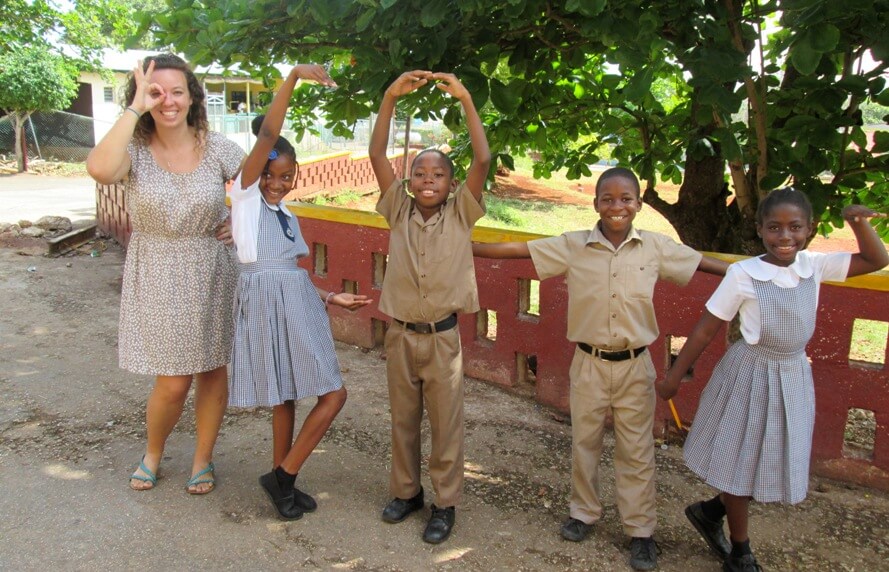
Certainly the more traditional 4‑H projects continue to remain relevant and practical, but I learned some of my most important lessons in an initiative Christian County 4‑H took on called Youth in Governance (YIG). This program trained youth in advocacy and how government worked. Through our efforts, youth were placed as non-voting members of various boards and government agencies. We contended that the voice of youth was valuable and worth hearing. I was an ex-officio member of our local Economic Development Council (EDC), where I learned how industry impacts a community, how local governance works (or doesn’t), and most importantly in my mind, the value of caring. When I was a teenager, it certainly wasn’t “cool” to be passionate about something. Apathy was popular and being on the EDC as part of YIG showed me that people dedicated to a cause get things done in their community. That lesson has stayed with me and ultimately played a part in my decision to join the Peace Corps, where I’m still working with 4‑H in Jamaica. Our YIG group went to the Citizenship Washington Focus in 2004 and happened to be there during President Reagan’s funeral, certainly a memorable experience.

ElizabethRiley_youth

One of my most treasured memories in 4‑H is when I was an adult counselor at 4‑H camp. I always preferred to be in charge of the youngest girls, even though they were often plagued with homesickness; the drama and boy-craziness of the older girls hadn’t hit them yet, for which I was profoundly thankful. In Kentucky 4‑H camps, a Spirit Stick is awarded to the teams with the most “spirit” at each evenings’ activities; basically, the loudest ones. This always put my little ones at a disadvantage, but one night they pulled out all the stops and were awarded the Spirit Stick. To this day, I don’t know why it touched me so much, perhaps we’d been denied it so long, but I was unbelievably proud of those girls.

My 4‑H activities and animal science knowledge led me to receive my BS in Animal Science from the University of Kentucky and my MS, also in Animal Science, from Virginia Tech. The people I’ve met and friendships forged throughout the years have certainly enriched my life and made me a better person. I carry with me all the lessons that I learned through 4‑H, especially applicable as I continue my Peace Corps service in Jamaica. I don’t know what my next step in life will be, but you can bet 4‑H will be part of it.