

The 4-H Story
The 4-H Story

4-H didn't really start in one time or place. It began around the start of the 20th century in the work of several people in different parts of the United States who were concerned about young people.

The seed of the 4-H idea of practical and “hands-on” learning came from the desire to make public school education more connected to country life. Early programs tied both public and private resources together for the purpose of helping rural youth.

During this time, researchers at experiment stations of the land-grant college system and USDA saw that adults in the farming community did not readily accept new agricultural discoveries. But, educators found that youth would "experiment" with these new ideas and then share their experiences and successes with the adults.

So rural youth programs became a way to introduce new agriculture technology to the adults. A.B. Graham started one such youth program in Ohio in 1902. It is considered the birth of the 4-H program in the U.S. When Congress created the Cooperative Extension Service at USDA in 1914, it included boys' and girls' club work. This soon became known as 4-H clubs - Head, Heart, Hands, and Health.

Nearing its 50th anniversary, 4-H began to undergo several changes. In 1948, a group of American young people went to Europe, and a group of Europeans came to the United States on the first International Farm Youth Exchange. Since then, thousands of young people have participated in 4-H out-of-state trips and international exchanges. 4-H began to extend into urban areas in the 1950's.
Later, the basic 4-H focus became the personal growth of the member. Life skills development was built into 4-H projects, activities and events to help youth become contributing, productive, self-directed members of society. The organization changed in the 1960's, combining 4-H groups divided by gender or race into a single integrated program.

You can learn more about 4-H history with this 4-H timeline.
The 4-H Pledge, Mission, Vision & Motto

The 4-H Pledge


"I Pledge my Head to clearer thinking,
my Heart to greater loyalty,
my Hands to larger service,
and my Health to better living,
for my club, my community, my country, and my world."

The pledge tells what 4-H is all about. 4-H has as its goal the four-fold development of youth: Head, Heart, Hands and Health. The pledge was adopted by the delegates to the 1927 National 4-H Club Camp in Washington, DC. State club leaders voted for and adopted the pledge for universal use. The phrase "and my world" was added in 1973. The saying of the pledge has prominent place in 4-H activities at regular 4-H meetings, achievement days, and other club events.

4-H Mission

4-H empowers youth to reach their full potential, working and learning in partnership with caring adults.

4-H Vision

A world in which youth and adults learn, grow and work together as catalysts for positive change.

Motto:

"To Make The Best Better"
The motto was adopted at about the same time as the 4-H Club Pledge. Its intent is to inspire young people to continue to learn and grow, to make their best efforts better through participating in educational experiences.

"Learning by Doing"
This phrase sums up the educational philosophy of the 4-H program. Young people learn best when they are involved in their learning. The intent is to do, reflect, and apply.

The 4-H Name, Emblem and the Four H's

The original symbol of the Boys and Girls Clubs was a three leaf clover with the words Head, Heart, and Hands. Nebraska clubs used the words as part of their statement of purpose: "to educate the youth of the county, town and city to a knowledge of their dependence upon nature's resources, and to the value of the fullest development of hand, head and heart...."

wright pin 1 wright pin 2

Here are two examples of the pins designed by O.H. Benson, Superintendent of Schools, Wright County, Iowa. He used the design on placards, posters and badges in 1907 or 1908. On September 16, 1909, he placed the first order on record with the Union Emblem Company for the pins. Benson and others are said to have had a four-leaf H design around 1908, but no record of it has been found.

Early in 1911, a meeting of club leaders in Washington adopted a committee recommendation approving the present 4-H emblem design. O.B. Martin, who was directing club work in the South, is credited with suggesting that the 4-H's stand for Head, Heart, Hands and Health. (Benson originally referred to a fourth H as Hustle.)

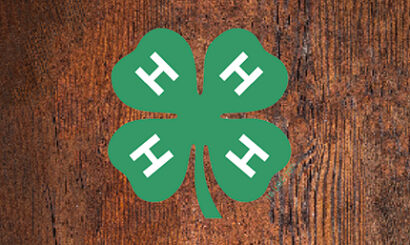
The 4-H emblem is federally protected under Section 18 US Code 707 and belongs to the Congress of the United States. The official emblem is green with white H's - the 4-H colors. The white symbolizes purity. The green represents nature's most common color and is emblematic of youth, life, and growth. Go to Name and Emblem to learn more about the proper, legal use of the 4-H name and emblem.

 
4-H Today

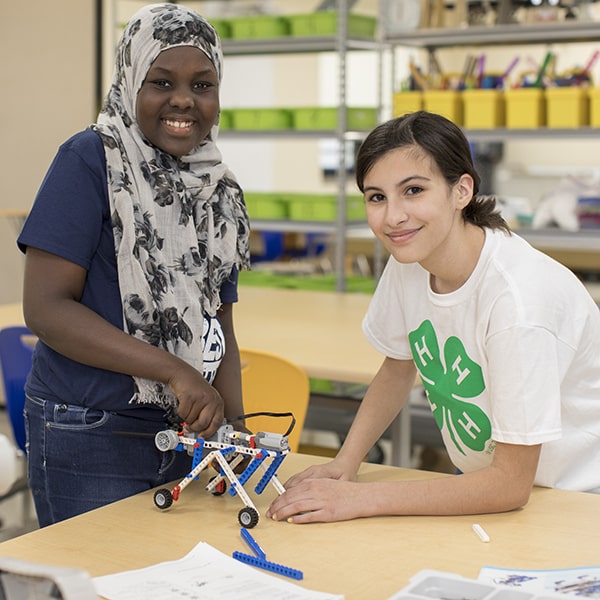
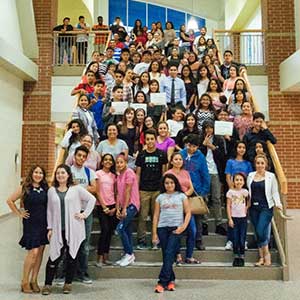
4-H has grown into a community of 6 million young people across America learning leadership, citizenship and life skills. 4-H can be found in every county in every state, as well as the District of Columbia, Puerto Rico and over 80 countries around the world. The 4-H community also includes 3,500 staff, 518,000 volunteers and 60 million alumni. 4-H'ers participate in fun, hands-on learning activities, supported by the latest research of land-grant universities, that are focused on three areas called Mission Mandates:

The 106 land-grant universities across the country deliver research driven programs through Extension agents in each of the more than 3,000 counties. The 4-H leadership builds on the strength of our state and local professionals in partnership with the National 4-H Headquarters.

National 4-H Headquarters

national 4-h headquarters logoNational 4-H Headquarters at USDA is the Cooperative State Research, Education, and Extension Service (CSREES) flagship youth development program. CSREES partners with the Land-Grant University System to create youth development outreach programs that take the university knowledge and expertise to youth in rural, suburban, and urban communities. CSREES also partners with public and private agricultural and nonagricultural sectors and other federal, state, and local agencies in program development and support.

Visit the National 4-H Headquarters page to learn more.

National 4-H Council

national 4-h council logo

National 4-H Council is the national, private sector non-profit partner of 4-H and the Cooperative Extension System. National 4-H Council focuses on fundraising; brand management; communications; legal and fiduciary support to national and state 4-H programs; and operation of the full-service National 4-H Youth Conference Center in Chevy Chase, Md., and the National 4-H Supply Service, the authorized agent for items bearing the 4-H Name and Emblem.

View Annual reports on the National 4-H Council page to learn more.

To contact National 4-H Council
7100 Connecticut Avenue
Chevy Chase, Maryland 20815
301-961-2800

The 4-H Study of Positive Youth Development

PYD StudyNew research shows that youth development programs like 4-H play a special and vital role in the lives of America's young people. According to The 4-H Study of Positive Youth Development, youth have the capacity to thrive when presented with the resources for healthy development found in families, schools, and communities, regardless of background, socioeconomic status, race, or gender.

Visit The 4-H Study of Positive Youth Development to download the second Annual Report.

Resource Library

For your convenience we have provided a library of resources that will provide you with more details about the 4-H movement.