


National 4-H Headquarters
About CSREES and 4-H 

Today's youth are an investment in America's future. They are tomorrow's leaders. Youth, like adults, must deal with pressures of stress, blended families, peer pressure, unemployment, and other societal issues. The better prepared they become as decision makers with high respect for self and others, the less potential there will be for tension and conflict in building a stronger national and world community.
Cooperative State Research, Education, and Extension Service (CSREES) partners with the Land-Grant University System to create youth development outreach programs that take the university knowledge and expertise to youth in rural, suburban, and urban communities. CSREES also partners with public and private agricultural and nonagricultural sectors and other federal, state, and local agencies in program development and support.

Through these programs, youth have an opportunity to contribute to energy conservation and environmental issues, community service, and food production. They learn about science and technology, and they become involved in programs that help them with employment and career decisions, health, nutrition, food safety, and family relationships. In the process, youth apply leadership skills, acquire a positive self-image, and learn to respect and get along with others.

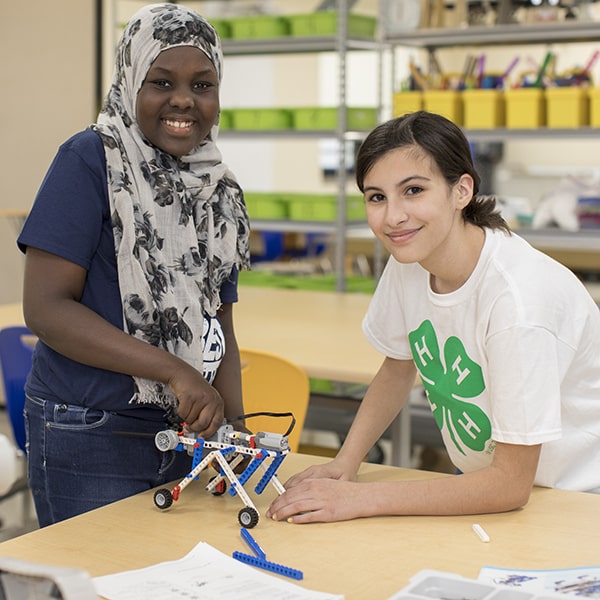
4-H is the CSREES flagship youth development program. Youth are encouraged to participate in a variety of activities that emphasize the "learning by doing" experiential learning approach. Through these programs, youth gain knowledge in a variety of areas and develop important life skills.

Essential Elements of Youth Development 

What if no youth development programs existed? If we were to develop one – using the latest research – that would assist young people to become healthy, problem-solving, constructive adults, what would it look like?

It would look a lot like 4-H! Using the Essential Elements of 4-H, we create opportunities and environments that meet young people's needs and build life skills.

4-H offers opportunities for Belonging - young people don't just join 4-H. . .they belong!

Youth need to know they are cared about and accepted by others. Youth also need to experience a sense of physical and emotional safety. They need to feel a sense of connection to others in the group. Current research emphasizes how important it is that youth have opportunities for long-term consistent relationships with adults other than their parents. In fact, the research suggests that a sense of belonging may be the single most powerful positive ingredient we can add into the lives of children and youth.

4-H offers opportunities to experience Mastery - young people master skills that are relevant.

Mastery includes the development of skills, knowledge, and attitudes followed by the competent demonstration of these skills and knowledge. In order to develop self-confidence and a sense that they matter, young people need to feel that they are capable. They must also experience success at solving problems and meeting meaningful challenges. Mastery is sometimes called “self-efficacy.” Settings that promote self-efficacy and mastery encourage youth to take risks, seek out challenges, and focus on self-improvement rather than comparing themselves to their peers.

4-H offers opportunities to experience Generosity- young people become active and engaged citizens.

Young people need to feel their lives have meaning and purpose. They need opportunities to connect to their communities and learn how to give back to others. As part of this process, youth gain an understanding of others' needs and learn how to respond to these needs. Generosity may also include the development of values such as compassion and tolerance for diversity and the ability to take the perspective of others, and to approach problems as "a member of a global society," through participation in local, and national politics.

4-H offers opportunities to experience Independence- young people have opportunities to choose. . .and learn to make good choices.

Youth need to know that they are able to influence people and events through decision-making and action. Independence refers to an adolescent's growing ability to think, feel, make decisions, and act on her or his own. This continues to develop whenever someone is challenged to act with a new level of self-reliance. By gaining a sense of independence, youth develop personal responsibility and discipline.
 
Headquarters Resources 

The following resources are hosted on the official National 4-H Headquarters sites. 

Contact National 4-H Headquarters 

Contact us at the National 4-H Headquarters if you have questions or comments about our national level programs or policies. For information about 4-H clubs, events, programs or policies in your local, county or state 4-H program, you should contact the 4-H staff at your local/county Cooperative Extension office or your state 4-H office.

Official Websites:

Surface Mail:
1400 Independence Ave., S.W., Stop 2225
Washington, DC 20250-2225

Delivery Address (FedEx, UPS, etc.):
Waterfront Centre
800 9th St., S.W., Room 4401
Washington, DC 20024

Phone: 202-720-2908
Fax: 202-720-9366
Email: 4hhq@csrees.usda.gov