




Whilst we load your content.

As Hans Christian Andersen once said, “Where words fail, music speaks.” As a clarinetist and an active supporter of my community, this quote resonates with me deeply. The creation of “The Largest Crescendo” was rooted in the belief that music spreads joy and brings people together in a unique way.
A friend and I were discussing an idea to combine our passion for band with our desire to help others and after hours of brainstorming in her basement about what our community service focused non-profit would do, we knew we needed a name first. We decided on The Largest Crescendo—or TLC.
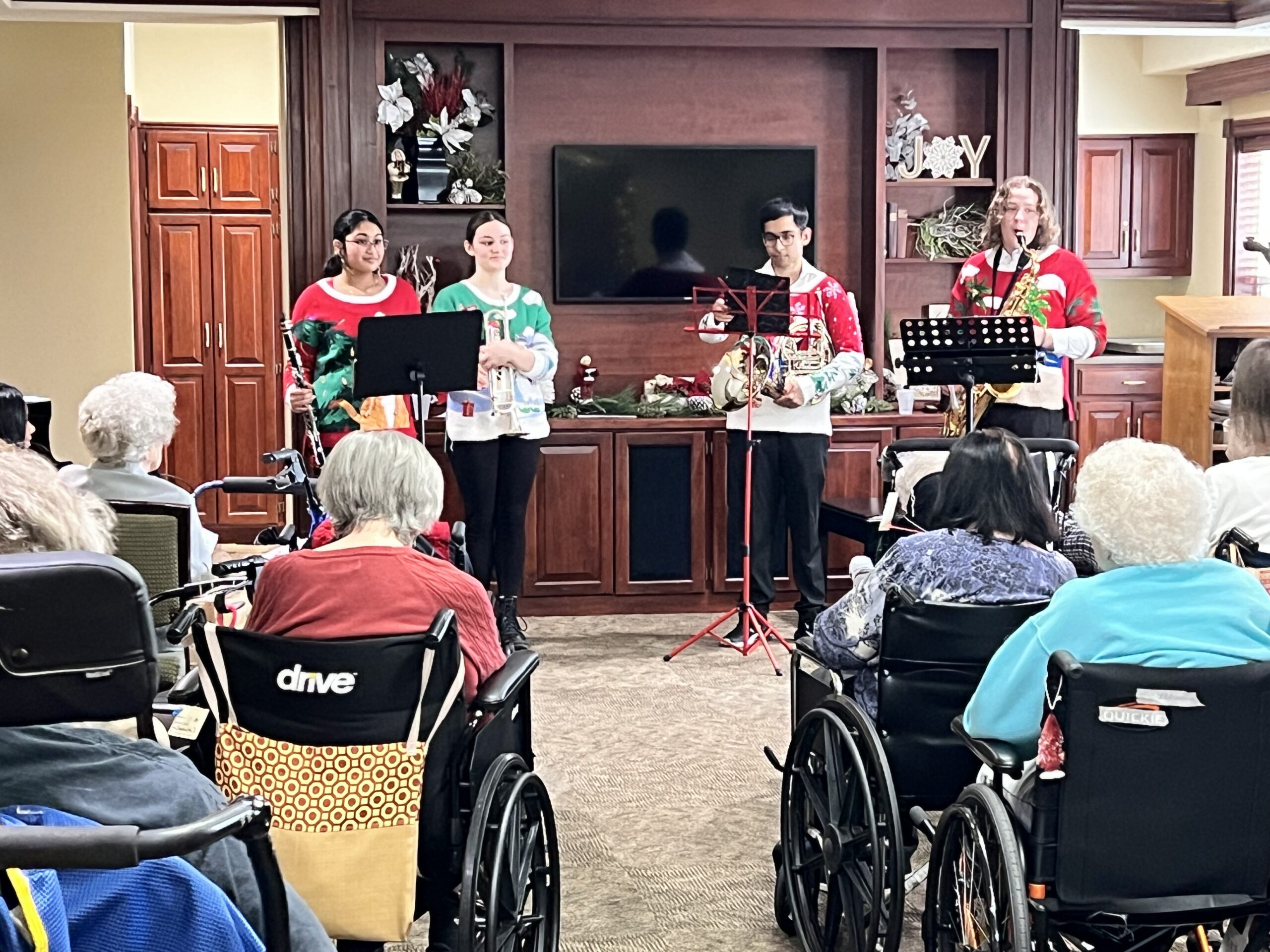
The charity is a band of high schoolers that perform at local nursing homes and donates proceeds to organizations fighting food insecurity. What better way to mix our love of music and make fun noise that brings a smile to those around us!
My motivation for TLC comes from 4-H, which introduced me to volunteering, local charities, and the importance of contributing to the greater good. Through my club, I learned about community issues I may not have seen otherwise. While volunteering during club events, I noticed that more people in my community struggled with hunger than I realized. Some kids lacked basic necessities, and many families faced food insecurity daily.
I later learned that about 12% of people in my county: Blue Earth County, MN; face food insecurity. This is what inspired my friend and I to direct our concert donations toward charities for food insecurity.
In addition to this, performing at nursing homes became TLC’s other focus. Since I have volunteered at - and now work - nursing homes, I have seen firsthand how much joy music brings to the residents, especially during the holiday season. Their reactions are a major reason we choose to perform our concerts at nursing homes and assisted livings.
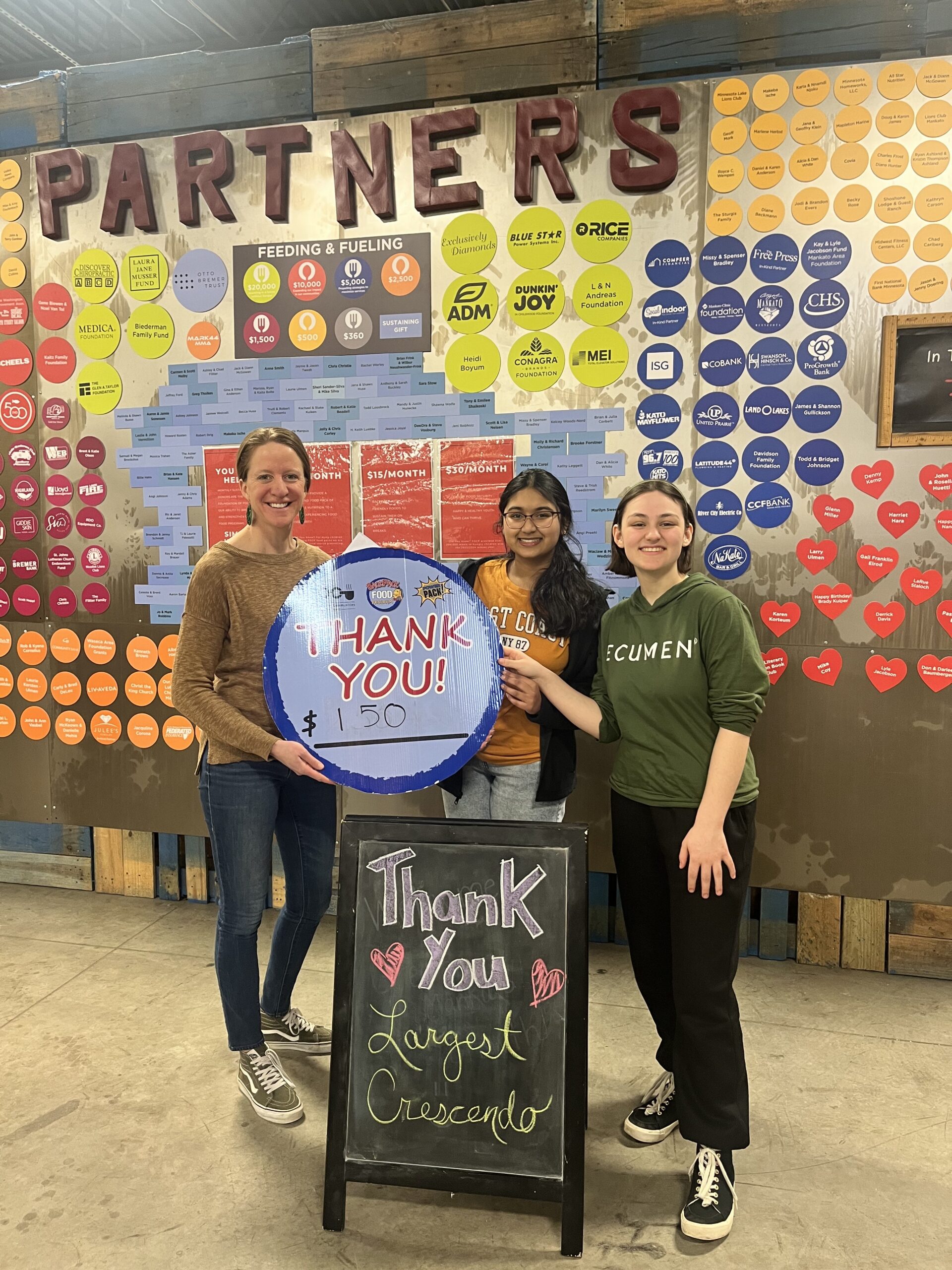
So far, TLC has held six concerts and donated around $1,300, with plans to continue growing. Our first concert was at Oak Terrace Assisted Living, which was another opportunity made possible through my 4-H network. The performance was amazing; we played Christmas music that cheered everyone up and donated $100 to a program that provides backpacks of food to elementary school students in need.
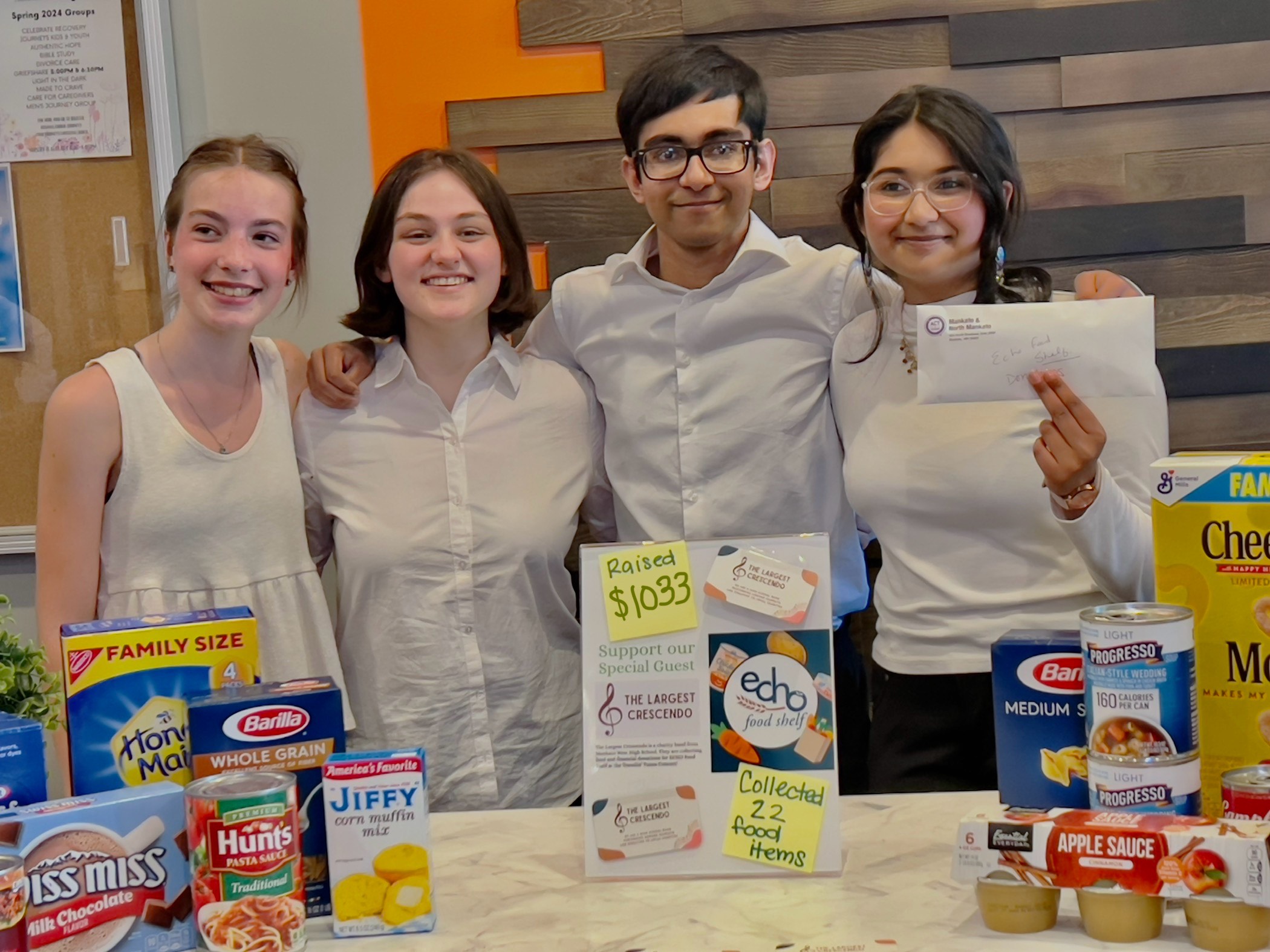
Our second concert was one of the most memorable. We performed as invited guests of a local choir for Alzheimer’s patients, and it turned out to be one of our largest events. Livestreams and recordings from that performance are still being used as entertainment in local nursing homes a year later. At that concert, we raised close to $1,100 and twenty-two food items—all from community members who came together to make a difference. That moment changed the way I view my community, and it truly solidified a feeling of kindness and belonging for me.
TLC has taught me many skills, opened doors, and pushed me to incorporate acts of kindness into my daily life. In addition, founding and managing TLC has sharpened my understanding of team dynamics, strengthened my technological knowledge, and improved my social media management skills. For example, a key part of TLC is the management of donations and band funding. Now, I may not be a technology expert, but something I do know how to do is research and hard work. This is how I took a day to create an extensive Google sheet to manage our finances and keep track of our expenses down to the penny. This has immensely improved our structure and responsibility, ensuring that donations make it to the right place.
Aside from the skills I have learnt, I would say some of the most meaningful rewards have come from the people I’ve met. After a Christmas Eve performance at a nursing home, an elderly woman approached me to compliment my clarinet playing and tell me about her own experience in band when she was younger. Another man recognized me from multiple TLC concerts, and we talked after the performance about his childhood and how much music means to the elderly, especially during times when they feel a loss of holiday spirit. These conversations are moments I will always cherish.
To anyone who wants to make an impact in their community, I encourage you to go for it! 4-H offers countless opportunities to get involved, and not every action has to be large or time-consuming. Small gestures like cheering at a local marathon, making holiday cards for a nursing home, or donating to a charity can create ripple effects that you might not even know about. And there is no single way to give back; you can offer your time, presence, support, or resources in whichever way is meaningful to you.
As we go into the holiday season, try to make a difference for a cause you are passionate about, and watch your holiday spirit rise as you spread cheer to others.

WASHINGTON, D.C. (Dec. 12, 2025) – National 4-H Council recently added influential leaders from the corporate, technology, academic, and nonprofit sectors to its Board of Trustees. Collective expertise from Deisha Barnett, Michael T. Benson, Brent Colburn, and Taylor Thigpen will advance 4-H’s Beyond Ready initiative to help youth prepare for what’s next in their life and careers.
Mark Berven, 4-H board chair, said, “These leaders have built strong teams, expanded access, provided educational leadership and started youth-led nonprofits. Their expertise will help us elevate how we serve young people.”
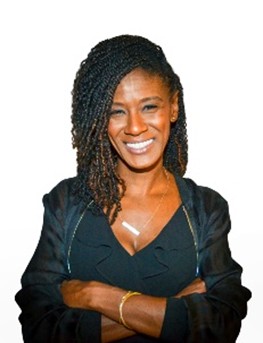
Deisha Barnett, President, Global Communications & Brand, UPS- Barnett is a 4-H alumna and accomplished communications strategist, well-known for leading initiatives that strengthen brand reputation and relevance. Her expertise across corporate communications, civic engagement, and nonprofit board service will strengthen how we tell stories and elevate youth impact.
“I was an elementary school student, dressed in business attire, standing behind a podium during 4-H public speaking workshops and oratorical contests. I learned skills I now use professionally – proof that when we pour into young people, it helps shape the future,” Barnett said.
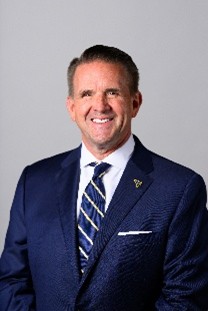
Dr. Michael T. Benson, President, West Virginia University With three decades of executive and academic leadership and a record of transforming major institutions, Dr. Benson is a nationally recognized university president and scholar who has secured historic philanthropic gifts, expanded student enrollment, and strengthened partnerships that advance higher education. He carries a family legacy of public service; his grandfather was the Secretary of Agriculture under President Dwight D. Eisenhower.
“Education changes lives and 4-H is a critical starting point,” Dr. Benson said. “Every young person deserves the chance to learn about themselves and the world, and to build the skills necessary for their own success. Investments in these opportunities benefit all of us.”

Brent Colburn, Vice President for Global Public Affairs, Microsoft - Colburn is a senior leader at Microsoft whose career in government, public policy, higher education, philanthropy, and technology has centered on expanding access and empowering communities. His expertise in technology innovation and public impact will help 4-H continue to equip young people with the digital and artificial intelligence skills required to excel in a rapidly evolving workforce.
“In today’s world, success often depends on combining digital confidence with curiosity and character,” Colburn said. “4-H is helping young people build the skills they’ll need in coding, artificial intelligence, and digital safety, and I look forward to supporting them in this important work.”
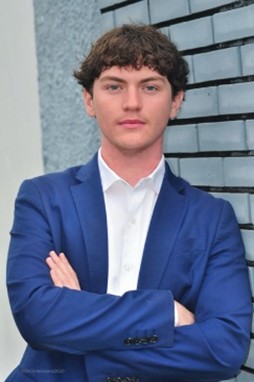
Taylor Thigpen, Social Entrepreneur; CEO, Local Hands Global Heart and Young Alumni Advisory Committee Member - A global affairs and social entrepreneurship major at Notre Dame and a proud Florida 4-H alum, Thigpen is a nonprofit leader and youth advocate. During the pandemic, he started Plantkingusa that he sold a few years later to fund more social good. Now as CEO of Local Hands Global Heart, he supports grassroots initiatives across 5 continents to advance community development. He brings a powerful youth perspective, entrepreneurship, and a passion for global service to the board as a member of the Young Alumni Advisory Committee.
“4‑H made me who I am, and serving on the Board allows me to be a representative for the 6 million young 4-H’ers to prove they can have a seat at the table,” Thigpen said. “Today’s youth face big challenges, but with 4‑H, they gain the confidence and support to be the change today.”
ABOUT 4-H:
4-H, the nation’s largest youth development organization, grows confident young people who are empowered for life today and prepared for careers tomorrow. 4-H programs reach nearly six million young people across the U.S. through experiences that develop critical life skills. Through the Beyond Ready national initiative, 4-H aims to increase that number to ten million youth annually by 2030. 4-H is the youth development program of our nation’s Cooperative Extension System and USDA and serves every county and parish in the U.S. through a network of 110 public universities and more than 3,000 local Extension offices. Globally, 4-H collaborates with independent programs to empower one million youth in 50 countries. The research-backed 4-H experience grows young people who are four times more likely to contribute to their communities; two times more likely to make healthier choices; two times more likely to be civically active; and two times more likely to participate in STEM programs
Learn more about 4-H at 4-H.org and follow us on Facebook, Instagram, and X.
Media Contact:
yolandastephen@fourhcouncil.edu
WASHINGTON, D.C. (Dec. 1, 2025) – For eight years, National 4-H Council and Microsoft have closed the digital divide in rural communities. This collaboration has a track record of turning vision into action — from the 4-H Tech Changemakers initiative that expanded digital skills in rural communities, to reaching 1.4 million youth with the AI Foundations curriculum through Minecraft Education in 2024. This investment reaffirms both organizations’ shared mission to prepare young people for an AI-powered world through Microsoft Minecraft education.
By the Numbers
Research by 4-H and Microsoft shows that young people are interested in AI — but many don’t feel prepared to use it.
“AI is already part of everyday life. Our job is to make sure young people — especially those in rural areas — understand how to use it responsibly today and into the future,” said Jill Bramble, President and CEO of National 4-H Council. “With Microsoft’s support, we’re giving educators and youth the tools to be healthy, productive and engaged.”
Continuation of Learning and Leading
This partnership builds on 4-H’s national Beyond Ready initiative, which aims to reach 10 million youth by 2030. 4-H and Microsoft will:
“For more than a century, 4‑H has been a cornerstone of opportunity and learning in rural America, helping generations build skills that strengthen communities,” said Justin Spelhaug, President, Microsoft Elevate. “We’re proud to build on that legacy and deepen our partnership to bring AI education and capacity building to classrooms and counties nationwide. Together, we can ensure that every young person — no matter where they live — has the tools to thrive in an AI-driven future.”
A Partnership with Impact
4-H youth are already putting AI to work. One example is Henry Zou, an 18-year-old Iowa State University Extension 4-H member whose project tackles one of agriculture’s most damaging corn diseases — Gray Leaf Spot (GLS). Henry developed a deep learning system called DeGLS (Detection of Gray Leaf Spot) that uses artificial intelligence to automatically identify and measure the severity of GLS on corn leaves.
“I’ve learned that science isn’t just about experiments — it’s about solving real problems that impact our communities,” said Zou. “GLS affects farmers and food production all over the world, so I wanted to use technology to make a difference. By combining artificial intelligence with agriculture, my goal is to create a tool that helps farmers protect their crops and strengthen the future of agriculture.”
ABOUT 4-H:
4-H, the nation’s largest youth development organization, grows confident young people who are empowered for life today and prepared for careers tomorrow. 4-H programs reach nearly six million young people across the U.S. through experiences that develop critical life skills. Through the Beyond Ready national initiative, 4-H aims to increase that number to ten million youth annually by 2030. 4-H is the youth development program of our nation’s Cooperative Extension System and USDA and serves every county and parish in the U.S. through a network of 110 public universities and more than 3,000 local Extension offices. Globally, 4-H collaborates with independent programs to empower one million youth in 50 countries. The research-backed 4-H experience grows young people who are four times more likely to contribute to their communities; two times more likely to make healthier choices; two times more likely to be civically active; and two times more likely to participate in STEM programs.
Learn more about 4‑H at 4-H.org and follow us on Facebook, Instagram, and X.
ABOUT MICROSOFT:
Microsoft (Nasdaq “MSFT” @microsoft) creates platforms and tools powered by AI to deliver innovative solutions that meet the evolving needs of our customers. The technology company is committed to making AI available broadly and doing so responsibly, with a mission to empower every person and every organization on the planet to achieve more
For more information, press only:
ystephen@fourhcouncil.edu
rapidresponse@wecommunications.com
WASHINGTON, DC (June 26, 2025) The National 4-H Council Board of Trustees welcomes Michael Lavin, founder and managing partner of Germin8 Ventures, to its Board of Trustees. A recognized leader in leveraging science and technology to transform the Ag supply chain and global food systems, Lavin brings deep expertise in emerging technologies and partnership models that align with 4-H’s commitment to innovation.

At Germin8 Ventures, Lavin leads a venture capital firm that backs pioneering technologies that drive resilience and reshape supply chains. With a portfolio spanning agriculture, biotechnology, and AI, Germin8 supports innovative startups that provide solutions for future-proofing the farm, nutrition, and food security. Additionally, Lavin serves as Vice Chairman of OSI Group, a premier global supplier of custom value-added food products to the world's leading foodservice and retail food brands.
“I’m honored to join the 4-H Board of Trustees and contribute to an organization that empowers the next generation of leaders,” Lavin said. “Our nation’s youth are a projection of America’s future, and I am grateful for the opportunity to support 4-H’s mission to equip youth with the skills, confidence, and opportunities to thrive.”
Lavin currently serves on the Board’s Investment Subcommittee, providing strategic guidance on investment decisions. His insights support long-term growth and mission-driven impact.

“As we look to prepare youth for tomorrow, Michael’s extensive knowledge recognizing innovative systems and deep understanding of agriculture and food sectors will make him a key contributor to our strategic vision,” said Mark Berven, Chair of National 4-H Council’s Board of Trustees.
Lavin’s appointment reflects 4-H’s ongoing commitment to excellence in leadership and its strategic focus on food, agriculture, AI and innovation to shape a better future for all.
ABOUT 4-H
4-H, the nation’s largest youth development organization, grows confident young people who are empowered for life today and prepared for careers tomorrow. 4-H programs reach nearly six million
young people across the U.S. through experiences that develop critical life skills. Through the Beyond Ready national initiative, 4-H aims to increase that number to ten million youth annually by 2030. 4-H is the youth development program of our nation’s Cooperative Extension System and USDA and serves every county and parish in the U.S. through a network of 110 public universities and more than 3,000 local Extension offices. Globally, 4-H collaborates with independent programs to empower one million youth in 50 countries. The research-backed 4-H experience grows young people who are four times more likely to contribute to their communities; two times more likely to make healthier choices; two times more likely to be civically active; and two times more likely to participate in STEM programs.
Learn more about 4‑H at 4-H.org and follow us on Facebook, Instagram, and X.
Archana Gharpuray started her career at Hughesnet over 35 years ago as a software engineer. Today, she leads the software development teams for the Hughesnet JUPITER satellite ground systems. Her team of around 100 engineers collaborates with experts worldwide to create cutting-edge satellite ground technology.

What sparked your interest in a STEM Career? What training/education did you participate in to pursue this career path?
Growing up, I was the kid who always asked why. Why does this work? How can I make it better? That endless curiosity led me down a path I never expected but has shaped my life in amazing ways.
My journey into engineering began at home. My dad noticed my interest and encouraged me to explore communications engineering – a field not many girls chose at the time. But that only made me more determined. I wanted to understand the world and build something meaningful.
After high school, I enrolled in Electrical Engineering with a focus on Telecommunications. It was both exciting and challenging. There were times when I was buried in complex math or struggling with tough group projects. But through it all, my passion for creating solutions kept me going. There's a special kind of magic in seeing something you helped design actually work. That feeling never gets old.
What are some skills that you use day-to-day that people would be surprised you need to know?
Engineering is about way more than just equations. Every day, I use skills like communication, creativity, and teamwork. Whether I’m explaining technical ideas to non-engineers, writing detailed reports, or brainstorming new designs, I’ve learned that engineering is as much about people as it is about technology.
Creative problem-solving is at the heart of what we do. It's not just about getting the right answer - it’s about finding better answers, new ideas, and fresh perspectives. And almost nothing in engineering is done alone. Teamwork isn’t optional - it’s essential.
What advice would you give to someone interested in turning their passion for STEM into a career?
If you’re someone who loves puzzles, questions, and building things - big or small - then engineering might be the perfect fit for you. My advice? Start exploring now. Build a simple circuit. Take something apart just to see how it works. Join a STEM club, try a free coding class online, or volunteer for a school tech project.
And here’s the most important thing: you don’t have to be perfect to pursue engineering. You just have to start. Mistakes, failures, and messy first tries are all part of the process. That’s where the real learning—and growth—happens.
Jill Bramble, 4-H President and CEO, and Kristine Dixon, Charles Schwab Foundation Executive Director

Today’s young people are ambitious and eager to work toward economic success. As we see a growing number of youth seeking content from financial advice influencers on TikTok (aka FinTok) and other platforms, it’s clear that there’s a strong demand for trustworthy information on how to achieve their financial goals.
According to National 4-H Council’s Beyond Ready survey of American teens, these goals include owning a home (77%), being financially secure (68%), and living debt-free (67%). Many young people also aspire to own a business (36%), a goal especially high among Black teens (55%). This same research revealed 41% of teens wish money management was taught at their school. Ensuring that financial literacy education is broadly available is a crucial part of helping youth make their dreams a reality.
The unique challenges young people face today – such as growing credit card debt compared to previous generations and delaying major life milestones like homeownership due to financial concerns – make it even more essential that we provide them with guidance on how to navigate the 21st century economy.
Schools are expected to do more with less. While some education systems make financial literacy a part of their curriculum, there is still a critical gap to fill in many communities across the country. But schools can’t do it alone.
To ensure young people are Beyond Ready to succeed, leaders across corporate and nonprofit sectors must step up, working with schools and communities to make modern, relevant financial literacy education and tools available to young people nationwide.
One example of successful collaboration is the 4-H Smart Cents program. 4-H educators from the University of Nebraska-Lincoln Extension collaborate with skilled professionals through a partnership with Charles Schwab Foundation to create a financial literacy playbook for educators across the country. The lessons cover essential, practical topics like paying for college and managing credit card spending. The program provides a roadmap for how leaders across the private and nonprofit sectors can expand financial literacy education outside of the traditional classroom.
Inside Nebraska schools, the state’s Financial Literacy Act requires at least five high school credit hours in personal finance or financial literacy before graduation. Nebraska schools also partner with local banks for in-school savings programs that encourage kids to develop positive saving habits. These creative collaborations – across government, education, nonprofit, and corporate sectors – create financial education resources that benefit Nebraska students, helping cement the state’s status as a leader in this space.
While the priorities of rural youth may look different compared to youth in urban areas, depending on factors such as transportation or career interests, basic personal finance principles are universal. Students who have a strong foundation in financial literacy are better equipped to save and invest their money, set financial goals for the future, and in some cases, even start a business before graduating high school. Equipping the next generation with the knowledge and skills they need to manage their money is crucial for the long-term growth and prosperity of our nation.
The world is moving at a rapid pace, and financial literacy will remain an essential skill for young people. With smart investments in teaching these basic life skills, we can empower youth to become confident in their financial decisions and their economic outlook for the future. And working collaboratively across sectors that help emphasize financial literacy and partnerships like Schwab and 4-H, it ensures that youth have the essential skills to become Beyond Ready for work and life and build essential skills for success that drive even better results.
_________
The Charles Schwab Foundation is a nonprofit, private foundation, classified by the IRS as a charity under 501(c), (3) of the Internal Revenue Code. The Foundation is neither a part of the Charles Schwab & Co., Inc. (member SIPC) nor its parent company The Charles Schwab Corporation.
(0425-LZ6X)
When I first stepped foot in Austin, I was filled with excitement, confidence, and motivated for the opportunities SXSW EDU were sure to bring. I felt Beyond Ready. Reflecting about this opportunity last summer, I recall a mix of nerves and determination. 4-H had given me so much throughout my career, and I wanted to use this incredible opportunity as a chance to represent the organization in the best light. I prepared for months to ensure I captured the experience of 6 million young people involved in 4-H.
From participating in Clovers and Company to being honored as a Youth in Action awardee, my 4-H journey has been nothing short of a series of projects and programs that taught me the skills to be ready for life. The leadership skills I gained as a 4-H officer and the decision-making skills I learned from judging teams, and the empathy I learned from community service has shaped me into the person I am today.


At South by Southwest EDU (SXSW EDU), I connected with people from varied backgrounds and experiences. Some were similar to mine and others were vastly different. A highlight was an invitation to breakfast with students from New York, California, Massachusetts and Texas for a Walton Family Foundation roundtable discussion. Sharing insights about 4-H with my peers underscored the power of youth voice, which was a theme that resonated deeply during my upcoming panel discussion later that day.
The panel I participated in was titled, “Community Power: Elevating Youth Through Learning Ecosystems.” It provided an opportunity to collaborate with Hannah Howard from Camp Fire, Manny Juarez of the Griffin Museum of Science and Industry, and Safaniya Stevenson from the Collaborative Communications Group who were also panelists and amazing mentors. Together, we shared the importance of positive youth development programs in shaping futures with the attendees in the room. I stressed it takes a village to raise a child.
During the panel presentation, as the only youth in a room full of adults, my favorite question was how adults can uplift youth voices in their educational spaces. This reflection allowed me to highlight how my SPARK champions empower me to find my passions in the most simple spaces. One of those places is through the nonprofit I started, I AM. It provides a voice to young Black girls to help them learn about confidence, develop life skills and opportunities to help them find their spark. I shared students don’t require a stage or flashy facilities to feel seen and heard; sometimes simply “pull up a chair and listen because change is already transpiring.”

This experience reinforced a pivotal lesson from 4-H: true growth happens outside of your comfort zone. The willingness to step up, take risks and learn from failures prepared me for moments like attending SXSW EDU. It’s this same mindset that makes me excited about my future career and life. I am beyond ready for the challenges, opportunities and adventures to come.
Amiyah Elam
If my friends ever asked: “Is 4-H the right fit for me?” I could answer – unequivocally – YES! 4-H is the perfect match for anyone who wants to unlock a future full of possibilities.
My own 4-H journey began as a 5-year-old Cloverbud in Hardin County, KY where I attended club meetings with my older sisters. When I turned 9, I joined more 4-H clubs and began taking more classes. Here are the ways that 4-H matched me with the lifelong skills and meaningful experiences that are part of who I am today:
PASSION
Part of discovering your spark – what interests and motivates you – involves trying lots of new things. Through 4-H, I was part of clubs like livestock, photography and sewing. By trying out new programs and projects, you learn quickly what you don’t like, find out what you’re good at, what you enjoy doing, and what you want to get better at.
For me, it was sewing. I was amazed by the endless projects I could make independently. This opened the door to many more opportunities and cemented my passion for sewing, crafting, and design. I quickly became obsessed with creating custom sewing patterns for my own pieces. Years later this would spiral into an endless imagination of textile styling, upcycled projects, and a passion for vintage and sustainable fashion.
The one piece of advice I give to young 4-H’ers: Take advantage of every opportunity 4-H has to offer. Don’t miss out, step outside your comfort zone, and find what you’re passionate about!
LEADERSHIP AND COMMUNICATION
As a homeschooler, I had the flexibility to participate in anything my county, state, and National 4-H had to offer. As my involvement in the 4-H program escalated, so did my passion for leadership. I began creating clubs, classes and workshops. I learned to communicate with others, set and accomplish goals, and so much more.
Without the leadership opportunities I took part in as a young 4-H’er, I would never have had the courage to chair the Kentucky State Leadership Board, to serve as the 2020 Kentucky State Treasurer, or to join National 4-H Council’s Young Alumni Advisory Committee (YAAC). Being able to converse with influential state representatives and potential donors about 4-H was a huge advantage in developing my professionalism, confidence, and public speaking abilities.
RESILIENCY AND PROBLEM-SOLVING
My Kentucky 4-H State officer team faced many hardships due to the COVID-19 shutdown. While altering our state programs to reach youth through online experiences, I realized the importance of teamwork and adaptation. While so many opportunities were taken from us during the pandemic, we created new ones online and learned an entirely different skillset as leaders. Through video content, online communication, and social media platforms we connected to our fellow 4-H’ers in a way no other officer teams had before. Looking back, these skills were crucial in becoming a business owner.
CONFIDENCE
Growing up with seven sisters, we thrifted the majority of our clothing. Shopping second-hand was a way to express ourselves aside from hand-me-downs. I quickly realized I loved vintage clothing but didn't have the confidence to wear the eccentric styles I wanted. "Once I became involved in 4-H, I developed the confidence to try new things and step out of the box I kept myself in. Throughout my teenage years, that confidence developed into expressing myself through upcycling and styling vintage clothing.
ENTREPRENEURSHIP AND CREATIVITY
During the pandemic, I began documenting my thrifting adventures and creating style content on my Instagram business account. I started collecting, styling and selling my vintage clothing items, thereby creating a business for myself. Within a few months, I was able to quit my part-time job at a realtor’s office and sell vintage full-time.
After establishing an online presence, I opened a brick-and-mortar shop at 18 years old. Since the opening of Panoramic Vintage, I have moved into a larger location in downtown Leitchfield, Kentucky.
VOLUNTEERISM
As an entrepreneur, I am able to create my own schedule to include my 4-H involvement, church volunteering, and family-focused lifestyle. Once I aged out of 4-H, I wanted to give back to my county and district programs by creating 4-H clubs, workshops, and by being an active member in my local, regional, and national 4-H offices.
COMMUNITY
Without my past 17 years of 4-H experiences, I wouldn't be a fraction of the leader, business owner, or community volunteer I am today. I hope to continue volunteering within the 4-H program to influence fellow 4-Her’s to achieve their goal and dreams.
Personally and professionally, it’s easy for me to see how 4-H is woven into the fabric of my life. It has given me the skills I need, the community I adore, and the career I dreamt of. I’m still in awe of how surreal it is to help others discover their style through sustainable fashion. I hope to continue growing Panoramic Vintage and investing in others the way 4-H invested in me.
Want to follow along with my business and adventures? Visit panoramicvintage.com, follow me on social @panoramic.vintage, or check out one of my vintage pop-ups throughout the country!
If you’re a teen wondering how you can be matched with experiences like these, join 4-H today. Or if you just care about young people and want them to discover their spark while making memories that last a lifetime, please make a gift. Donate today. Your gift matches kids with the skills and experiences they need to be Beyond Ready – like me – for whatever comes their way.
WASHINGTON, DC (December 09, 2024) – The National 4-H Council received a $15 million grant from Lilly Endowment Inc. to advance its 4-H Beyond Ready initiative, a comprehensive program that will equip 10 million youth by 2030 with essential career and character development as fundamental elements for work and life. This funding is part of Lilly Endowment’s Character Development Through Youth Programs initiative, which supports organizations focused on cultivating positive character traits in young people across the nation.
Findings from a recent 4-H Youth Voice Survey, conducted by Hart Research, show schools can’t prepare students for life and work alone. The impact of out-of-school programs like 4-H are critical to youth development. According to the survey, 77% of youth said out-of-school programs help build confidence, compared to 63% who said the same about in-school programs. Additionally, 62% of youth said these programs help them manage stress, whereas 49% report the same for school-based programs.
Through Beyond Ready, 4-H will expand its efforts to:
Jill Bramble, President and CEO of National 4-H Council, emphasizes the significance of this initiative: “Lilly Endowment’s investment shines a light on the importance of character development in youth programs. We can provide more outreach, programs and support to young people so they are ready to thrive in an ever-changing world.”
As one of eight organizations selected for this significant investment, 4-H will also develop evaluation tools to measure its progress.
“From the earliest days of its grantmaking, the Endowment has supported projects to encourage character development, especially among young people,” said Ted Maple, the Endowment’s vice president for education and youth programs. “We are heartened by the thoughtful and strategic approaches these youth-serving organizations are taking to support children and youth in developing character traits that will be important for them in their future roles as individuals, family members and citizens.”
ABOUT 4-H
4-H, the nation’s largest youth development organization, grows confident young people who are empowered for life today and prepared for careers tomorrow. 4-H programs empower nearly six million young people across the U.S. through experiences that develop critical life skills. Through Beyond Ready, 4-H will increase that number to ten million youth annually. 4-H is the youth development program of our nation’s Cooperative Extension System and USDA and serves every county and parish in the U.S. through a network of 110 public universities and more than 3,000 local Extension offices. Globally, 4-H collaborates with independent programs to empower one million youth in 50 countries. The research-backed 4-H experience grows young people who are four times more likely to contribute to their communities; two times more likely to make healthier choices; two times more likely to be civically active; and two times more likely to participate in STEM programs.
Learn more about 4‑H at 4-H.org and follow us on Facebook, Instagram, and Twitter.
About Lilly Endowment Inc.
Lilly Endowment Inc. is an Indianapolis-based, private foundation created in 1937 by J.K. Lilly and his sons, Eli and J.K. Jr., through gifts of stock in their pharmaceutical business, Eli Lilly and Company. Although gifts of stock remain the financial bedrock of the Endowment, the Endowment is a separate entity from the company, with a distinct governing board, staff and location. The Endowment supports the causes of community development, education and religion.